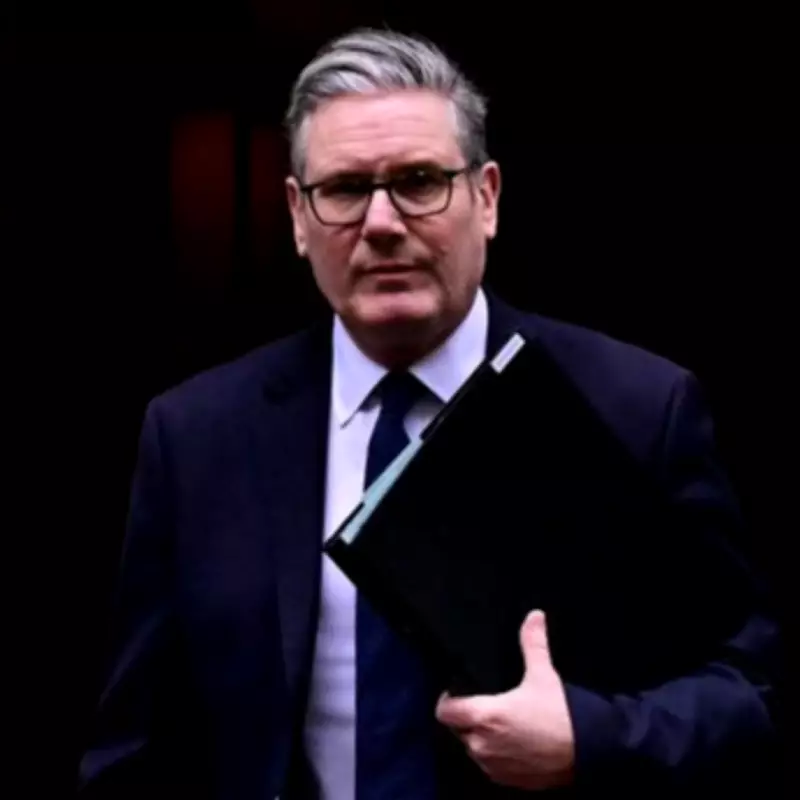
Keir Starmer's Leadership Crisis: Battles Ahead Despite Cabinet Support
Keir Starmer emerged defiant yesterday after confronting the most severe challenge to his leadership since assuming office, but the struggle for political stability remains far from resolved. In a dramatic development, Scottish Labour leader Anas Sarwar publicly broke ranks to demand Starmer's resignation, while Energy Secretary Ed Miliband acknowledged the Prime Minister faced a "moment of peril" in his fight to preserve his premiership.
The Prime Minister was ultimately bolstered by his Cabinet ministers, who sequentially declared their public backing for Starmer during the crisis. However, the release of documents connected to the ongoing Peter Mandelson scandal threatens to dominate government business and ignite further controversies. Additionally, Starmer confronts significant electoral challenges in the coming months, including an imminent by-election and crucial May elections that could determine his political future.
Immediate Aftermath and Cabinet Response
A resolute Keir Starmer delivered a combative address at Monday night's Parliamentary Labour Party meeting, telling assembled MPs in Westminster: "I've won every fight I've ever been in." The Prime Minister emphasized he was "not prepared to walk away" from his leadership role despite mounting pressure.

Starmer must now navigate a critical Cabinet meeting where senior ministers will gather for their weekly discussion. The Prime Minister has acknowledged to MPs that the government needs to alter its course, particularly addressing discontent surrounding Lord Mandelson's appointment as Ambassador to the United States and controversial winter fuel cuts. Disappointment with government decisions has been accumulating for months, manifesting in disputes over benefits and welfare reductions.
The Prime Minister has been granted an opportunity to demonstrate he has absorbed these criticisms and will implement meaningful changes. His ability to convince both ministers and backbench MPs of this new direction will be crucial for maintaining party unity and political momentum.
Ongoing Political Challenges and Opposition Tactics
While Starmer hopes to move beyond this leadership crisis, opposition parties are preparing to exploit any perceived vulnerabilities. Conservative leader Kemi Badenoch, who has repeatedly pressured Starmer to resign, is scheduled to address broadcasters about the ongoing political turmoil. Badenoch is expected to capitalize on any signs of weakness in the Prime Minister's position.
Meanwhile, Reform UK leader Nigel Farage announced he was placing his party "on a general election war footing," suggesting a national vote could occur sooner than the scheduled 2027 date. This declaration adds another layer of political pressure on Starmer's administration.
Further complicating matters, Starmer has committed to publishing documents related to his ambassador appointment, believed to encompass tens of thousands of pages. However, their release is delayed by an ongoing police investigation. When eventually made public, these documents risk overshadowing government initiatives and reigniting controversies surrounding Lord Mandelson.
Electoral Battles Looming on the Horizon
The Prime Minister faces two critical electoral tests in the coming months that could determine his political survival. First is the by-election in Gorton and Denton, traditionally a secure Labour constituency now witnessing intense competition between Labour, the Green Party, and Reform UK. A disastrous outcome for Labour could trigger renewed calls for Starmer's resignation, with one Labour MP warning: "If we are hammered in Gorton and Denton, then it'll be it for Starmer."
Additionally, local elections in May, combined with elections in Scotland and Wales, present another formidable challenge. Scottish Labour leader Anas Sarwar, who publicly called for Starmer's resignation, faces difficult Holyrood elections in May—a likely factor in his decision to break ranks. Welsh First Minister Eluned Morgan initially hesitated before offering her support to Starmer, emphasizing she judges any Prime Minister "by a simple test: whether they deliver for Wales."

If Labour suffers significant losses in both Scotland and Wales during the May elections, Starmer will face intense scrutiny about his leadership capabilities and electoral strategy.
Potential Successors and Internal Party Dynamics
Health Secretary Wes Streeting, long considered a potential leadership contender, faced renewed speculation about his ambitions during the crisis. Streeting was compelled to deny claims that Sarwar's intervention was coordinated with him, while simultaneously addressing his own controversy involving private messages with Lord Mandelson. These messages revealed Streeting criticizing the government for having "no growth strategy at all," raising questions about Cabinet unity.
Meanwhile, Angela Rayner—another frequently mentioned successor—claimed a "crass false flag operation" had been launched to undermine her leadership prospects. This followed reports that a campaign website using her name and image went live in January, which her team identified as fraudulent and is pursuing legal action over.
The combination of external electoral pressures, internal party divisions, and ongoing scandals ensures that Keir Starmer's leadership remains precarious despite surviving the immediate challenge. The coming months will test both his political resilience and his ability to unite a fractured party while confronting determined opposition from multiple fronts.