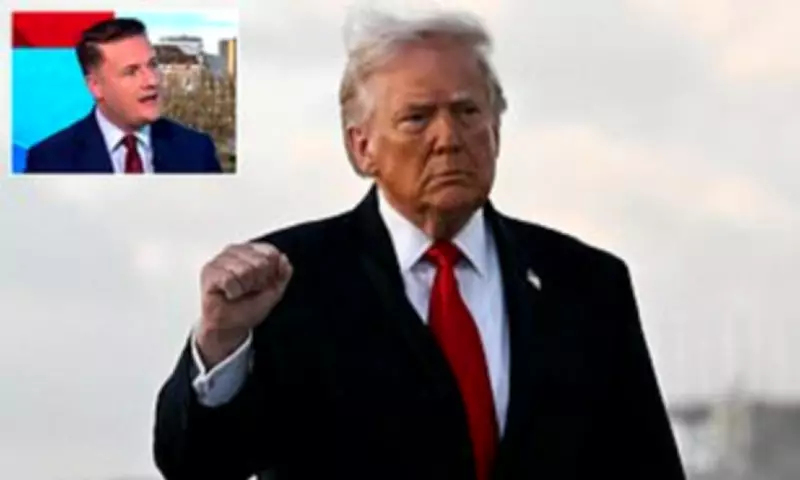
Labour's Wes Streeting Condemns Trump's 'Provocative' Iran Rhetoric But Urges Focus on Deeds
Labour's Health Secretary Wes Streeting has today described Donald Trump's social media posts regarding the Iran conflict as 'incendiary', 'provocative', and 'outrageous'. However, in a nuanced intervention, he suggested that the British public should largely ignore such rhetoric and instead judge the US President based on 'what he does, not just what he says'.
Expletive-Laden Threats and Failed Peace Talks
The comments follow a series of aggressive posts by President Trump on his Truth Social platform. In these, he vowed to bomb Iran 'back to the Stone Ages' if it did not end its blockade of the strategically vital Strait of Hormuz, using explicit language to order Tehran to open the waterway.
Despite a subsequent two-week ceasefire agreement between the US and Iran, hopes for a longer-term peace deal were dashed over the weekend. A marathon 21-hour session of peace talks, hosted by Pakistan, concluded in the early hours of Sunday without any breakthrough.

Speaking to Sky News, Mr Streeting labelled the lack of progress in Islamabad as 'obviously disappointing'. He acknowledged that the ongoing Iran conflict had 'strained' relations with the Trump administration, citing additional disagreements over issues like Greenland and the Chagos Islands.
Distinguishing Rhetoric from Reality in the 'Special Relationship'
Despite President Trump's regular criticism of the UK Prime Minister for not providing greater military assistance, Mr Streeting insisted the foundational 'special relationship' between Britain and America remains intact.
'You have to distinguish between some of the rhetoric which people might find shocking, and then the reality,' the Health Secretary stated. 'Over the course of the last week, President Trump has said some pretty bold – in 'Yes Minister' language – incendiary, provocative, outrageous things on social media. I think we've all come to learn that you judge President Trump through what he does, not just what he says.'
He emphasised the enduring partnership, noting shared democratic values and security interests. 'On so many other things our interests as the UK and the US are intertwined. We are old and close friends... So all of that work, all of that partnership continues to go on.'
Diplomatic Efforts and Economic Fallout
The diplomatic landscape remains complex. US Vice-President JD Vance is currently in Pakistan for continued negotiations. However, Tehran's reported refusal to commit to not building a nuclear weapon has cast further uncertainty over the fragile ceasefire.
Mr Streeting struck a pragmatic note on diplomacy: 'But as ever in diplomacy, you're failing until you succeed. So while these talks may not have ended in success, that doesn't mean there isn't merit in continuing to try.' He stressed the global interest in a sustainable resolution, given the war's impact on nations uninvolved in the conflict.
The economic consequences are already being felt in the UK. Chancellor Rachel Reeves has issued a stark warning that the war in Iran 'will come at a cost to British families and businesses'. Energy prices have surged sharply due to the ongoing closure of the Strait of Hormuz, a chokepoint that previously carried one-fifth of the world's oil.
In a piece for The Times, Ms Reeves wrote: 'These are not costs I wanted, but they are costs we will have to respond to.' She committed the government to taking action to support those most affected, while prioritising diplomatic efforts to reopen the Strait and stabilise energy supplies at upcoming IMF meetings.
The situation underscores the delicate balance the UK government is attempting to maintain: criticising inflammatory rhetoric from a key ally while working to preserve a crucial strategic partnership and mitigate the domestic economic fallout from a distant conflict.