Troubles-Themed Board Game Faces Widespread Condemnation from Victims' Groups
A controversial board game themed on the Northern Ireland Troubles has sparked significant outrage after being condemned by survivors' organisations for what they describe as "minimising the suffering" of conflict victims. The game, titled The Troubles: Shadow War in Northern Ireland, has drawn particular criticism for allowing players to adopt roles including paramilitary groups responsible for violence during the decades-long conflict.
Game Mechanics and Historical References Draw Concern
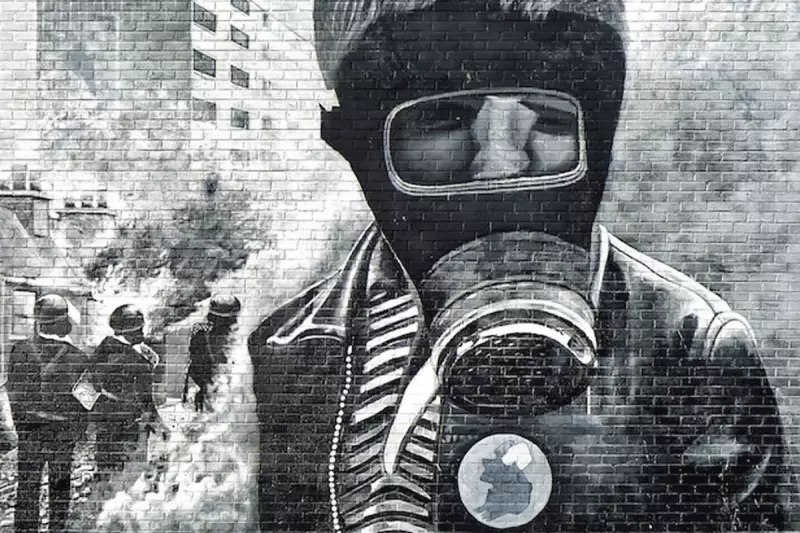
The board game presents itself as a card-driven simulation where participants can play as various factions active between 1964 and 1998. These include the British Forces, the IRA, Loyalist Paramilitaries, the Royal Ulster Constabulary, and prominent nationalist or unionist politicians. The game's main image features the famous Petrol Bomber mural from Derry's historic Free Derry Corner, while gameplay cards reference sensitive historical events and terms including "Bombing," "Nutting Squad," "Internment," and "Bandit Country."
One particularly contentious card references "Stakeknife," the notorious IRA mole linked to multiple murders and abductions, believed to be Belfast man Freddie Scappaticci. Players adopting paramilitary roles are given options to attack or collude with security forces, while political factions can choose to back terrorism, share power, or contest elections.

Survivors Voice Profound Concerns About Trauma and Trivialisation
Kenny Donaldson, director of the Northern Irish support group South East Fermanagh Foundation, expressed serious concerns about the game's potential impact. "There is significant potential for some victims/survivors to feel triggered by this new US-produced board game and many will feel that it has the effect of minimising their suffering," he stated. The organisation consulted with a cross-section of victims and survivors upon learning about the game's development.
Donaldson strongly disputed claims that the board game could serve educational purposes, noting the absence of trauma-informed approaches. "We engage with this work sensitively and in a trauma-informed manner. It is not evident that this has been the case with this particular board game 'education resource,'" he explained, highlighting the group's involvement in educational initiatives examining the Troubles through appropriate lenses.
Developer Response and Comparative Perspective
The game has been advertised for pre-sale by US developer Compass Games since 2021, originally priced at $85 with a planned 2023 release that has since been delayed. Following media reports, the game appears to have been removed from the company's website. Bill Thomas, founder and president of Compass Games, told The Guardian that the game remains in early development and requires extensive playtesting before any potential release.
Thomas defended the project as an educational tool, suggesting that "kids in their 20s and 30s in America know nothing about history" and that engaging formats are necessary to convey historical understanding. However, survivors challenged this perspective with a powerful comparison. "What would be the likely response of 9/11 families were these US producers to make a comparable board game about 9/11, with players being the FBI, a terrorist murdering pilot etc?" Donaldson asked, suggesting similar opposition would rightly emerge.
Historical Context and Contemporary Relevance
The Troubles refer to the ethno-nationalist conflict in Northern Ireland between the late 1960s and the 1998 Good Friday Agreement, which resulted in more than 3,400 deaths—over half of whom were civilians. The conflict's social repercussions continue to resonate in Northern Ireland today, making sensitive treatment of the subject particularly important for those directly affected.
As the controversy develops, questions remain about how historical conflicts should be represented in entertainment media, particularly when survivors and victims' families continue to live with the trauma. The board game's future remains uncertain as developers reconsider their approach amid mounting criticism from those most impacted by the events being simulated.