Trump's Imperial Presidency Culminates in Reckless Iran War
Emboldened by the absence of domestic constraints on his authority, Donald Trump grew intoxicated with the overwhelming military capabilities at his disposal. This recklessness has now culminated in an open-ended war against Iran, marking the zenith of his imperial presidency. The path to this conflict was paved by the collapse of accountability in Washington, where Trump has systematically dismantled checks and balances since reclaiming the White House.
Monarchical Aspirations and Power Consolidation
Trump has openly embraced comparisons to a monarch, declaring "LONG LIVE THE KING!" on social media and sharing AI-generated videos depicting himself as a crowned ruler. His administration has engaged in relentless self-aggrandizement, including plastering his name on government buildings like the Kennedy Center and planning to replace the White House's East Wing with a grand ballroom. Additionally, the National Park Service designated his birthday as a free-admission day, and the US Treasury plans to issue commemorative coins featuring his image for America's 250th independence anniversary.
In his drive to consolidate power, Trump has established a more dangerous version of the imperial presidency than any modern predecessor. By plunging the US into war with Iran, he has reached the peak of his ambitions, following a pattern of lawlessness that includes deploying troops in American cities, gutting federal agencies, attacking civilian boats in the Caribbean, and using law enforcement against political enemies—all with minimal resistance from Congress or the Supreme Court.

Erosion of Accountability and Ethical Safeguards
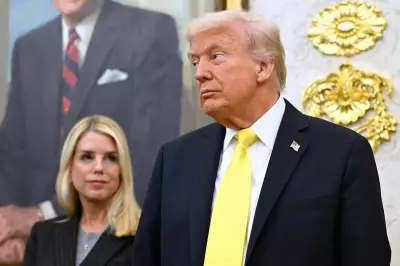
The collapse of accountability in Washington enabled Trump's reckless actions. Early in his second term, he issued numerous executive orders expanding presidential power and undermining congressional authority over spending and federal agencies. He weakened anti-corruption laws and ethical safeguards post-Watergate, firing 17 inspectors general and bypassing the Senate to appoint loyalists as top prosecutors. Trump also installed allies like Pam Bondi as Attorney General and Kash Patel as FBI director, transforming parts of the federal bureaucracy into tools for personal retribution.
Trump pressured the Justice Department to prosecute political opponents, such as New York Attorney General Letitia James and former FBI Director James Comey. While James won a civil fraud verdict against Trump, though a fine was later overturned, Comey's investigation into Russian interference in the 2016 election led to his dismissal. White House Chief of Staff Susie Wiles acknowledged these actions as "score settling," noting Trump's tendency to seize opportunities for retribution.
Supreme Court and Congressional Complicity
Trump's imperial approach has been bolstered by a compliant Supreme Court and Congress. The Court, with a conservative majority shaped by Trump's appointments, granted him substantial immunity from prosecution for official acts in a 6-3 ruling. Justice Sonia Sotomayor's dissent warned this could allow a president to act as "a king above the law," potentially enabling assassinations or coups without fear of prosecution.
Congress, led by Republicans fearful of alienating Trump's Maga base, has ceded authority over war powers and spending. They blocked Democratic resolutions to end the Iran attack unless Congress approved, unlike the 2003 Iraq invasion where George W. Bush sought congressional support. Trump launched the Iran war without making a coherent public case, despite campaigning on an "America First" platform opposed to foreign interventions.
Public Opposition and Historical Context
Historically, presidents enjoy a "rally around the flag" effect during military actions, with high public approval. For example, Bush had over 90% support after 9/11 and 70% before the Iraq war. However, Trump has failed to mobilize this in Iran, with polls showing about 60% of Americans oppose the conflict. This reflects public exhaustion with foreign wars and Trump's shifting justifications, highlighting his imperial view of himself as impervious to public opinion.

Trump's actions surpass even Richard Nixon's imperial presidency, as defined by historian Arthur Schlesinger Jr. While Nixon was restrained by Congress and the Supreme Court, Trump faces little such resistance today. His targeting of political enemies and unchecked power grab underscore a dangerous erosion of democratic norms, culminating in a war that risks further global instability.