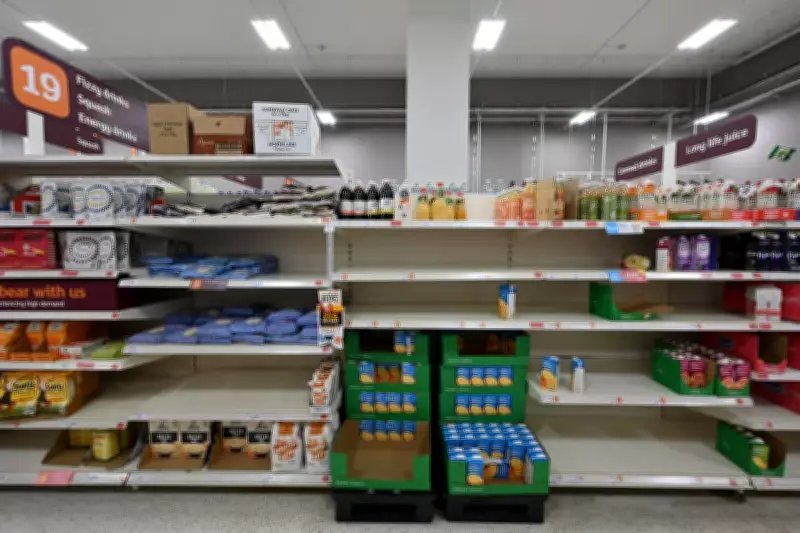
UK Government Engages in 'Worst-Case Scenario' Planning for Potential Food Shortages
The United Kingdom is actively preparing for potential shortages of key supermarket goods this summer should the ongoing conflict with Iran persist, according to a recently leaked government document. Officials have developed comprehensive contingency plans labeled as a "reasonable worst-case scenario", focusing particularly on the critical Strait of Hormuz shipping route and its potential closure.
Secret Exercise Reveals Government Concerns
The confidential analysis, first reported by The Times newspaper and codenamed "Exercise Turnstone", was conducted by the government's emergency committee known as Cobra. This planning exercise involved multiple government departments including Number 10 Downing Street, the Treasury, and the Ministry of Defence, all collaborating to assess the potential impact of the Iran war on British industry.
The scenario planning was based on the assumption that the Strait of Hormuz remains closed and no peace agreement has been reached between the involved parties. The analysis specifically warned that supplies of carbon dioxide (CO2) could potentially plummet to just 18 percent of current levels under these circumstances.

Critical CO2 Shortages Could Impact Multiple Industries
The potential CO2 shortage stems from two primary factors: a mechanical failure at a key UK production plant combined with high gas costs reducing ammonia and fertiliser production across Europe, processes that generate CO2 as a valuable by-product. This development could have severe consequences for several vital sectors of the British economy.
Farming and hospitality industries are identified as potentially the worst affected, as CO2 plays crucial roles in:
- Extending the shelf life of various foods including salads, packaged meats, and baked goods
- The humane slaughter process for pigs and chickens, with limited stockpiled supplies available
Additionally, breweries could face significant disruptions due to CO2's essential role in carbonating beverages, raising concerns about potential shortages coinciding with the upcoming FIFA World Cup tournament scheduled to begin in June.
Government Response and Reassurances
Business Secretary Peter Kyle addressed the leaked documents, stating that the public should feel "reassured" that ministers are actively developing contingency plans for the potential impacts of the Iran conflict. While acknowledging that such leaks are "very unhelpful", Kyle emphasized the government's proactive approach to scenario planning.
"When people do read it, they need to be reassured that we are doing this kind of planning, and we are doing this kind of scenario planning," Kyle stated. He contrasted the current administration's approach with previous government responses, noting that "the prime minister has been there since the very start, and he is going through personally and driving deep dives into lots of areas of resilience throughout our economy."
The Business Secretary highlighted his own early decision to reverse the mothballing of the Ensus bio-ethanol plant in Teesside to secure carbon dioxide supplies, demonstrating what he described as "creativity and boldness" in government action.
Contingency Measures Under Consideration
To prevent the reasonable worst-case scenario from materializing, ministers have reportedly developed several contingency plans including:
- Requesting factories to increase CO2 production to maximum capacity by temporarily halting other manufacturing processes
- Preparing emergency legislation that could compel factory cooperation, potentially passing through Parliament within days
- Relaxing competition laws to allow prioritization of limited CO2 supplies to critical areas including healthcare services
A government spokesperson confirmed: "We took decisive action last month to shore up the UK's critical supplies of CO2 by temporarily restarting the Ensus bioethanol plant in Teesside and are continuing to work closely with business groups to tackle the impacts of events in the Middle East."

The spokesperson further clarified that "reasonable worst-case scenarios are a planning tool used by experts and are not a prediction of future events," emphasizing the precautionary nature of the government's preparations.
Broader Implications and Critical Uses
While Kyle insisted that current CO2 supplies are "not a concern" for the UK, he acknowledged the substance's critical importance beyond food and beverage production. Carbon dioxide plays essential roles in medical applications including MRI scanning, water purification processes, civil nuclear power generation, and certain defense applications.
"There's lots of needs for CO2, so these are the reasons why I took it so seriously way back to six months ago, not just in the last few weeks," Kyle explained during a media interview, while encouraging the public to continue their normal consumption patterns for the time being.
The government's contingency planning reflects growing concerns about global supply chain vulnerabilities amid ongoing geopolitical tensions, with particular focus on maintaining essential supplies and economic resilience during potential international crises.