America's Loosening Grip: Inside the 17 April Guardian Weekly
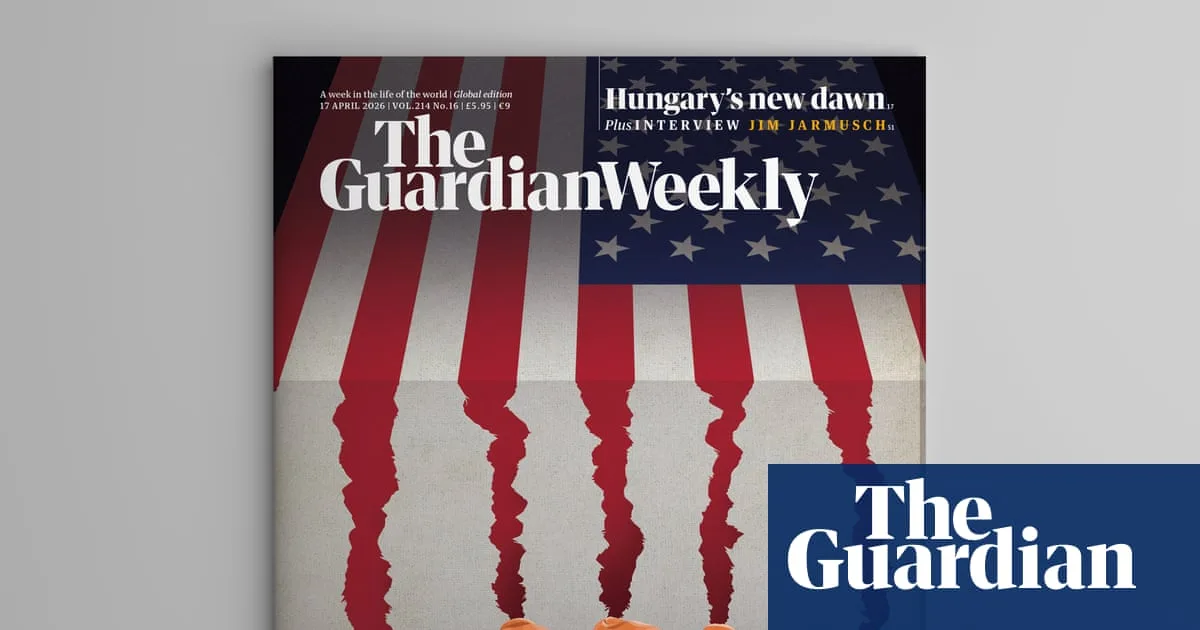
The cover of the 17 April edition of the Guardian Weekly magazine, illustrated by Pete Reynolds, sets the stage for a profound exploration of shifting global dynamics. This issue critically examines the decline of US hegemony, alongside Hungary's political transformation and other essential reads.
The Erosion of US Global Standing
In late 2025, Patrick Wintour penned a compelling essay for Guardian Weekly, describing an interregnum in global history where the rules-based order has eroded, and great powers are jostling for control. This week, Patrick returns to a key aspect: the deteriorating global standing of the United States. Following high-stakes brinkmanship with Iran, Donald Trump's aborted threat that Iranian civilization would "die ... never to be brought back" unless it ceded to his demands exposed the limits of his apocalyptic foreign policy. It also highlighted the broader decline of American influence, portraying the US as untrustworthy and strategically isolated in a complex world.
As negotiations to defuse the crisis and reopen the Strait of Hormuz remain uncertain, Patrick reflects on 21 frantic hours in Islamabad. Hundreds of diplomats from Iran and the US assembled and departed without reaching any agreement, underscoring the challenges in international diplomacy. Meanwhile, with US-UK relations under growing strain, columnist Simon Tisdall urges King Charles III to ditch protocol during his forthcoming visit to Washington. Instead, he should deliver hard truths to US representatives, advocating for a more candid and constructive dialogue between the allies.
Hungary's Political Dawn
Opponents of right-wing populism in Europe have reason for renewed hope this week. Hungary's election ended 16 years of Viktor Orbán's government, marking a significant political shift. Péter Magyar, leader of the Tisza party, spoke to the press after winning two-thirds of the seats in parliament, amid jubilant scenes in Budapest. However, questions remain: will his successor be much different? Ashifa Kassam and Flora Garamvolgyi report on this new dawn, analyzing the implications for Hungary and the broader European landscape.
Five Essential Reads in This Week's Edition
Spotlight | Hungary's New Dawn: After 16 years, Viktor Orbán's populist grip on Hungarian politics is over. But will Péter Magyar bring substantial change? This report delves into the aftermath of the election and its potential impacts.
Science | The Man Who Was Bitten by Snakes 200 Times – On Purpose: Tim Friede put his "ass on the line" to help stop snakebite deaths, which appear to be rising amid the climate crisis. Oliver Milman meets him to explore this daring mission and its public health significance.
Feature | The Brutal Reality of Life as a Foreign Student in the UK: British universities rely heavily on overseas applicants paying full fees, leading to unscrupulous recruiters and leaving many hopefuls and their families deep in debt. Samira Shackle investigates this troubling trend and its consequences.
Opinion | Netanyahu-ism Has Achieved Nothing for Israelis: Jonathan Freedland argues that Israeli voters will settle their Prime Minister's fate later this year, but all they have heard are hollow promises of "total victory." This piece critiques the current political rhetoric and its failures.
Culture | Jim Jarmusch, the Darling of Indie Cinema: At 73, Jim Jarmusch has been at the cutting edge of US independent movies since the 1980s. As his film Father Mother Sister Brother opens in the UK, he tells Amy Raphael about grief, greed, and "doing crazy shit" with Steve Coogan, offering insights into his creative journey.
What Else We've Been Reading
The celebrated Indian playback singer Asha Bhosle, known for Cornershop's 1997 hit Brimful of Asha, has died at age 92. With a career spanning almost eight decades and over 12,000 songs, Guardian global music critic Ammar Kalia provides a guide to 10 of her best recordings, showcasing her versatility from Bollywood soundtracks to collaborations with Boy George and Michael Stipe.
In sports, Marie-Louise Eta will make football history this weekend as the first woman appointed head coach of a men's team in one of Europe's top five leagues. Taking charge of Union Berlin in the Bundesliga, she aims to save the club from relegation, with Nick Ames explaining her role as a model of progress in the sport.
Other Highlights from the Guardian Website
Audio features explore North Korea's "most beloved daughter," while videos analyze Israel's plans for Lebanon in the 'Gaza playbook.' Galleries present space as the ultimate wardrobe challenge, offering diverse perspectives on global events and culture.
Readers are encouraged to share their thoughts on the magazine via email for letters or editorial feedback. Follow Guardian Weekly on social media for updates, and consider getting the magazine delivered to your home address for in-depth coverage of these and other topics.