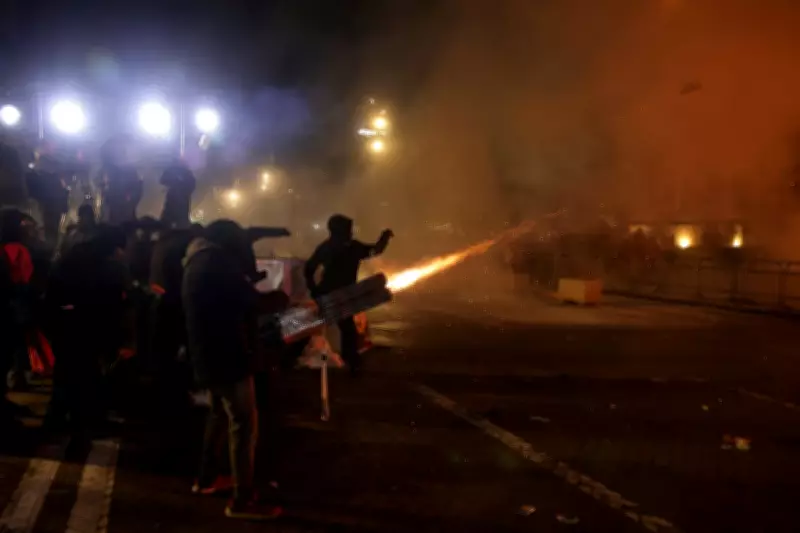
Violence erupted in the Albanian capital of Tirana on Tuesday night as riot police clashed with thousands of anti-government demonstrators. The protest, organised by opposition supporters, saw police fire tear gas and water cannons at crowds who responded by throwing Molotov cocktails and flares.
Demands for Government Resignation
The demonstration, the third of its kind in recent months, was driven by calls for the resignation of Prime Minister Edi Rama's government. Protesters are demanding accountability over corruption allegations involving Deputy Prime Minister Belinda Balluku, who also serves as minister for energy and infrastructure.
Corruption Allegations and Parliamentary Immunity
Anti-corruption prosecutors have accused Balluku of interfering in public procurement processes for construction projects to favour specific companies. They have called for her parliamentary immunity to be lifted, a move that requires a vote in parliament. Prime Minister Rama has resisted pressure to dismiss Balluku, despite growing demands from opposition parties and protesters.

More than 1,300 police officers were deployed to maintain security during the protest, which took place in central Tirana. Previous demonstrations have also turned violent, with similar confrontations between protesters and authorities involving projectiles and crowd control measures.
Political Figures and Analyst Perspectives
Opposition Democratic Party leader Sali Berisha, a former prime minister who has himself faced corruption charges, addressed the crowd, describing the event as a "peaceful uprising" at a critical juncture for Albania. He accused Prime Minister Rama of "declaring war on the justice system."
Political analyst Mentor Kikia offered a sceptical view on the protests' potential impact. "Citizens are distrustful, having consistently voted for the lesser evil to remove the greater evil from power," he said. Kikia added, "The current perception is that if Rama leaves, Berisha will return. One left power because of corruption, the other must also leave power because of corruption."
European Union Aspirations and Corruption Concerns
Albania's political turmoil comes as the country aims to join the European Union, with hopes of completing its accession process by 2027. The EU is closely monitoring Albania's progress, particularly regarding governance and anti-corruption efforts.
International watchdogs have repeatedly highlighted widespread corruption as a significant challenge for Albania. The ongoing protests and allegations against senior government figures underscore the persistent issues that could affect the country's EU integration prospects.