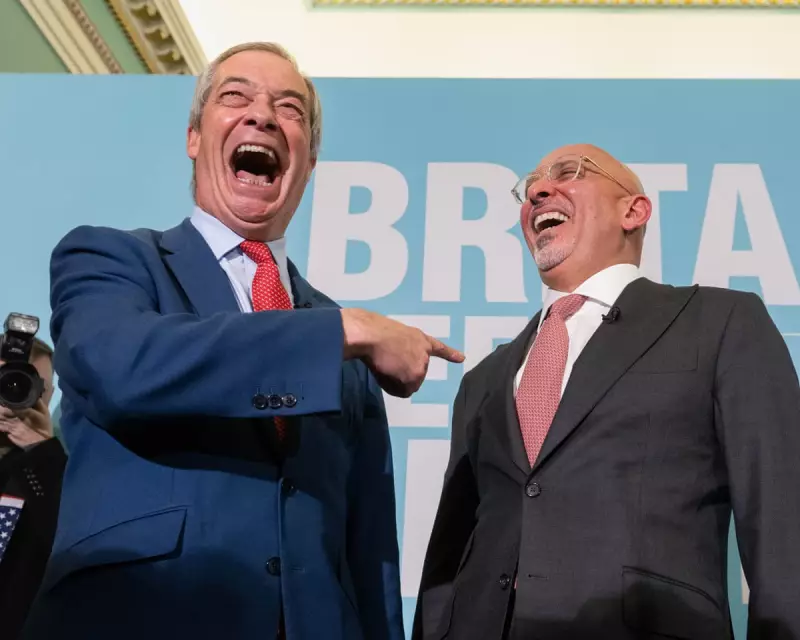
In a move that underscores the ongoing fragmentation of the British right, former Conservative Party chairman Nadhim Zahawi has officially defected to Nigel Farage's Reform UK. The announcement was made at a press conference in Central London, dealing a symbolic blow to the Tories and signalling Reform's intent to position itself as a home for disaffected Conservatives.
A High-Profile Defection for Reform UK
The defection of Zahawi, a former chancellor and a significant figure within the Conservative Party, represents a major coup for Nigel Farage. The event was staged at the Institute of Directors, where Farage presented his latest recruit. Analysts see this as part of a deliberate strategy by Reform to inflict maximum disruption on the Conservative Party while bolstering its own ranks with experienced, if controversial, politicians.
Zahawi, who lost his parliamentary seat in the 2024 general election, stated that he had allowed his Conservative membership to lapse in December. He positioned his move as a response to a country he claimed was "on its last legs," suggesting he had more to offer the national political scene. His defection follows other former Tory MPs like Lee Anderson, Andrea Jenkyns, and Danny Kruger in crossing to Reform.

Zahawi's Controversial Past and Political Rebranding
The former Stratford-on-Avon MP brings a baggage of political controversies with him. His career highlights, as noted by critics, include a £5 million tax settlement with HM Revenue & Customs, which came with a 30% penalty for carelessness. This occurred while he was in charge of the Treasury, leading to his sacking as Conservative Party chairman for a serious breach of the ministerial code.
His political judgement has also been questioned. Zahawi served as chancellor under Boris Johnson for a brief period before calling for his resignation. He backed Liz Truss's leadership, then Johnson again, before ultimately supporting Rishi Sunak. At the press conference, he appeared undeterred by past criticisms, presenting himself as a figure of immense calibre ready to serve the country once more.
Farage's Embrace and Unanswered Questions
Nigel Farage appeared protective of his new recruit, dismissing questions about Zahawi's past comments. In 2015, Zahawi had tweeted that Farage offered only division and that he "could never live in a country run by Farage." When confronted, Zahawi dismissed the remarks, claiming that after knowing Farage for "10 minutes," he could confirm there wasn't "a racist bone in his body."
Questions also arose regarding Reform's platform on vaccines, given Zahawi's former role as vaccines minister. The party has previously given a platform to medics promoting conspiracy theories linking the Covid vaccine to the King's cancer. Farage defended this as a matter of "free speech." When pressed on his tax affairs, Zahawi grew tetchy, labelling one question from a Daily Telegraph journalist as "stupid."
Strategic Implications for UK Politics
This defection is less a political bombshell and more a case of naked opportunism on both sides. For Zahawi, it represents a potential path to political relevance after losing his seat and reportedly being denied a peerage. For Farage and Reform, it serves a dual purpose: it wounds the Conservatives and helps alter the perception that Reform is merely a one-man band.
Farage's logic seems to be that there is no such thing as too many rats leaving a sinking ship, as they create their own momentum. The move consolidates Reform's position as a convalescent home for former Tory MPs whose careers have stalled, while simultaneously draining talent and morale from the Conservative Party. The long-term impact on the British political landscape, particularly on the right, remains to be seen, but the battle lines for the next electoral cycle are being drawn now.