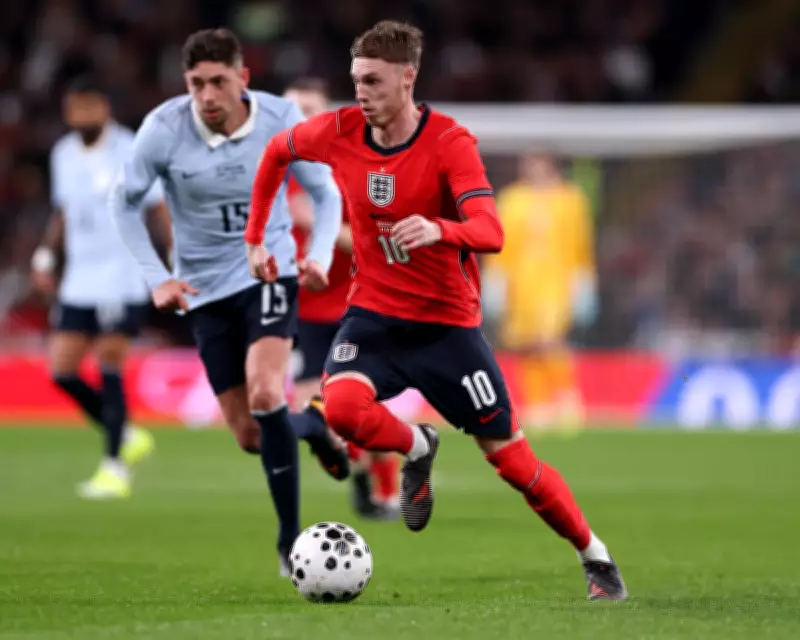
England's Football Reality Check: Are the Three Lions Simply Not Good Enough?
In the world of international football, England often finds itself under intense scrutiny, with fans and pundits alike dissecting every move, selection, and tactical nuance. Yet, amidst the endless debates, a simpler truth may be emerging: perhaps the Three Lions are not as formidable as we wish them to be.
The Dating Game of Football Analysis
Rationalising England's capabilities can feel akin to navigating the hyper-formalised dating scene of 1990s New York. We obsess over details, cling to what-ifs, and argue over the rules of engagement. Should there be a winter break? Should Jack Grealish be unleashed? What if all the No 10s played simultaneously? This frenzy mirrors the broader sports landscape, where outcomes prompt frantic retrospection, searching for hidden answers like a windsurfing dog in a magic eye picture.
Ultimately, Occam's razor often applies: the simplest explanation is usually correct. Just as the book Maybe He's Not That Into You suggested that romantic struggles might stem from lack of interest, England's tournament woes could boil down to a straightforward reality. Maybe agonising over managers, hotel choices, or tattoo selections misses the point. Maybe the team is simply not as good as we desire, perpetually falling short of greatness.

Assessing the Current Squad
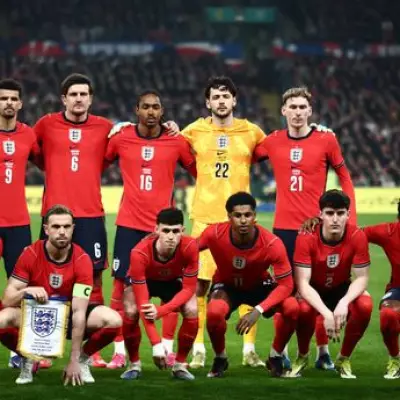
If the World Cup started tomorrow, England's likely starting XI would feature players like Jordan Pickford, Tino Livramento, Marc Guéhi, Ezri Konsa, Nico O'Reilly, Declan Rice, Elliot Anderson, Bukayo Saka, Morgan Rogers, Marcus Rashford, and Harry Kane. While this lineup is competent, it raises questions: is it truly a tournament-winning side, or merely a pretty good one?
The defence, though skilled, lacks players with league or European titles to their names. O'Reilly's talent is undeniable, but expecting him to contain Kylian Mbappé for 90 minutes is a tall order. The midfield lacks a dedicated holding player, and the debate over Kane's backup is becoming existential—should they even have one?
The squad feels flat, with no fresh A-list stars emerging since the last World Cup. Kane, Rice, Reece James, and John Stones remain the pillars, but injuries plague them. Saka appears fatigued, both physically and tactically, with limited variations in his play. Kane, despite his prowess, often seems to stagnate in tournaments, facing criticism for imperfection.
Zooming Out on Performance
England's record under Thomas Tuchel tells a sobering tale. They have faced only one top-tier opponent, Senegal, and lost at home. In 2024, against Fifa top-10 teams, they beat the Netherlands but lost to Spain and Brazil and drew with Belgium. Someone must occupy the fifth-best spot globally; perhaps this is England's natural level.
Even potential solutions like including Danny Welbeck or Trent Alexander-Arnold offer limited impact. Alexander-Arnold's creativity, with three assists and no goals this season, raises questions about fitting a maverick into an inconsistent team. The No 10 position, often seen as a talent hub, reveals cracks: Phil Foden has two goals in 45 games, and Rogers, while skilled, may not intimidate elite defences.
Roots of the Confusion
This uncertainty stems partly from unearned exceptionalism—the belief that England should always excel simply because they are England. The Premier League's hype exacerbates this, but being surrounded by stars doesn't make one a star. Against Uruguay, four starters were second-choice at their clubs, and four risk relegation. Compare this to France, with 12 Champions League players, or Spain's roster of cohesive technicians.
Glimmers of Hope
Opportunities persist. Jude Bellingham and Cole Palmer have limited games left this season but time to become attacking linchpins. Palmer, in particular, stands out as a creatively unpredictable asset, thriving against strong teams. In an alternate timeline, his performances in Euro 2024 and the Club World Cup could have made him central to England's plans.

Scaling back expectations is key. Tuchel, though an odd hire lacking international experience, understands English football and faces familiar challenges: the absence of a distinct English style, replaced by a hodgepodge of borrowed tactics. His vision of an assertive Premier League style clashes with this season's league reality, where players are good but not exceptional, and injuries loom large.
The Fundamental Relationship
Ultimately, success hinges on basic talent and the relationship between England and the ball. Do they connect? Is there mutual affinity? There's still time to assemble a functional squad—not 11 perfect players, but 11 suitable ones. As July in New York approaches, perhaps we'll wonder if this could finally be the real deal, but for now, a reality check is in order.