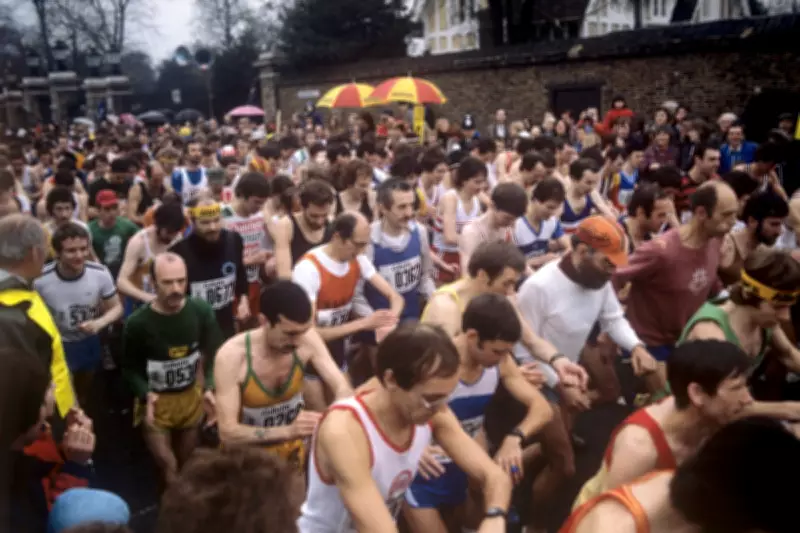
The First London Marathon: A Historic Day of Personal Triumphs in 1981
On March 29, 1981, a drizzly morning in Greenwich Park set the stage for a groundbreaking sporting event as just over 7,000 runners, predominantly male, embarked on the inaugural London Marathon. The 26.2-mile route stretched from Greenwich Park to Constitution Hill, watched by an estimated 100,000 spectators, marking the largest single sporting event ever seen in Britain at the time.
Victory and Camaraderie at the Finish Line
Inge Simonsen, a 27-year-old Norwegian, officially won the race with a time of 2 hours, 11 minutes, and 48 seconds, the fastest marathon time recorded in Britain for 11 years. In a remarkable display of sportsmanship, Simonsen and American runner Dick Beardsley crossed the finish line hand-in-hand, though Beardsley was awarded second place instead of a tie. The cheers from the crowd on Constitution Hill were polite but subdued as the leaders completed the course with ease.
At the other end of the spectrum, Bob Wiseman, a 78-year-old part-time storeman from Greenwich with 17 grandchildren and seven great-grandchildren, finished last in just over six hours. Despite his age and inexperience—having never run more than seven miles before—he completed the marathon proud and physically undistressed, joking that officials might have been "just being kind" when they told him others were still behind him.

The Inspiration Behind the Event
The marathon was inspired by Chris Brasher, the 1956 Olympic steeplechase gold medalist, who modelled it on the 11-year-old New York marathon. Brasher envisioned the event as a day where "the human race can be one joyous human family, working together, laughing together, achieving the impossible." However, the London version began as a more restrained British affair, with placards reading "Good luck, Mum" instead of New York's motivational banners.
The race started with the crack of a 25-pounder cannon and the roar of five police helicopters overhead, against a grey, Wagnerian sky. A spellbound silence fell over the crowd as they witnessed the massive bunch of runners, which took six minutes to fully pass the start-line. Conditions varied along the route: heavy rain at Greenwich, thick crowds at Tower Bridge forcing jostling, and easier going on the Isle of Dogs as the rain lifted.
Television Coverage and Public Reaction
Television coverage of the event was limited, with BBC-1 opting not to broadcast it live, instead airing an edited version that some critics felt diminished the scale of the achievement. Commentary included obscure remarks, such as Brendan Foster's statement about "a head-to-head confrontation," while an Irish banner near the finish line politicized the event with a message supporting hunger strikes.
Despite this, the "New York effect" Brasher hoped for materialized as first-time marathoners appeared, their faces reflecting cramp and concentration, prompting cheers from the crowd. The event evolved from a parade-like atmosphere into a significant race, with notable performances beyond the winners.
Notable Achievements and Records
Joyce Smith, a 43-year-old housewife from Barnet AC, won the women's race, finishing 138th overall out of an estimated 7,500 starters. She set a new British and Commonwealth record with a time of 2 hours, 29 minutes, and 56 seconds, improving her previous best by 31 seconds and dipping under 2 hours and 30 minutes for the first time. Though still over four minutes off the world record, her achievement provided a bright moment for sodden patriots.
Trevor Wright of Wolverhampton and Bilston was the first Briton to finish, coming in third but losing a minute to the winners over the last 10 miles. He noted the course had too many twists and turns for strict marathon standards, but overall conditions were excellent—soaking yet cooling.
In total, around 7,500 men and women participated, joining the select company of those who have achieved "a pointless but wonderful victory over doubt and fear, body and mind" by completing 26 miles and 385 yards. The first London Marathon was not just a race but a celebration of human endurance and personal triumph, setting the stage for an iconic annual event.