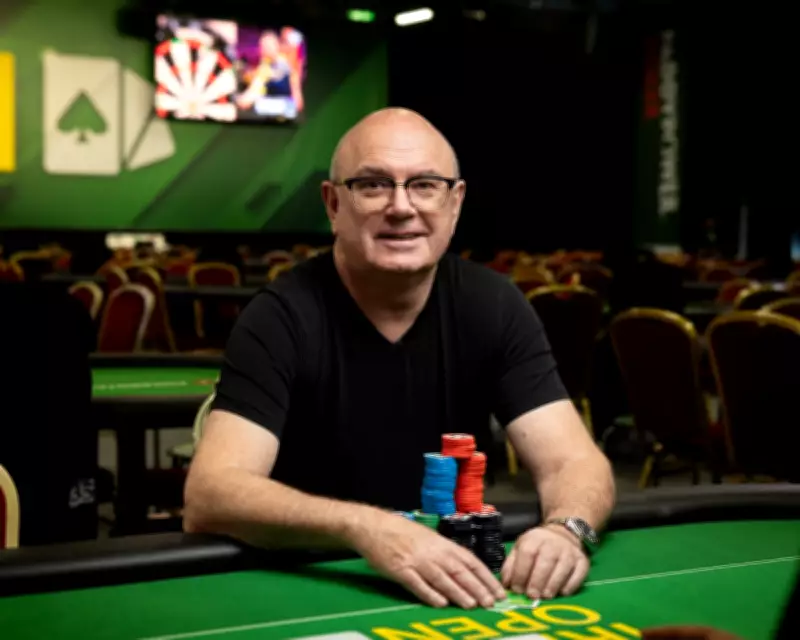
Gary Fisher's Remarkable Transition from Tech Executive to Professional Poker Player
At an age when many consider retirement, Gary Fisher embarked on a bold new career path, swapping the corporate world for the high-stakes tables of professional poker. Now in his sixties, Fisher has transformed a lifelong hobby into a lucrative profession, defying conventional expectations about age and vocation.
The Spark That Ignited a New Career
Fisher's journey began unexpectedly when his partner observed his natural aptitude for poker but noted his lack of formal study. "She pointed out that I was good but didn't put in the work," Fisher recalls. This casual remark prompted him to take the game seriously for the first time. He immersed himself in research, completed online courses, and hired a coach to refine his skills.
What started as recreational play quickly evolved into a professional pursuit. Fisher, who resides in London, now travels extensively to compete in international tournaments. This year alone, he has participated in events across Cyprus, Marrakech, Amsterdam, Tallinn, and Paris, with plans to continue to Melbourne.

Financial Success and Strategic Approach
Fisher's dedication has yielded impressive results. In 2024, he has already secured $200,000 (£150,000) in prize money, contributing to lifetime earnings exceeding $1.1 million. He currently ranks 755th globally and within the top 40 players in the United Kingdom. Fisher maintains meticulous records of every tournament, tracking his average hourly rate and return on investment with the precision of a seasoned analyst.
His approach to the game is methodical and disciplined. During tournaments, Fisher prioritises health and focus: he eats nutritiously, avoids alcohol, ensures adequate sleep, exercises regularly, and uses hydration salts during marathon sessions that can span 12 hours daily for weeks. "The mental demands are intense," he explains. "Every hour presents critical decisions that require complete concentration."
Beyond the Money: The Psychological Appeal
For Fisher, poker transcends financial gain. He describes it as a pursuit of recognition and mastery, akin to elite athletes striving for top rankings. "Like golfers who measure success through earnings but ultimately seek the number one spot, I want to be acknowledged among the best," he says. This drive fuels his ambition to secure a major title and achieve a million-dollar win.
Fisher's background in physics and software engineering informs his strategic mindset. He views poker not as a mere card game but as a complex interplay of mathematical reasoning, psychology, logical analysis, and pattern recognition. "It's about distilling intricate human behavior and game theory into actionable strategies," he notes, drawing parallels to his earlier work in simplifying complex systems.
Personal Growth and Life Lessons
The transition has fostered personal development, particularly in cultivating patience and discipline—qualities Fisher admits were not always his strengths. "I've learned to resist impulsive decisions, both at the table and in life," he reflects. This newfound resilience helps him navigate challenges, whether rebuilding dwindling chip stacks or addressing past mistakes in relationships and work.
Fisher's story challenges stereotypes about aging and career reinvention. From a childhood in Kingston upon Thames where he struggled with card games to becoming a respected professional player, his journey underscores the potential for transformation at any stage of life. As he continues to compete and refine his craft, Fisher embodies the adage that it's never too late to pursue one's passions.