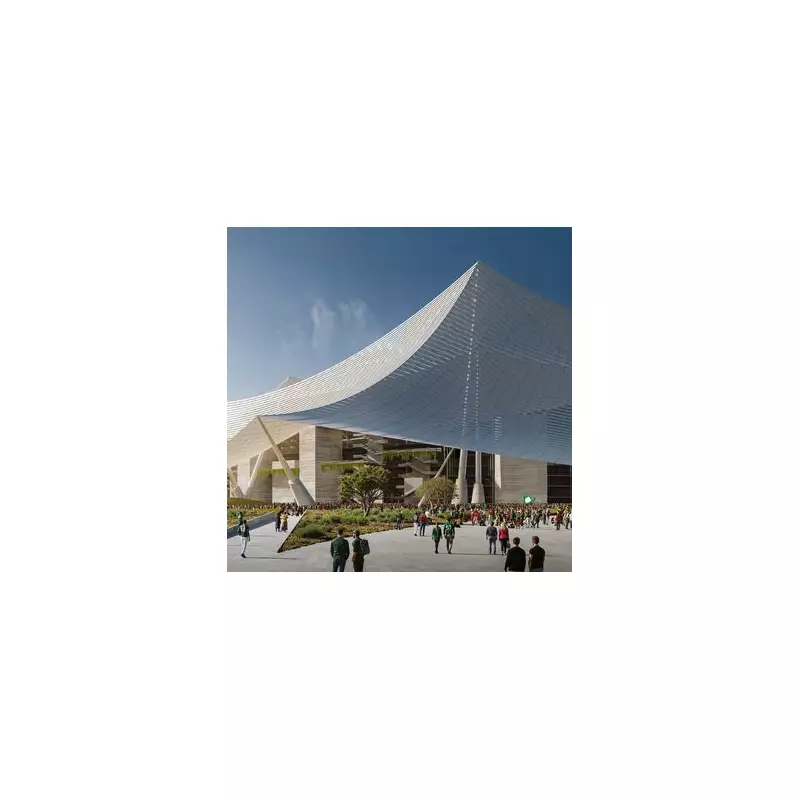
While the football world eagerly awaits the 2026 tournament, FIFA and host nations are already laying ambitious plans for the 2030 World Cup. A landmark project in Morocco is poised to become the centrepiece of that event, with designs for a colossal new stadium intended to host the final match.
A Stadium Fit for a Historic Final
The Grand Stade Hassan II in Morocco is projected to become the largest football-specific stadium in the world, boasting a staggering capacity of 115,000 spectators. This monumental venue is being designed with one clear goal: to be selected as the host for the ultimate match of the 2030 FIFA World Cup.
The 2030 edition will be a historic first, jointly hosted by three nations across two continents: Spain, Portugal, and Morocco. As the sole African co-host, Morocco is campaigning for the prestigious honour of staging the final in its new national arena.
Inspired Design and Natural Integration
Led by global architecture firm Populous, in collaboration with Oualalou + Choi, the stadium's design is deeply rooted in Moroccan culture. Its form takes inspiration from the traditional 'moussem' – a large social gathering – and resembles a giant, elegant tent set against a forested landscape near Casablanca.
The architectural team revealed that the stadium bowl will feature three tiers at each end, each holding up to 29,500 people. Between these ends, five further tiers will provide over 12,000 premium hospitality seats, including a dedicated Royal box.
A defining feature is its integration with nature. Elevated botanical gardens and greenery under a translucent roof canopy are designed to make fans feel they are in an oasis, not just a sports ground. "The gardens create an extraordinary spatial experience," the designers stated.
Groundwork Underway for 2030 Vision
Practical steps are already being taken to turn this vision into reality. Preparation for groundworks is underway on a vast 100-heatre site in the town of El Mansouria, in the Benslimane province approximately 38 km north of Casablanca.
This follows the approval of public financing for the project in October 2023. The stadium is being built to fully comply with all FIFA regulations for hosting a World Cup final.
Meanwhile, attention remains on the imminent 2026 World Cup across the United States, Canada, and Mexico, where the final will be held at New Jersey's MetLife Stadium on July 19. Yet, the development in Morocco signals a bold and breathtaking future for football's biggest stage four years later.