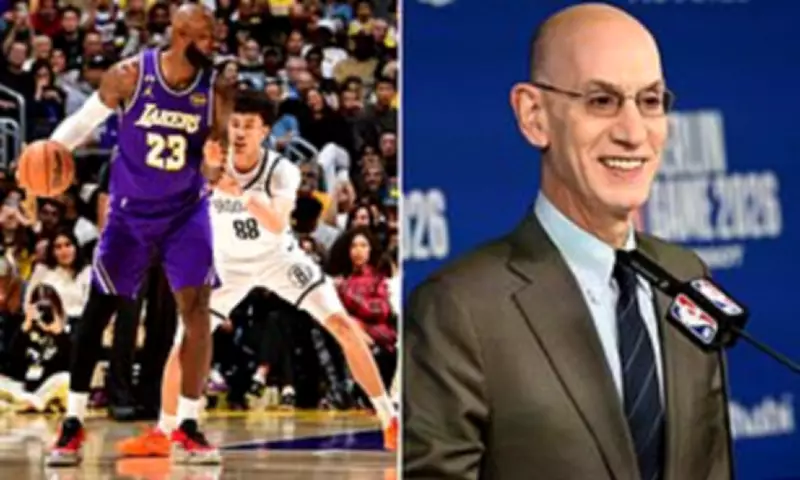
NBA Unveils Three Concepts to Combat Tanking in Draft Lottery System
The National Basketball Association has presented three distinct concepts aimed at deterring teams from the frustrating annual practice of intentionally losing games to improve their draft position. These ideas, which are not yet finalized proposals, were shared with the league's board of governors by NBA executives earlier this week in a concerted effort to finally address the scourge of 'tanking' that has long irritated basketball fans.
Commissioner Silver Calls for Urgent Action
NBA Commissioner Adam Silver stated on Wednesday that he anticipates a special meeting of team owners will be convened in May to vote on potential modifications to the lottery system. Silver vowed that the league is committed to resolving the tanking issue once and for all.
'I will say again, as I've said this before, this is not a new issue in this league,' Silver remarked this week. 'You can trace it back to the 1960s, when coin tosses were employed to determine the first overall pick, then to the 1980s, when the draft lottery was initially established. That lottery has undergone four revisions since then. It does not appear to be functioning optimally in its current state.'

Whatever changes are ultimately approved will not be implemented for this year's lottery, scheduled for May. Nevertheless, the announcement has generated considerable excitement among basketball enthusiasts on social media platforms.
Fan Reactions to Proposed Changes
Supporters have expressed widespread approval of the potential reforms. One fan commented: 'This makes a lot of sense. Tanking will now be less attractive.' Another posted: 'Tanking has somewhat ruined the sport. Something needs to be done to fix it.' A third wrote: 'Honestly this is a great move because watching teams lose on purpose just for a better draft pick is actually killing the fun of the game.'
Additional reactions included queries and exclamations such as: 'Does this finally force teams like the Wizards and Blazers to actually try to win games in March?' and 'Finally. No more teams quitting in February for ping pong balls.' Another fan celebrated: 'We are finally fixing the league! No more sitting stars in February. No more G-League lineups in April.'
Current Lottery Mechanics and Proposed Reforms
Under the existing system, the fourteen teams that fail to qualify for the NBA playoffs enter the lottery. A four-number combination drawn from ping-pong balls determines the order of the top four selections in the draft. The three teams with the poorest records each possess a fourteen percent chance of securing the number one pick, and none of the five worst-performing teams can fall below eighth in the lottery order. Odds for the remaining eleven teams diminish progressively, from twelve point five percent for the fourth-worst record to zero point seven percent for the fourteenth-worst.
Silver emphasized: 'Incentives need to be fixed. We will fix them. I'm looking forward to that.'
The proposed changes include scenarios where the ten teams missing the playoffs and the eight teams participating in the play-in tournament would all be eligible for the lottery. In one concept, the bottom ten teams would each have eight percent odds of winning, with probabilities decreasing from there. This could allow even the eighteenth-worst team, potentially a playoff participant, a one percent chance at the top pick.

Three Key Concepts Under Consideration
- Multi-Season Performance Model: Inspired by the WNBA lottery, which evaluates the worst teams over a two-season period rather than just the previous season, the NBA is contemplating a similar approach. This would incorporate a win floor, currently suggested at twenty-five victories per season, to eliminate incentives for complete failure. For instance, a team with thirty-one wins over two seasons would have identical odds to a team with exactly fifty wins during that span.
- Expanded Equal Odds: A second idea proposes that the five worst teams would each have eleven percent odds of winning the number one pick, replacing the current model where three teams hold fourteen percent odds. This model would also include pick protections to prevent the poorest teams from dropping too far in the draft order.
- Incentive Realignment: The overarching goal is to recalibrate incentives to discourage deliberate losing, ensuring competitive integrity throughout the entire season.
These concepts represent a significant step toward addressing a persistent issue that has undermined fan engagement and competitive fairness. The NBA's proactive stance signals a commitment to enhancing the sport's appeal and ensuring that teams remain motivated to compete at their highest level from start to finish.