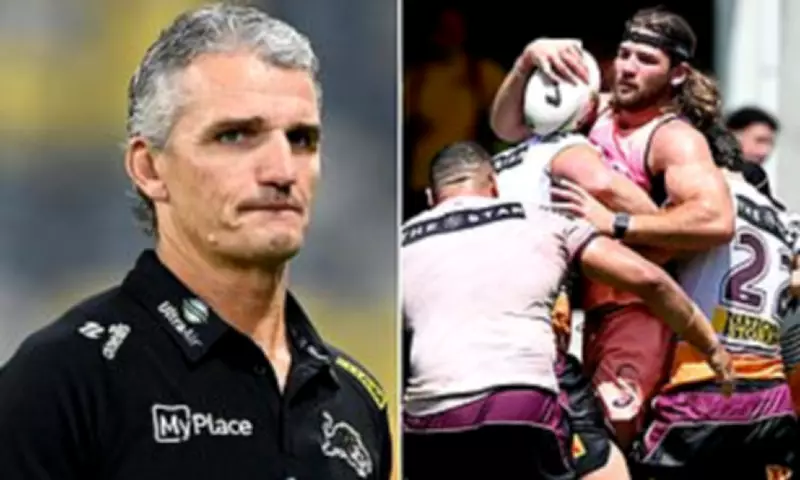
Penrith Panthers head coach Ivan Cleary has launched a scathing critique of the National Rugby League's newly implemented training guidelines, branding them as 'dangerous' for player safety. The NRL introduced strict caps on contact during training sessions at the start of the season, aiming to minimise injuries and concussions across all clubs.
NRL's Comprehensive Contact Training Restrictions
The league has mandated that players cannot exceed 100 minutes of contact training during a standard seven-day turnaround between matches. For shorter five or six-day turnarounds, this limit drops to just 50 minutes. These regulations explicitly include wrestling sessions, which form a crucial part of rugby league preparation.
Furthermore, the NRL has imposed additional safeguards: total contact training must not surpass 200 minutes weekly after Christmas, high-intensity contact sessions cannot occur on consecutive days, and no more than three consecutive days of contact training are permitted without a recovery day. These measures represent the league's latest effort in an ongoing campaign to address concussion concerns that have plagued contact sports globally.

Cleary's Controversial Counter-Argument
Despite these well-intentioned protocols, four-time premiership winning coach Ivan Cleary remains unconvinced about their effectiveness. He contends that controlled contact during training is essential for properly conditioning players to withstand the physical demands of match situations.
'I believe this approach carries significant risk because contact forms an integral part of preparation and conditioning,' Cleary asserted. 'The more frequently players experience these collisions in training, the better they become at absorbing them safely.'
The veteran coach warned of potential unintended consequences: 'If we excessively reduce contact in training, I fear matches could become more violent as players lose their familiarity with proper collision techniques. They simply won't be adequately prepared for weekend contests.'
Cleary revealed his club hasn't altered their contact training approach for the 2026 season, noting that most intensive contact work occurs during pre-season preparations. 'Once the competitive season commences, clubs naturally reduce contact levels anyway. Our historical data shows that as we've increased certain contact elements over years, our concussion rates have actually decreased significantly.'
Medical Community's Persistent Concerns
Neurologists and medical experts have long advocated for precisely these kinds of training restrictions. They argue that limiting contact exposure protects athletes not just from obvious concussions, but from the insidious effects of sub-concussive impacts that show no immediate symptoms.
Dr Rowena Mobbs, neurologist and founder of the Australian CTE Biobank, emphasises that these sub-concussive hits pose the greatest threat for developing Chronic Traumatic Encephalopathy (CTE) later in life. CTE is a progressive, degenerative brain disease linked to repeated head trauma, currently detectable only post-mortem.
The disease has been identified in several rugby league legends including Paul Green and Steve Folkes. Former Manly and Australian fullback Graham Eadie has spoken publicly about living with CTE symptoms, describing the challenges of comprehending later-life consequences from sporting injuries.
International Precedents and Domestic Resistance
World Rugby and the American NFL have maintained similar training restrictions for several years, while the Australian Football League continues to resist implementing comparable measures despite a coroner's 2023 recommendation.
Former Roosters and South Sydney premiership winner Luke Keary has been particularly vocal, arguing these restrictions should have been introduced years earlier. 'We should have reduced contact training five years ago,' Keary stated in 2023. 'The NFL has conducted extensive research in this area. I simply don't understand why we haven't followed their lead with proper studies and protective measures.'
The NRL's determination to safeguard players from head injuries reflects growing awareness about CTE's devastating long-term effects. However, Cleary's dissent highlights the complex balance between immediate player protection and adequate match preparation.

In related injury news, Penrith hooker Mitch Kenny underwent surgery this Tuesday for a broken ankle sustained during Friday's victory over the Dolphins. Medical staff anticipate a twelve-week recovery period for the key player.