Political Strife Casts Shadow Over T20 World Cup as England Emerge as Contenders
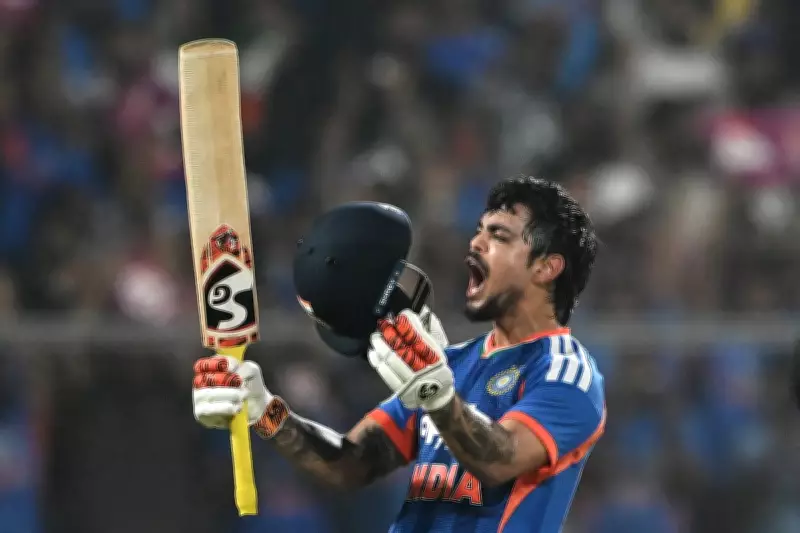
The 2026 T20 Cricket World Cup, co-hosted by India and Sri Lanka, has been plunged into unprecedented political turmoil, threatening to overshadow the sporting spectacle. Bangladesh has withdrawn from the tournament entirely, while fierce rivals Pakistan have announced a boycott of their scheduled match against India. This diplomatic crisis stems from escalating tensions between the nations, with cricket becoming a battleground for broader geopolitical conflicts.
England's Formidable Squad Amidst the Chaos
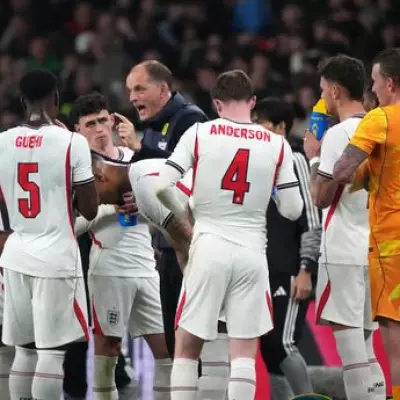
Amidst this backdrop of political unrest, England's cricket team appears remarkably well-positioned to challenge for glory. Under the leadership of Brendon McCullum, England have developed into a formidable T20 unit, winning 10 of their last 11 matches including a recent 3-0 series whitewash against Sri Lanka. Their opening partnership of Phil Salt and Jos Buttler is statistically the strongest in world cricket, providing explosive starts that have seen them post scores exceeding 300 runs against top opponents like South Africa.
The middle order, spearheaded by the talented Harry Brook, adds considerable firepower despite recent controversies. Brook found himself in hot water after an altercation with a nightclub bouncer that initially appeared to be a "terrible mistake" but later revealed involvement from teammates Jacob Bethell and Josh Tongue. Brook described the incident as "a challenging period" in his career, but his batting form remains undiminished.

Spin Strength and Bowling Concerns
England's spin department represents another significant strength, featuring the complementary pairing of Liam Dawson and Adil Rashid - one competent, the other exceptional. However, concerns persist around their seam bowling attack. While Jofra Archer remains a world-class performer, supporting bowlers Sam Curran and Jamie Overton struggled for control against Sri Lanka, conceding runs at 13 and 11.4 per over respectively.
With World Cup conditions expected to favour spin bowling, England are banking on their slower bowlers to shoulder the bulk of the workload, potentially minimizing exposure for their more expensive seam options. England, two-time T20 World Cup champions, find themselves in a group alongside fellow two-time winners West Indies, as well as Nepal, Scotland, and first-time qualifiers Italy.
The Political Storm Unfolds
The tournament's political crisis has multiple points of origin, but a significant flashpoint occurred when Bangladesh's star seamer Mustafizur Rahman was removed from the Kolkata Knight Riders' IPL squad on instruction from India's Board of Control for Cricket (BCCI). No official reason was provided beyond references to "recent developments" and "deteriorating diplomatic ties" between the nations.
These developments appear connected to events a month earlier when a Hindu man in Muslim-majority Bangladesh was accused of blasphemy and beaten to death by a mob. India's ruling Bharatiya Janata Party (BJP), which adheres to Hindu nationalist ideology, saw members label KKR owner Shah Rukh Khan - a Bollywood superstar and prominent Indian Muslim - as a "traitor" for signing a Bangladeshi player.
Institutional Connections and Diplomatic Fallout
The connections between cricket administration and politics run deep. Current India head coach Gautam Gambhir previously served as a BJP Member of Parliament, while the stadium hosting the World Cup final is named after sitting Prime Minister Narendra Modi. Following Rahman's removal, Bangladesh requested all their World Cup matches be moved from India to Sri Lanka citing security concerns, but the International Cricket Council (ICC) rejected this, deeming no "credible security threat" existed.
Bangladesh perceived this as double standards, noting that India successfully lobbied last year to have their Champions Trophy matches rescheduled from Pakistan to the UAE. The current ICC Chairman, Jay Shah, previously headed the BCCI from 2019-2024, and his father serves as Home Affairs Minister in the BJP government.

Financial Implications and Cricket Community Reaction
Pakistan's boycott of their match against India represents a significant financial blow to world cricket, as this fixture stands as the sport's most commercially lucrative encounter. The teams had previously agreed to play at neutral venues whenever one hosts an ICC event, but Pakistan has chosen to support Bangladesh's position by boycotting this specific match while participating in the rest of the tournament.
Cricket commentators have expressed grave concerns about the situation. Former England captain Michael Atherton described it as "a real crisis" that "might be a crisis that the game needs to shake it out of its stupor." Fellow commentator Nasser Hussain offered a more nuanced perspective: "I actually quite like Bangladesh sticking to their guns; they stood up for their player. And I quite like Pakistan sticking up for Bangladesh, and I know it's political, but at some stage someone's got to say enough with this politics, can we just get back to playing cricket?"
Tournament Favourites and Competitive Landscape
Despite the political distractions, India remain overwhelming favourites to claim the trophy, widely regarded as the world's best T20 team. As opener Phil Salt acknowledged: "I think everyone's going to need a bit of luck to beat India. I think they are by far and away the strongest team in the World Cup... but I am really excited by the idea that we get to come up against them in a World Cup in their backyard."
Behind India, the competition appears wide open, with England positioning themselves as "the best of the rest" in what Salt describes as "a mush of teams, all of whom can beat one another on their day." Tournament cricket, as Salt notes, "isn't easy" and requires "a bit of luck at the right time."
Scotland's last-minute inclusion as the highest-ranked team not originally qualified, replacing the withdrawn Bangladesh, adds another layer to an already complex tournament narrative. As cricket prepares to begin amidst this unprecedented political storm, the sport finds itself at a crossroads where geopolitical tensions have fundamentally altered the competition landscape.