Ukrainian War Veterans Make History in World's First Double-Amputee Boxing Bout
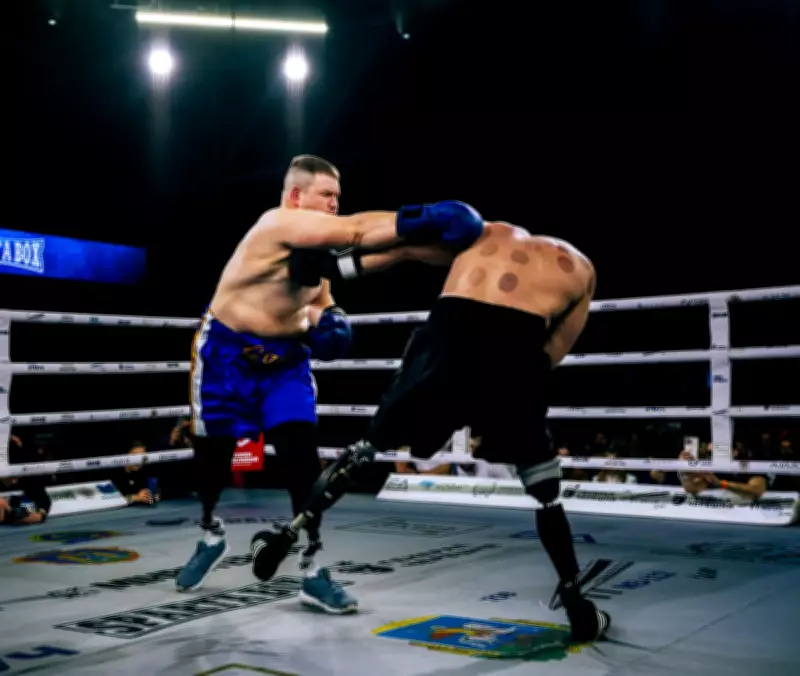
In a remarkable display of resilience and determination, two Ukrainian war veterans faced off in what organisers have hailed as the world's first competitive boxing match between double-amputee fighters. The historic bout took place on Saturday in Brovary, a town just outside Kyiv, drawing attention to the power of adaptive sports in post-conflict recovery.
A New Rhythm in the Ring
Footwork is often cited as a decisive factor in boxing, but for Artem Khrebet and Mykhailo Drobotenko, this took on a profound new meaning. Over three intense two-minute rounds, the heavyweight fighters navigated the ring on prosthetic legs, with movement measured and each step carefully placed to maintain balance. Unlike traditional bouts, there was less circling, yet the exchanges were familiar to any boxing enthusiast, with jabs flicking out and short combinations delivered in bursts.
The event was not without its challenges. Earlier in the day, the crowd was forced to evacuate the arena due to an air raid alert as Russia continued its attacks on Ukraine. Upon their return, spectators witnessed something unprecedented, initially unsure how to react. However, they soon erupted into roars of support, not just for the punches thrown, but for the fighters' unwavering spirit in rising to the occasion.

Personal Stories of Sacrifice and Strength
Artem Khrebet, known by his military call sign Grizzly, lost both legs in the Luhansk region during the early months of Russia's full-scale invasion in 2022, when he came under artillery fire. At the weigh-in before the fight, he stood topless, his arms thick with muscle, and declared, "I am boxing to remind people that, whatever happens, Ukraine and its people will get through this." He emphasised that veterans do not seek pity, stating, "We don't want pity. Even after serious injuries like mine, life goes on. Give us the opportunity and the resources, and we'll do the rest."
Mykhailo Drobotenko, a former member of Ukraine's special forces, lost his legs after stepping on a mine. He explained his motivation for participating, saying, "I wanted to test myself and show other guys, my fellow veterans, that despite serious injuries, you can keep living and improving." Both men described the gruelling months of preparation, highlighting the unique challenges of boxing on prosthetics, where balance and power generation rely more on core strength than leg movement.
The Role of Boxing in Rehabilitation and Mental Health
Ukraine faces a daunting task in rehabilitating the wounded after years of conflict, with estimates suggesting over 100,000 people have lost limbs since the invasion began. Speaking from ringside, Scott Welch, a former British heavyweight champion, advocated for boxing as a tool to aid veterans' recovery. For more than a decade, Welch has promoted adaptive boxing, often practised from wheelchairs, and noted, "Ukraine has so many veterans starting a new life, a new chapter. Boxing builds their confidence and helps their minds. It lets them feel invincible and put on a great show."
Khrebet and Drobotenko both attested to the psychological benefits of the sport. Khrebet, who has been open about his mental health struggles post-injury, shared, "Training helped quiet everything else. It offers focus, structure, and some sort of sense of normality. There are moments when you even forget that you don't have legs any more. It's therapy for me." The camaraderie between the fighters was evident, with none of the usual trash talk at the weigh-in, yet a clear competitive drive once the bout began.
The Fight and Its Aftermath
Igor Faniian, the fighters' coach who helped organise the event, explained that adaptive boxing typically avoids emphasis on winning or losing, but the veterans insisted on a competitive edge. "Both are champions in life. Only one will take the belt," he said. In the third round, Drobotenko began to lose his footing more frequently under Khrebet's punches, a consequence of having lost his legs higher up, which affected his centre of gravity. When the final bell rang, Khrebet was declared the winner, claiming the Ukrainian veterans' championship belt.

In the changing room afterward, Drobotenko showed no signs of defeat, instead focusing on the future. "I'm asking for a rematch," he stated firmly. "I'm not done with him yet." This historic bout not only highlighted the fighters' personal triumphs but also underscored the broader potential of adaptive sports in fostering resilience and community among Ukraine's veteran population.