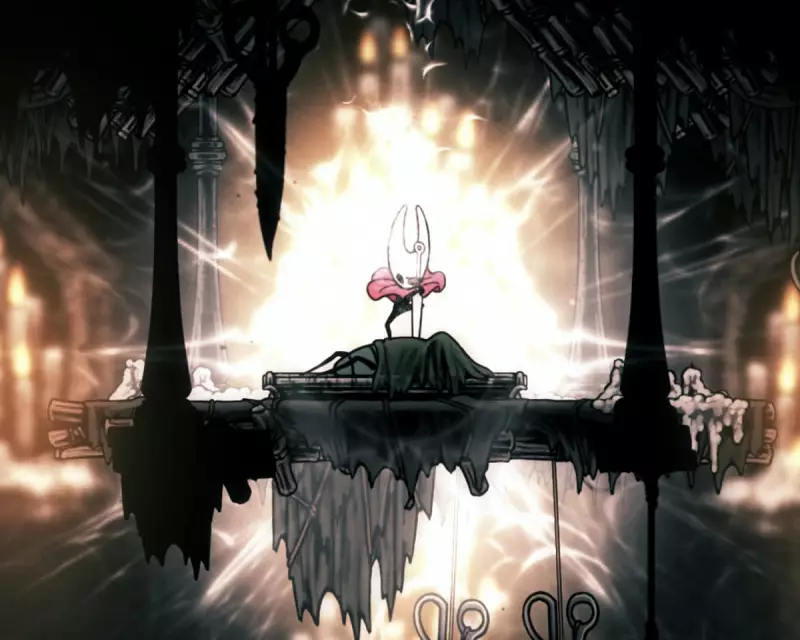
When the long-awaited video game Hollow Knight: Silksong finally launched last summer, I faced a painful paradox. I was in the grip of a debilitating nerve condition that made even simple tasks agonising, yet I was desperate to play one of the year's most challenging releases. Could this digital trial by fire teach me anything new about enduring real-world suffering?
A Personal Pilgrimage Through Pain
My own ordeal began in March, when excruciating, burning pain erupted in my right arm and shoulder. Diagnosed months later as brachial neuritis – an inflammation of the nerve pathway from neck to hand – the condition offered a grim prognosis. A neurologist advised that recovery could take one to three years, with little effective treatment for the pain in the interim. Traditional medications were useless for nerve pain, and specialised drugs left me with unbearable side-effects. I had to learn to live with a constant, humming discomfort that lacerated my mental wellbeing and stole simple pleasures like playing guitar or gaming.
Into this landscape of personal struggle dropped the release of Silksong. Developed by the Australian studio Team Cherry, this sequel to 2017's beloved Hollow Knight had been mythologised through years of eager anticipation and online memes. Its arrival presented a cruel test: a game famed for its difficulty, released when my physical capacity was at its lowest.

Pharloom: A Digital Purgatory
Silksong casts players as Hornet, a masked spider in a crimson cloak, navigating the fallen, bug-infested kingdom of Pharloom. The journey is a stark, beautiful nightmare, mirroring Dante's ascent from hell to heaven. From the shanty-town outpost at the kingdom's foot, you climb through luminescent caverns, moonlit temples, and wind-blasted wastes towards the gleaming Citadel – a promised paradise for generations of pilgrim bugs.
Yet, this is a world poisoned. Its inhabitants, cute but dead-eyed, cower in settlements, blankly accepting their fate. The path is barred by feral beasts and corrupted priests, battles demanding dozens of attempts. The ultimate revelation is bitter: the Citadel, once reached, is also fallen. The promised heaven is hellish, rendering the pilgrims' suffering pointless. The game's true challenge unfolds beyond its grand gate, in deeper, more punishing realms like the roiling furnace below or the pitiless ice mountain.
Hornet, imbued with the divine silk that holds Pharloom in thrall, is a beacon of clarity and compassion. She fights with needle, boomerang, and poison, but each victory merely unveils another battle. The world feels obsessively detailed and eerily indifferent to the player's presence; a realm rotting independently, where Hornet is often met with suspicion, not salvation.
Playing Slowly, Learning to Listen
Hampered by pain, my pilgrimage could not be rushed. Where I might have completed the game in weeks previously, it took four months of playing in 20 to 40-minute sessions. The stress and adrenaline of a difficult game were at odds with managing my nervous system. This forced slowness, however, transformed Pharloom into a parallel dimension I inhabited both on my Nintendo Switch and in my mind. I would puzzle over pathways and boss patterns long after I'd stopped playing.
This protracted engagement revealed the game's profound, sometimes sadistic, nature. Areas like the fetid Bilewater, a parkour nightmare over maggot pools, brought me to tears. Yet, giving up felt alien. In a life already defined by suffering, choosing to endure the game's punishment offered a strange sense of control. It stood in stark contrast to the lessons of typical difficult games, which preach that tenacity and skill guarantee victory.
Pain does not work that way. Nerves cannot be bullied into healing faster. I had to unlearn the gamer's ethos of relentless effort and instead learn to act slowly, acknowledge limitations, and modify my life without guilt. As I played, I delved into modern pain science, discovering that acknowledging pain – listening to the brain's danger signal rather than ignoring it – is the first step to living with it.

After 40 hours over four months, I neared the end, locked in a final boss battle since before Christmas. While I'd hoped for a neat, symbolic victory before 2026, the real lesson was messier. Silksong helped me see that suffering doesn't require a tidy narrative of redemption. The point isn't to overcome it through force of will, but to learn to work around it, to make your way through. You can keep on playing.