UK Government Prepares Emergency Alert System Amid Chinese Rocket Descent
The United Kingdom is taking precautionary measures by readying its national emergency alert system, as concerns mount over an uncontrolled Chinese rocket expected to plummet to Earth later today. The experimental Zhuque-3 rocket, launched by private space firm LandSpace in early December, is now predicted to crash into the atmosphere this afternoon, prompting authorities to ensure mobile networks are prepared for potential warnings.
Timeline and Trajectory Predictions
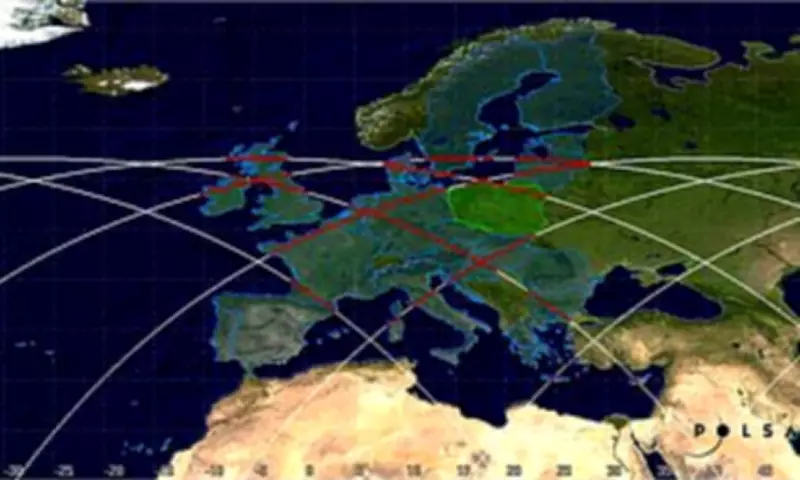
According to The Aerospace Corporation, the rocket is forecast to re-enter Earth's atmosphere at approximately 12:30 GMT today, with a margin of error of plus or minus fifteen hours. However, significant uncertainty remains, as the European Union's Space Surveillance and Tracking agency suggests an earlier re-entry time of 10:32 GMT, plus or minus three hours. This discrepancy highlights the challenges in predicting the exact trajectory of space debris.
Professor Jonathan McDowell, an astronomer from the Harvard-Smithsonian Center for Astrophysics and an expert on space debris tracking, provided further insight to the Daily Mail. He stated: 'The latest prediction is that it will re-enter between 1030 and 1210 UTC. During that time, it will go once around the Earth. It will pass over the Inverness-Aberdeen area at 1200 UTC, so there's a small – a few per cent – chance it could re-enter there, otherwise it won't happen over the UK.'

Government Assurance and Routine Readiness
A UK government spokesperson emphasised to the Daily Mail that the likelihood of debris entering UK airspace remains extremely low. The spokesperson explained: 'It is extremely unlikely that any debris enters UK airspace. As you'd expect, we have well rehearsed plans for a variety of different risks including those related to space, that are tested routinely with partners.'
The government has clarified that the request to mobile network operators to verify the emergency alert system's functionality is a standard procedure. This readiness check does not indicate that an alert will necessarily be issued, but rather forms part of routine preparedness exercises for various potential hazards, including those originating from space.
Details of the Falling Rocket
The Zhuque-3 rocket, designated ZQ-3 R/B, was launched from the Jiuquan Satellite Launch Center in China's Gansu Province on December 3, 2025. While it successfully achieved orbit, its reusable booster stage, designed similarly to the SpaceX Falcon 9, exploded during its landing attempt. Since then, the upper stages and a large metal tank serving as a dummy payload have been gradually descending from orbit.
With an estimated mass of eleven tonnes and measuring between twelve and thirteen metres in length, the EU's Space Surveillance and Tracking agency has classified the ZQ-3 R/B as 'quite a sizeable object deserving careful monitoring.' Its shallow re-entry angle further complicates precise predictions about where any surviving fragments might land.
Historical Context and Growing Risks
Incidents of space debris re-entering Earth's atmosphere are not uncommon; debris passes over the UK approximately seventy times each month. The vast majority of this material burns up due to atmospheric friction. However, larger pieces or fragments made from heat-resistant materials like stainless steel or titanium can occasionally reach the ground, typically dispersing over oceans or uninhabited regions.
This is not the first instance involving Chinese rocket debris. In 2024, fragments from a Long March 3B booster stage landed mere metres from residential homes in China's Guangxi province, resulting in a dramatic fireball. Such events underscore the persistent, albeit low, risks associated with space activities.

Researchers are increasingly warning about the escalating dangers posed by space junk. A recent study from the University of British Columbia suggests a ten per cent probability that one or more individuals could be killed by falling debris within the next decade. Additionally, concerns are growing about threats to aviation, with a twenty-six per cent chance of debris intersecting some of the world's busiest air corridors in any given year. A 2020 study projected that the risk of a commercial aircraft being struck could rise to approximately one in one thousand by 2030.
Understanding Space Debris
Space junk encompasses an estimated 170 million pieces of residual material from space missions, ranging from spent rocket stages to minuscule paint flakes. Orbiting alongside approximately $700 billion worth of space infrastructure, only around 27,000 of these objects are actively tracked. Travelling at speeds exceeding 16,777 mph, even small fragments can cause significant damage to satellites and other spacecraft.
Two major incidents have notably exacerbated the space debris problem:
- In February 2009, an accidental collision occurred between an Iridium telecommunications satellite and Russia's Kosmos-2251 military satellite.
- In January 2007, China conducted an anti-satellite weapon test on an obsolete Fengyun weather satellite.
Particularly congested areas include low Earth orbit, utilised by navigation satellites, the International Space Station, and the Hubble telescope, and geostationary orbit, home to communications, weather, and surveillance satellites that maintain fixed positions relative to Earth.
While the immediate threat from the descending Zhuque-3 rocket is minimal, the event highlights the ongoing challenges and necessary vigilance regarding space debris management and public safety preparedness.