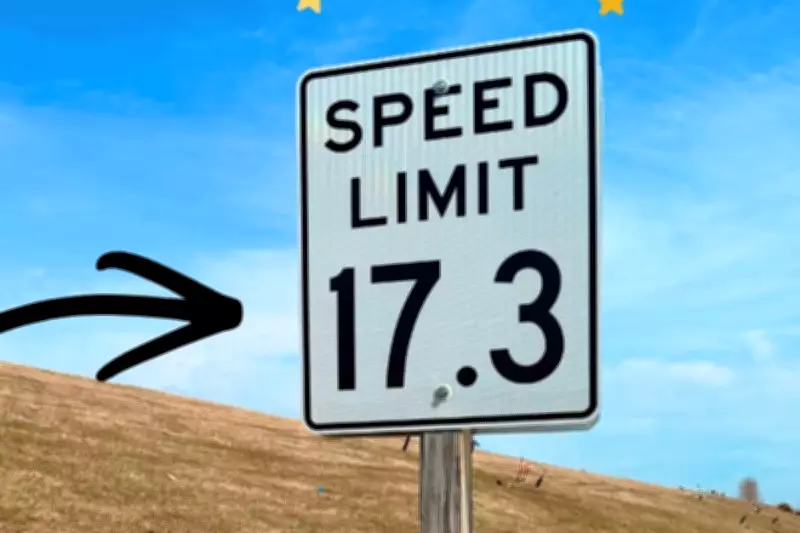
A road in Wisconsin has introduced a decimal point to its speed limit, aiming to make drivers think twice before accelerating. The Outagamie County Recycling and Solid Waste facility in Appleton, located 107 miles north of Milwaukee, announced on Monday that the speed limit within the facility is now set at 17.3 mph.
Why 17.3 mph?
The facility explained in a Facebook post that the unusual number is intended to make drivers "pause." "It makes you look twice. And most importantly, it breaks that 'autopilot' feeling we can all fall into when driving familiar routes," the post stated. The facility provides recycling and landfill disposal services and sees heavy traffic daily from haulers, contractors, and nearby residents.
Safety First
"With so much activity, staying alert is key to keeping everyone safe," the post continued. "This small change is a big reminder: Slow down, stay aware, look out for one another." The facility emphasized its goal: "We want every single person to have a safe visit and make it home at the end of the day." The post included an image of the new sign, though the previous speed limit was not disclosed.

Social media users reacted with humor and approval. One commented, "Worked last weekend when I was there. Made us laugh." Another joked, "Whatever you do DO NOT do 17.4 or the police car emoji gonna on yo tail!!" A third added, "I like it!! Pay attention. Safety First!"
Not the First Unusual Speed Limit
While such specific speed limits are rare, they are not unprecedented. A sign reading 8.2 mph at a shopping center in Colorado Springs, Colorado, has puzzled social media users for years, with one Reddit user quipping, "If you go 8.21 mph you may be executed." Another example is at Opry Mills Mall in Nashville, Tennessee, where the limit is 24 mph instead of the typical 25.
Despite the intent to slow drivers, a 2024 study by Minnesota's state and local transportation agencies found that lowering posted speed limits does not necessarily reduce speeds. The study, conducted in St. Louis Park, analyzed driver speeds before and after reductions on several roads. "The analysis showed drivers may not respond immediately to a posted speed change," said lead researcher Gary Davis. "But it's a good start to a longer-term evaluation to see if the speed control policy objectives will be met."