

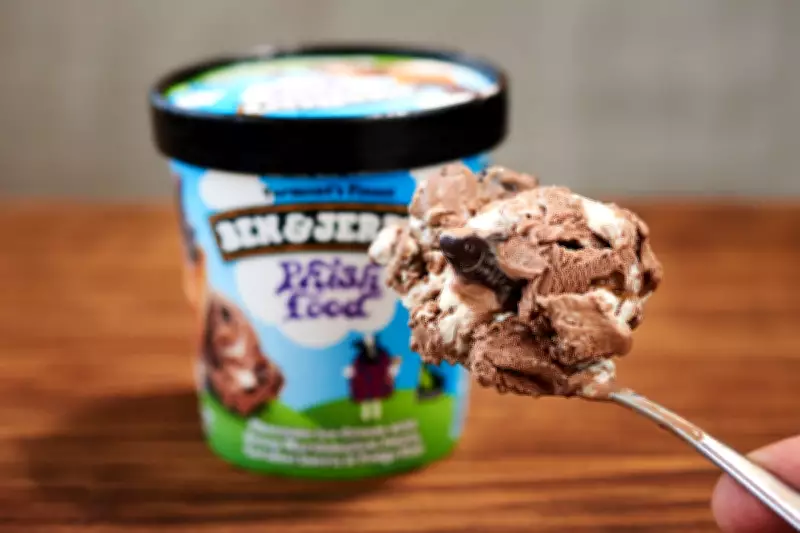
Ben & Jerry's Owner Dismisses Dispute as 'Noise' Amid Significant Profit Decline
The Magnum Ice Cream Company (TMICC), which became an independently listed entity in December after demerging from Unilever, has downplayed its ongoing dispute with Ben & Jerry's as mere "noise." This comes as the world's largest ice cream company revealed a sharp 49% drop in net profit for 2025.
Governance Row and Social Mission Tensions
The conflict with Ben & Jerry's has intensified in recent months, highlighted by co-founder Jerry Greenfield's departure in September after nearly five decades. Greenfield argued that the brand lost its independence when Unilever curtailed its social activism initiatives. The founders, who established Ben & Jerry's with a mission for social good, had previously secured an agreement with Unilever to ensure the brand's autonomy, including an independent board.
They subsequently launched a campaign to "free" Ben & Jerry's from the separated ice cream group, advocating for renewed independence. This governance dispute culminated in the removal of several board members at the end of last year, further straining relations.

Financial Performance and Strategic Outlook
TMICC reported a net profit of 307 million euros (£225 million) for 2025, a decline of nearly 49% compared to the previous year. This decrease was partly attributed to separation and restructuring costs, which increased by 118 million euros (£86 million). Revenues remained stable at 7.9 billion euros (£5.8 billion), though foreign exchange movements had a negative effect.
Despite the overall profit slump, sales grew by 2.7% in Europe, Australia, and New Zealand, driven by strong performances in the UK, France, and Spain. Brands such as Magnum, Ben & Jerry's, and Cornetto contributed to this growth, supported by innovative product launches like Cornetto Max and portion-control options such as Magnum Bonbons and Ben & Jerry's Peaces.
Leadership's Stance on Ben & Jerry's Future
TMICC Chief Executive Peter ter Kulve emphasized that the company has "no intention" to sell Ben & Jerry's, describing it as an "important and very successful part of our portfolio." He noted that TMICC has invested more in the brand's social mission than in its acquisition, asserting that the dispute is "well-known, it's priced in, and basically has no impact on the larger company."
Ter Kulve reiterated his view that the controversy is largely inconsequential, stating, "In many ways, as I've said before, it's noise."
Unilever's Post-Demerger Performance
Separately, Unilever released its full-year financial results, reporting a turnover of 50.5 billion euros (£37 billion), down 3.8% from the prior year. The company stated that demerging the ice cream business has enabled it to become a "simpler, sharper, and faster" organization with a clearer strategic focus.
Unilever continues to own a portfolio of household brands, including personal and home care products like Vaseline, Dove, Radox, and Persil, as well as food brands such as Hellmann's, Marmite, Colman's, and Pot Noodle. On an underlying basis, excluding one-off costs like foreign exchange impacts, sales grew by 3.5% year-on-year, with sales volume increasing and prices rising by 2%.
This growth was achieved despite a slowdown in sales activity in the US and European markets towards the end of the year, highlighting the challenges in the consumer goods sector.






