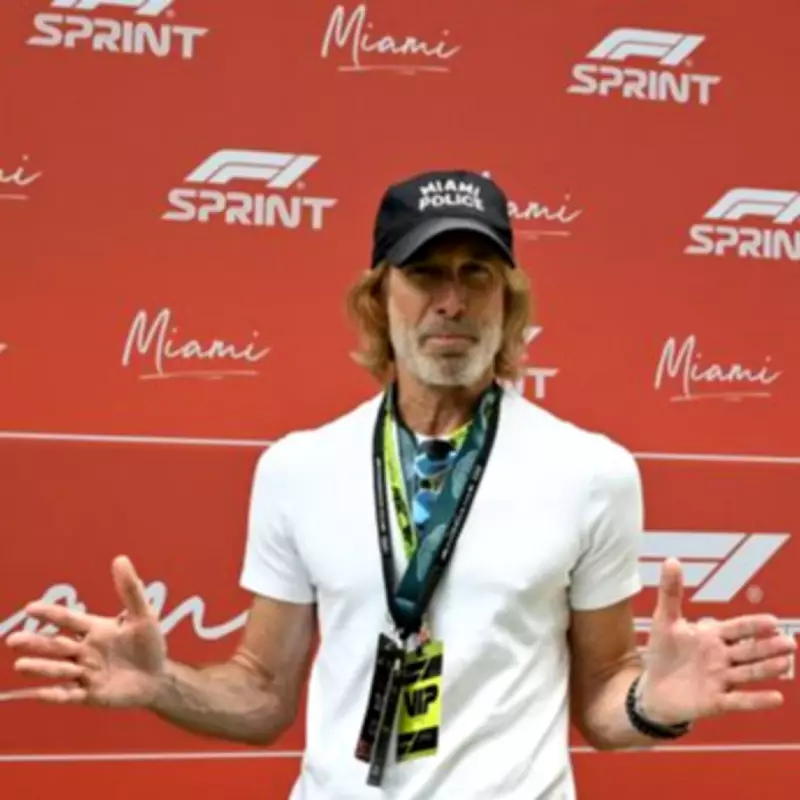
Hollywood Director Michael Bay Files £1.1 Million Lawsuit Against Cadillac F1 Team
Renowned Hollywood director Michael Bay has initiated legal proceedings against the Cadillac Formula 1 team, seeking damages totalling £1.1 million. The lawsuit, filed in Los Angeles, alleges that the team utilised his creative concepts for their high-profile Super Bowl advertisement without providing any compensation. Bay's complaint specifically targets TWG Motorsports boss Dan Towriss, accusing him of breach of contract and fraudulent behaviour in connection with the commercial broadcast during Super Bowl LX.
Details of the Alleged Creative Theft and Super Bowl Advert
The contentious advertisement, which aired during the globally televised NFL finale, unveiled the livery for Cadillac's debut F1 car scheduled to compete in the 2026 season. The livery features a striking asymmetrical design, with one side predominantly white and the other largely black, revealed for the first time in the thirty-second commercial slot. Bay, famous for directing blockbuster films such as Armageddon, Pearl Harbor, and multiple Transformers instalments, claims he was directly contacted by Towriss in late November to work on the project.
According to the lawsuit, Bay was given an extremely tight turnaround of just two months to complete the advert, as it needed to be submitted to the NFL for approval by February 2 to secure the costly Super Bowl slot, for which Cadillac likely paid millions. Bay alleges he "worked nearly nonstop" for several days, including pulling multiple all-nighters, only to be later informed that the team was "going in a different direction". The legal documents assert that Cadillac "have apparently stolen Bay's ideas and work... without paying for them" and planned all along to "rip him off".

Cadillac's Response and Counterclaims
Cadillac has firmly refuted these allegations, releasing a statement that the concept for the advert was already well-established before Bay was approached. The team stated they were merely "exploring" potential directors for the project and described Bay as a "cinematic genius" with whom they discussed directing the Super Bowl ad. However, after two meetings, it became clear he could not meet their production timeline, and there was ultimately no path forward.
The team's statement further questioned the timing of the lawsuit, noting that the advertisement has not even been released yet, and expressed confidence that the matter will be resolved appropriately. Despite the legal dispute, Cadillac emphasised they still admire Bay's creative brilliance and would welcome future collaboration opportunities. In response to Bay's claim that he postponed other projects, including film developments for major studios like Amazon, Apple, and Universal, Cadillac maintained that Bay was unable to commit to their schedule.
Broader Implications and Industry Context
This lawsuit highlights significant issues within the advertising and entertainment industries, particularly regarding intellectual property rights and contractual agreements under tight deadlines. The Super Bowl is one of the most-watched annual television events globally, making its advertising slots highly valuable and competitive. The case raises questions about how creative contributions are valued and protected in high-stakes marketing campaigns.
As the legal proceedings unfold, both parties are preparing their arguments, with Bay seeking substantial financial compensation for what he describes as stolen work. The outcome could set a precedent for similar disputes in the future, affecting how brands and creatives negotiate and collaborate on time-sensitive projects. For now, the Cadillac F1 team continues to promote its 2026 season livery, while Michael Bay pursues justice through the courts, alleging a costly "rip off" of his innovative ideas.