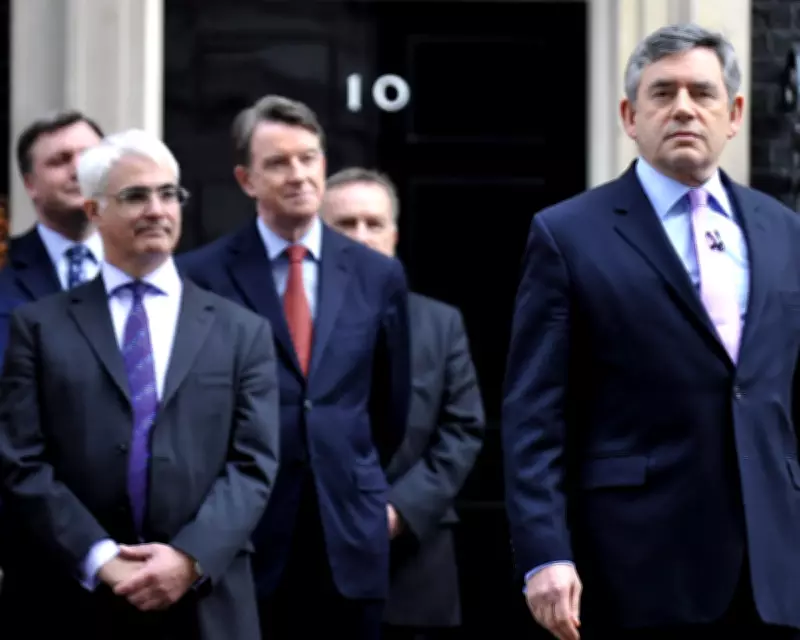
For veterans of the Labour government during the 2008 financial crisis, recent disclosures from the Jeffrey Epstein files have unearthed a profound sense of betrayal. The emails reveal that Peter Mandelson, then business secretary, actively worked against his own colleagues by colluding with major banks to undermine a proposed tax on bankers' bonuses.
A Whiff of Familiarity in Financial Lobbying
In 2009, as the UK economy reeled from the banking collapse, Chancellor Alistair Darling introduced a one-off 50% supertax on bonuses exceeding £25,000. This move came amid public fury over bank bosses' roles in driving the financial system to the brink while enriching themselves. However, Mandelson's correspondence with Epstein shows he was "trying hard" to change this policy, even suggesting that JP Morgan boss Jamie Dimon should "mildly threaten" the chancellor.
Labour insiders from that era have expressed outrage at Mandelson's disloyalty. One senior Treasury figure recalled that Darling would have been "shaking with rage" if he had known of these actions. The situation was exceptionally fragile, with extraordinary sums of taxpayer money pumped into failing banks to prevent total collapse.

The Unchanged Clash Between Progressive Policies and Finance
Darling's memoir recounts Dimon calling him "very, very angry" about the bonus tax, hinting at repercussions for UK debt purchases and London investments. Despite this pressure, Darling held firm and implemented the tax. Fast forward more than 16 years, and a different Labour government, under Chancellor Rachel Reeves, has chosen a contrasting path by eschewing a windfall tax on highly profitable banks.
In a striking parallel, Dimon recently issued an upbeat statement welcoming Reeves's budget and announcing plans for a new UK headquarters after she confirmed no bank windfall tax would be imposed. He cited the government's economic growth priority as a critical factor in this decision.
Modern Labour's Approach to Banking and Regulation
Carsten Jung, author of an Institute for Public Policy Research paper advocating an £8 billion annual bank tax, noted that Labour's anxiety about appearing "anti-business" has hindered sensible proposals. He suggested placing less emphasis on business sentiment and more on economic fundamentals.
As Reeves prepared her critical second budget, financial sector lobbying intensified against a bank tax. Labour's business envoy, Varun Chandra, attended a party hosted by Dimon in New York, while Goldman Sachs CEO David Solomon reportedly pressed Reeves personally on the issue. Faiza Shaheen of Tax Justice UK observed that Labour seems "impressed by those sorts of executives" and wary of being perceived as anti-growth.
Resisting Corporate Pressure or Accommodating It?
Reeves's allies reject claims that she yields easily to corporate lobbying, pointing to her insistence on directing apprenticeship levy funds toward younger workers despite business pressure for flexibility. However, the broader pattern suggests accommodation. Beyond tax policy, Labour has championed City deregulation to boost growth, with the Bank of England recently announcing reduced capital requirements for banks—the first such move since the crisis.
Additional Epstein emails reveal Mandelson aligning with banks against post-crisis re-regulation aimed at preventing future collapses. Shaheen lamented this continuity, asking, "It feels like we're back in the 90s: didn't we learn that lesson?"
The enduring struggle between progressive economic policies and powerful financial interests, highlighted by Mandelson's 2009 actions, continues to shape Labour's approach today, raising questions about lessons learned from the banking crisis.