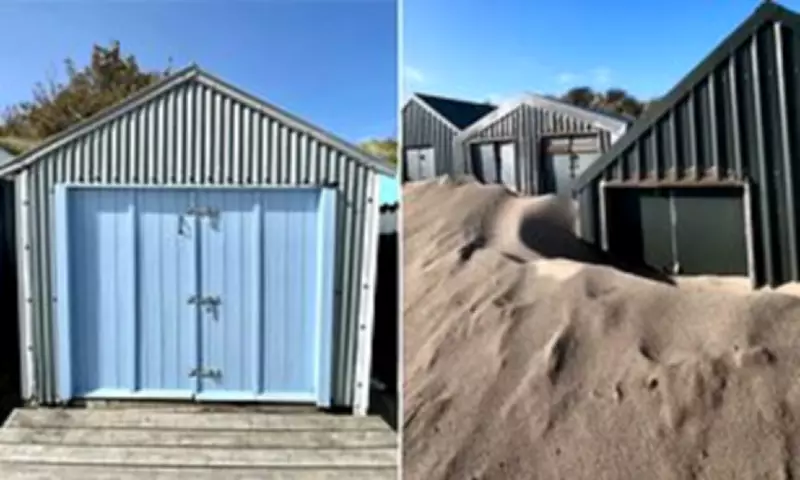
They may command price tags reaching hundreds of thousands of pounds and reside in one of Britain's most exclusive coastal retreats, famously nicknamed 'Cheshire-on-sea'. Yet, even this prestigious status could not shield the luxurious beach huts in the affluent Welsh town of Abersoch from the relentless forces of nature, after recent winter storms buried the structures beneath formidable mountains of sand.
A Coastal Crisis for Premium Properties
The huts, which have been known to sell for astonishing sums exceeding £200,000, now find themselves surrounded and engulfed by immense piles of wind-blown sand. This dramatic situation arose following a series of storms this winter that brought exceptionally high tides and powerful winds to the coast, overwhelming the huts' walls and completely burying their entrances.
A Lengthy Wait for Relief
It is highly probable that these valuable structures, most of which are scattered across Porth Mawr beach, will remain trapped within the dunes until the arrival of spring. This cautious approach is in anticipation of further adverse weather conditions forecast to batter the coastline in the coming weeks, making any immediate excavation efforts both challenging and potentially futile.

The Allure of Abersoch
Abersoch, a picturesque seaside resort located in Gwynedd, Wales, has long been a favoured staycation destination for celebrities, including adventurer Bear Grylls and Colleen Rooney. Its reputation as 'Cheshire-on-sea' stems from its high-profile connections and exclusive atmosphere. Real estate prices within the town, encompassing both homes and these coveted beach huts, rank among the most expensive in all of Wales.
Properties in this former fishing village, now transformed into a premier seaside resort, command an average price of approximately £585,000, underscoring its desirability and affluent character.
Community Reaction and Historical Context
The local tourist group, Abersoch.com, commented on the recurring nature of this issue, stating: 'Every winter, Abersoch beach takes a battering from storms, with the beach huts taking the full force and needing to be properly dug out again in spring.' They posed the question to the community: 'Looking at it this year - does anyone else think it's worse than usual?'
One long-term resident recalled similar challenges from decades past, noting: 'I've dug out eaves-high wind-blown sand before, back in the 1980s. It varies, as does the sand ledge and pebble 'underlay'.' They explained the meteorological factors at play: 'The worse the weather from the East during winter, and there's been quite a lot - and quite early too - the more disruption occurs. If the weather's fair from now until Easter much of the sand would get rearranged by Mother Nature.'
Another individual with experience of the arduous task added via social media: 'It used to take all day to dig ours out but that looks particularly bad.'
A Divided Response
However, not all observers expressed sympathy for the predicament facing the hut owners. One critical comment read: 'If you're prepared to spend £150k on a shed then I'm sure you can afford to sort the sand out!' Another offered a more sardonic perspective, suggesting: 'Nature just helping out with extra security for the over priced sheds.'
This event highlights the ongoing tension between luxury coastal development and the powerful, unpredictable forces of the natural environment, even in one of the UK's most sought-after holiday locations.