Prime Minister Anthony Albanese has moved to calm public anxiety as panic buying of fuel across Australia has triggered extraordinary demand surges of up to 400 percent in certain regions, leading to widespread service station shortages and pushing petrol and diesel prices to multi-year highs.
Government Assurances on Fuel Supply
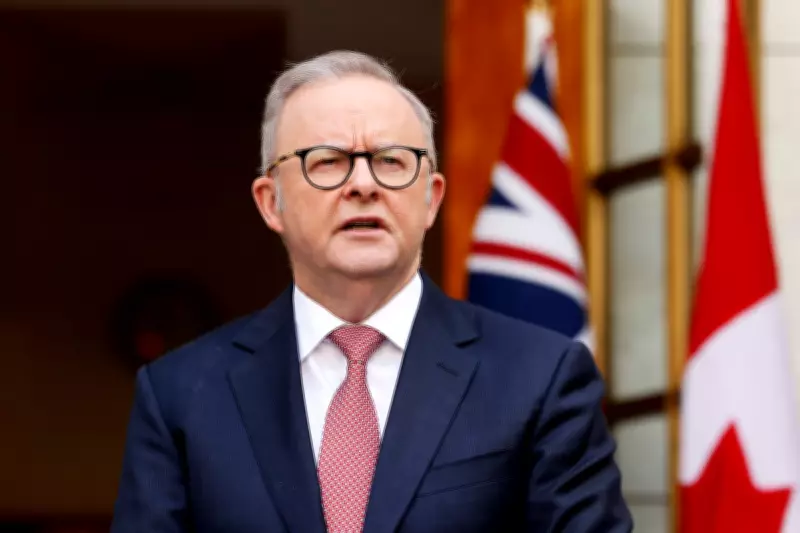
Speaking at a press conference in Canberra on Friday, Mr Albanese stated emphatically that Australia's overall supply of petrol, diesel, and oil would be "the same, if not higher, than it normally would be." He highlighted that six tankers of jet fuel from China are scheduled to arrive between Saturday and 8 April, bolstering national reserves.
Energy Minister Chris Bowen further reinforced this message, confirming that supplies from China are assured until late April or early May. The Prime Minister characterized the current shortages as primarily a "distributional" issue, concentrated in regional areas, and stressed there has been no reduction in the volume of fuel flowing into the country.

Scale of the Panic Buying Crisis
The government's reassurances come against a backdrop of dramatically escalated demand. Victorian Energy Minister Lily D'Ambrosio reported that demand had skyrocketed by between 300 and 400 percent in parts of the state, resulting in over 100 service stations running out of petrol and more than 80 without diesel by Tuesday.
In New South Wales, the situation was similarly dire, with one in seven service stations having exhausted at least one type of fuel by Friday. Specifically, 59 stations were completely without any fuel, and 207 were out of diesel.
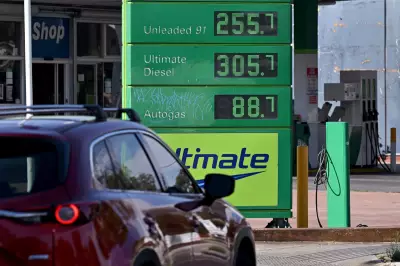
The Australian Competition and Consumer Commission provided stark data on rising costs, noting that average diesel prices across the five largest cities had jumped 10 percent over the past week to 303.5 cents per litre. Regular unleaded petrol prices increased by 8 percent to 252.2 cents per litre.
Political Pressure and Proposed Solutions
The opposition has seized on the crisis to apply pressure to the government. Opposition Leader Angus Taylor called for the federal fuel excise to be halved for three months, a measure that could save motorists approximately 26 cents per litre based on the current rate of 52.6 cents. Taylor declared, "Fuel prices are rising, stations are running dry, and families already stretched by the cost of living are falling further behind. This is now a national fuel crisis."
National Party politician Matt Canavan questioned the government's handling, suggesting that if supply is indeed adequate, "then this is a failure to get fuel where it is needed."
In response, Treasurer Jim Chalmers indicated earlier in the week that cutting the excise was "not something that we have been considering." Prime Minister Albanese, while not endorsing the idea on Friday, did not rule it out entirely. He emphasized his government's commitment to cost-of-living measures and promised to act "in a responsible way in the context of our budget considerations."
Economic Warnings and Broader Context
Economists have cautioned that an excise cut could inadvertently worsen shortages and contribute to inflationary pressures. Analysis suggests that such a measure would disproportionately benefit wealthier households.
Mr Albanese acknowledged the global context driving public concern, stating, "We understand that people are under real pressure and the impact of this war is real. It's happening across the other side of the world. But in today's interconnected world, it's why we have to engage and we acknowledge that."
Looking ahead, the Prime Minister announced that Monday's national cabinet meeting of state and territory leaders would focus on developing a coordinated national response. This approach aims to apply lessons learned from the Covid-19 pandemic, where fragmented systems across states complicated crisis management.
The government maintains that the current fuel crisis is driven by a surge in consumer buying behavior rather than any fundamental interruption to supply. As Ms D'Ambrosio told ABC Melbourne radio, "The fuels coming into the country, they're still flowing into the country."