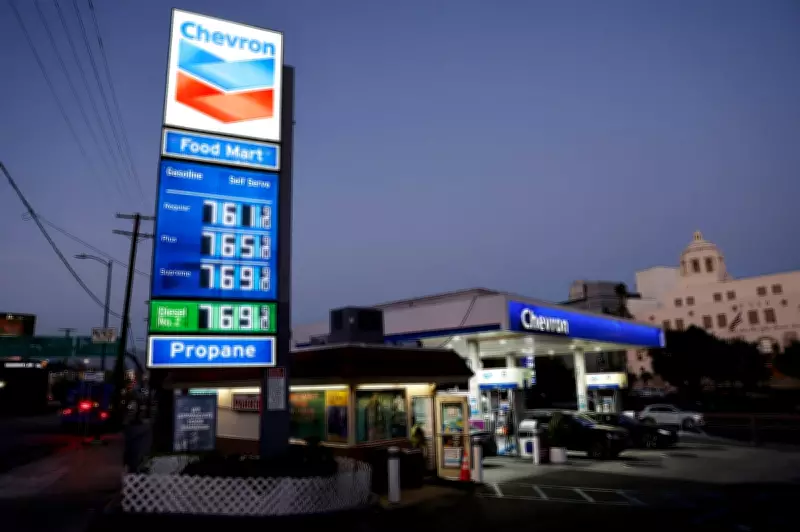
High gas prices are displayed at a downtown Chevron station on 3 March in Los Angeles, California, highlighting the severe financial strain on consumers as fuel costs escalate dramatically. The ongoing conflict between the United States and Iran has triggered a sharp increase in gas prices across the nation, with California bearing the brunt of this economic impact.
Gas Price Spike in California
According to data from the American Automobile Association (AAA), the average price per gallon of gas in California reached $5.20 on Monday, a significant jump from the national average of $3.47. This marks a rise of $0.55 per gallon in the Golden State since the conflict began over a week ago, compared to a nearly $0.50 increase nationally. California consistently ranks as the most expensive market for gas in the US, but this recent surge has pushed prices to levels not seen in nearly two years.
Impact of Middle East Conflict on Oil Markets
The escalation of violence in the Middle East, following attacks by the US and Israel on Iran on 28 February, has driven oil prices above $100 a barrel for the first time since 2022. This surge is attributed to damage to oil and gas facilities and the stranding of ships carrying approximately 20 million barrels of oil daily in the Gulf region. The Strait of Hormuz, a critical channel through which about 20% of the world's oil is shipped, has been effectively closed for the past week, exacerbating supply shortages.

Claudio Galimberti, chief economist at Rystad Energy, noted that around 9 million barrels of oil per day are currently off the market due to attacks or precautionary measures by producers. He described the situation as an "extreme deficit," compounding existing pressures from seasonal demand increases and the production of summer-blend gasoline.
Consumer Struggles and Political Responses
In Los Angeles, some Chevron stations have reported prices as high as $8.21 per gallon, according to ABC7. An Uber driver expressed frustration, stating, "I drive Uber and I'm just getting killed right now, and I mean gas prices are just so high... they were high before the war." This sentiment reflects the broader challenges faced by Californians, who already pay more for gas due to state taxes, environmental regulations, and reduced refining capacity.
Political leaders have offered contrasting views on the crisis. Former President Donald Trump has dismissed concerns, predicting prices will "drop very rapidly" once the conflict ends, with his administration suggesting the increases will last weeks rather than months. White House Press Secretary Karoline Leavitt framed the price rise as "a short-term disruption for a long-term gain of taking out the rogue Iranian terrorist regime and finally ending their restriction on the free-flow of energy through the straits of Hormuz."
Meanwhile, California Governor Gavin Newsom's office has placed blame squarely on the federal government, asserting in a social media statement, "Average gas prices in California have stayed below $5 for nearly two years – until now. This is because of Trump's war with Iran." This political divide underscores the complex interplay between international conflict, energy policy, and local economic realities.
The Associated Press contributed to this report, providing additional context on the global and domestic ramifications of the Iran conflict. As the situation evolves, consumers in California and beyond remain vulnerable to further price fluctuations, highlighting the interconnected nature of geopolitics and everyday expenses.