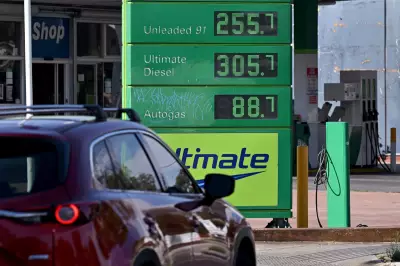
A former senior oil industry executive has called on government ministers to seriously consider implementing driving restrictions as the United Kingdom faces a looming fuel supply crisis. Nick Butler, who previously served as head of strategy at BP and acted as a policy advisor to former Prime Minister Gordon Brown, outlined several measures to mitigate the impact of potential shortages.
Proposed Measures to Reduce Consumption
Butler suggested that one effective approach would be to limit drivers to using their vehicles on alternate days, determined by their vehicle registration numbers. This system, he argued, would help distribute reduced fuel availability more fairly across the population.
Another proposal involved encouraging employers to grant staff an additional day off each week, specifically aimed at reducing commuter traffic volumes. This measure would directly address one of the largest sources of regular fuel consumption in the economy.

Government Responsibility in Crisis Management
The former BP executive emphasized that the government has a crucial role in managing the situation transparently. He urged officials to provide clear public communication about "what was going to happen" if the conflict in Iran continues to disrupt global energy supplies.
"If supplies are cut by 20 percent, then someone needs to be using 20 percent less," Butler stated bluntly. "The government must prioritize protecting essential sectors of the economy – including food supply chains, the National Health Service, schools, and other critical infrastructure – before determining how to manage the remaining fuel market for general consumers."
He warned against leaving distribution to a "free-for-all" market approach, which he described as potentially chaotic, regressive, and particularly unfair to those with limited financial resources.
International Precedents for Rationing
Butler noted that traditional ration books are unlikely to be implemented, but pointed to measures being considered in other nations. "Many countries worldwide are beginning to examine how to gently reduce consumption," he explained. "Alternate-day driving based on registration numbers and additional weekly holidays – these are approaches some Far Eastern countries are already adopting."
He characterized such measures as "a form of rationing that will constrain demand to establish a new balance with diminished supply."
Long-Term Supply Disruptions Expected
During an interview on BBC Radio 4's Today programme, Butler cautioned that fuel supply constraints would not be resolved quickly, even if political agreements were reached in the Middle East. "There has been real damage to facilities and supplies," he reported. "Some refineries have been knocked out of operation, and the gas terminal in Qatar has been damaged. Restoring these facilities will require considerable time."
"Consequently, we are facing a problem that will persist over an extended period," he added.
Additional Recommendations
Butler, who currently serves as a visiting professor at King's College London, also advised ministers to maximize production from the UK's North Sea oil fields, while acknowledging this would not provide an immediate solution to the crisis.
Furthermore, he called for consumer protections against potential price-gouging by fuel suppliers through "forensic audits" of company accounts to ensure fair pricing practices during the shortage.
"The government should be developing and presenting a comprehensive plan now to manage potentially serious shortages that could develop if this conflict continues and the Strait of Hormuz remains effectively closed," Butler emphasized.
"The greatest risk is panic buying, which would create a terrible situation. The government has a responsibility to calm markets by demonstrating exactly how they intend to cope with these challenging circumstances."