Government Unveils Sweeping Clean Energy Measures for Housing and Retail
In a major push to accelerate Britain's transition to renewable energy, the Government has announced that all new homes will be built with solar panels and heat pumps as standard. Simultaneously, plug-in solar panels will become available in UK shops "within months" for existing homeowners, marking a significant expansion of accessible clean energy technology.
Future Homes Standard Finally Implemented After Decade-Long Wait
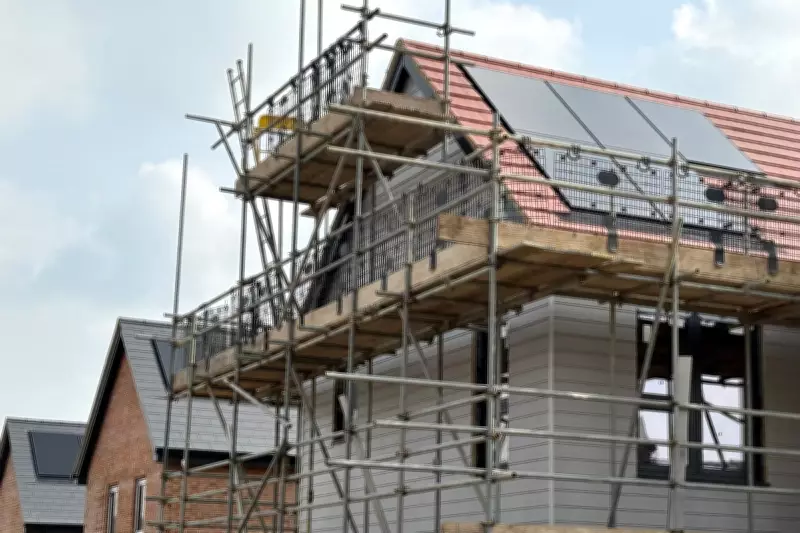
The long-awaited implementation of the "future homes standard" comes exactly ten years after previous measures to ensure homes were constructed to net-zero carbon standards were abandoned. Under these new building regulations, which take effect immediately, new properties will be equipped with heat pumps or connected to heating networks instead of traditional gas boilers.
The majority of new homes – with only limited exceptions – will feature onsite renewable electricity generation, predominantly through solar panel installations. Government officials estimate these measures could save homeowners up to £830 annually on energy bills compared to properties with a standard Energy Performance Certificate rating of C.

Perhaps more significantly, homes constructed under these new standards will produce at least 75% fewer carbon emissions than those built to 2013 regulations, representing a substantial environmental advancement in residential construction.
Plug-In Solar Technology Coming to UK Retailers
In parallel with the new construction requirements, the Government revealed that plug-in solar panels – which can be connected to home networks using ordinary electrical sockets – will soon be available through major UK retailers. These systems, already common in countries like Germany where residents frequently install them on balconies or fences, represent a simplified approach to residential solar power.
Officials confirmed they are collaborating with retailers including Amazon and Lidl, alongside manufacturers such as EcoFlow, to bring these products to the British market. Shoppers may soon find solar panels in the "middle of Lidl" aisle alongside other household goods, dramatically increasing accessibility to renewable energy technology.
The Department for Energy Security and Net Zero emphasized that these panels reduce electricity drawn from the national grid, lowering household bills while decreasing Britain's dependence on volatile fossil fuel markets for power generation.
Wind Farm Discount Scheme for Scotland and Eastern England
Ministers also unveiled plans for a novel approach to energy pricing that will primarily benefit Scotland and Eastern England. Due to historic underinvestment in grid infrastructure, wind farms in these regions sometimes receive payments to switch off during particularly windy periods when the network cannot accommodate all generated power.
The Government intends to introduce legislation enabling energy companies to offer discounted bills to customers in these areas during windy days. This initiative encourages consumption when renewable energy is abundant and inexpensive, rather than curtailing wind turbine operations.
Officials indicated this scheme should be operational in time for the coming winter, providing tangible financial benefits to households in wind-rich regions while optimizing renewable energy utilization.
Ministerial Responses to Energy Security Concerns
Energy Secretary Ed Miliband directly linked these measures to ongoing geopolitical tensions, stating: "The Iran war has once again demonstrated that our drive for clean power is essential for energy security, allowing us to escape the grip of fossil fuel markets beyond our control."
He added: "Whether through solar panels fitted as standard on new homes or making plug-in solar available in shops, we are determined to deploy clean power to achieve genuine energy sovereignty for our nation."
Housing Secretary Steve Reed connected the initiative to the Government's broader housing agenda, noting: "Building 1.5 million new homes also means constructing high-quality properties that are cheaper to operate and more comfortable to inhabit."

Reed continued: "As we transition to clean, domestically produced energy, today's standard represents what the future of housing can and should embody. These changes will not only protect hardworking families from international market shocks but also reduce their annual energy bills by hundreds of pounds."
Industry Welcomes "Landmark Moment" for Clean Energy
The announcements have received positive responses from the energy sector. Dhara Vyas, Chief Executive of industry body Energy UK, described the future homes standard as a "landmark moment" for clean energy in Britain.
"New homes constructed under this standard will benefit from clean heating solutions and solar power, shielding households from volatile gas prices and embedding energy security within the home itself," Vyas stated.
She further explained: "Combined with enhanced fabric efficiency standards, these homes will be warmer and more economical to maintain – delivering real, tangible improvements to people's daily lives."
Vyas also highlighted the economic benefits, noting that the new standards would provide businesses with the long-term certainty needed to invest in manufacturing, scale up supply chains, and develop a skilled workforce for the renewable energy sector.
The comprehensive package of measures represents the Government's most substantial clean energy housing initiative in a decade, responding both to environmental imperatives and energy security concerns heightened by international conflicts affecting fossil fuel markets.