Industry Body Urges UK to Ramp Up Domestic Oil and Gas Production
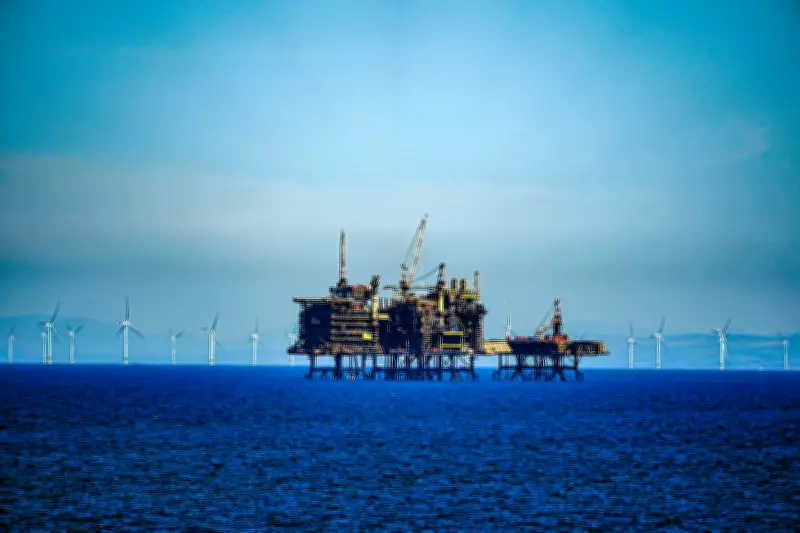
A leading trade association has issued a stark warning that the United Kingdom must urgently increase its domestic oil and gas output from the North Sea to safeguard energy security and maintain affordability for consumers. Offshore Energies UK (OEUK) has released a comprehensive report highlighting the critical role of homegrown fossil fuels alongside renewable energy sources in the nation's future energy mix.
Report Highlights Risks of Import Dependence
The business outlook report for 2026 underscores that the UK will continue to require substantial volumes of oil and gas for decades, even as renewable energy adoption accelerates. Currently, oil and gas supply approximately 75% of the UK's energy needs, and projections indicate they will still meet around a fifth of demand by 2050. The analysis cautions that without bolstered domestic production, the country risks becoming excessively reliant on energy imports during a period of escalating global instability.
Enrique Cornejo, director of energy policy at OEUK, emphasised the importance of a balanced approach. "We are continuing to support the development of renewable energies, we think that's important," he stated. "However, our position remains the same; for as long as the UK needs oil and gas, it makes sense to produce as much of that here."

Environmental and Economic Advantages of Domestic Supply
The OEUK report reveals that North Sea gas possesses a lower emissions footprint compared to liquefied natural gas (LNG) imported from overseas. Additionally, maintaining domestic production supports high-value employment opportunities and reduces exposure to volatile international markets. Current forecasts suggest the UK could depend on imported LNG for over a quarter of its gas supply by 2030, potentially rising to nearly half by 2035, up from approximately 14% last year.
David Whitehouse, chief executive of OEUK, articulated the urgency of the situation. "This is not an either renewables or oil and gas scenario. We urgently need greater supplies of secure, domestically-produced energy including oil and gas, which will remain a critical part of the UK energy system and economy for decades," he asserted.
Policy Recommendations and Government Response
OEUK advocates for replacing the temporary energy profits levy in 2026 with a permanent oil and gas price mechanism, which could unlock up to £50 billion in additional capital investment. Whitehouse stressed that implementing this measure is essential to diminish reliance on unpredictable imports, protect skilled jobs and supply chains, and ensure the UK can decarbonise while keeping energy secure and affordable.
In contrast, a UK Government spokesperson countered that issuing new licences for exploration does not guarantee energy security or reduce bills. "Regardless of where it comes from, oil and gas is sold on international markets, which set the price for British billpayers – making us a price taker," the spokesperson remarked. "The only way to truly protect ourselves from these price spikes is to get off the rollercoaster of fossil fuel markets."
Call for a Just Transition and Parallel Track Approach
Climate Action and Energy Secretary Gillian Martin acknowledged the ongoing significance of Scotland's oil and gas sector but highlighted the necessity for a just transition. "We need to see a parallel track approach to the energy transition, in which North Sea oil and gas production is managed alongside the increasing deployment of renewables," she explained. Martin called for an immediate end to the energy profits levy and a fair future fiscal regime to safeguard jobs and stimulate investment.
The OEUK analysis indicates that with appropriate investment conditions and pragmatic energy policies, LNG reliance could be reduced to as low as 6% by 2035. Cornejo concluded by warning against offshoring emissions, stating, "Because of how accounting of carbon emissions works for every country, it would be very easy for us to just say we will not produce our energy in the UK, or we will not produce our steel in the UK, and we're just pushing that problem elsewhere."