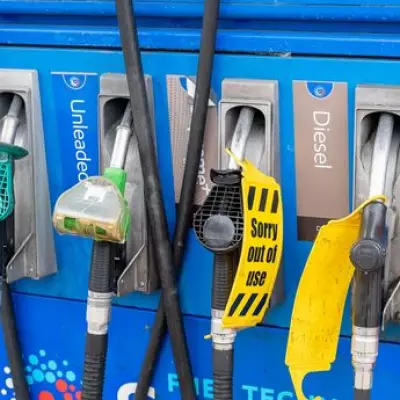
The Trump administration's strategy to rebuild Venezuela after the potential fall of Nicolas Maduro has encountered a significant and unexpected obstacle: a distinct lack of enthusiasm from the very American oil companies it hoped would lead the charge.
Corporate Cold Feet in a Cheap Oil Market
According to reports, Washington has been quietly gauging interest from major US energy firms about a potential return to the South American nation. The response, however, has been decidedly lukewarm. Industry giants are sending a blunt message back to the White House: they are not interested.
The global oil glut presents a double-edged sword for US policymakers. On one hand, plentiful supplies allow for a tough stance on Caracas without fear of triggering an immediate energy crisis. On the other, crude prices are now so low that corporations see little financial incentive to risk billions rehabilitating Venezuela's shattered oil infrastructure, which has been in steep decline since the era of Hugo Chávez.

'There has been the genesis of an outreach with the industry on the potential of reentering Venezuela,' a source familiar with the discussions told Politico. 'But frankly, there's not a lot of interest from the industry, in light of lower oil prices and more attractive fields globally.'
Diplomatic Efforts and Illicit Networks
The State Department's initiative is being supported by Evanan Romero, a Houston-based consultant with deep connections to Venezuela's energy sector and a former high-ranking official at a state oil company. Romero confirmed that the Trump administration's efforts included a meeting in Washington in late November, reportedly attended by Energy Secretary Chris Wright and representatives from Exxon and ConocoPhillips.
This diplomatic push coincides with a maritime crackdown. On Tuesday, President Trump announced heightened surveillance of ships transporting restricted Venezuelan crude. In a subsequent social media post, he framed the situation as the US reclaiming property, demanding the immediate return of 'Oil, Land, or any other Assets.'
Meanwhile, Venezuela, Iran, and Russia are allegedly bolstering their oil trade through clandestine networks. A report obtained by the Daily Mail exposed a fleet of 20 illicit oil tankers lurking in Caribbean waters, acting as a financial lifeline for the regimes in Caracas, Tehran, and Moscow. According to the monitoring group United Against Nuclear Iran (UANI), 11 ships are linked to Iran's oil trade, with revenues potentially funding the Islamic Revolutionary Guard Corps and Hezbollah.
Industry Stance and Geopolitical Risks
Major oil companies with historic ties to Venezuela are treading carefully. In a statement, Chevron spokesperson Bill Turenne emphasised that the company's century-long presence in Venezuela is a 'stabilising force' and that its operations strictly adhere to all US sanctions, with a primary focus on employee and community safety.
Analysts warn that the illicit oil network and the ideological alliance between Maduro and Iran's Ayatollah could lure the Trump administration into a dangerous provocation. Jemima Shelley, a Senior Research Analyst at UANI, highlighted this risk, pointing to the high stakes involved.
The White House did not immediately respond to requests for comment on the industry's reluctance, leaving a central pillar of its Venezuela strategy on uncertain ground.