

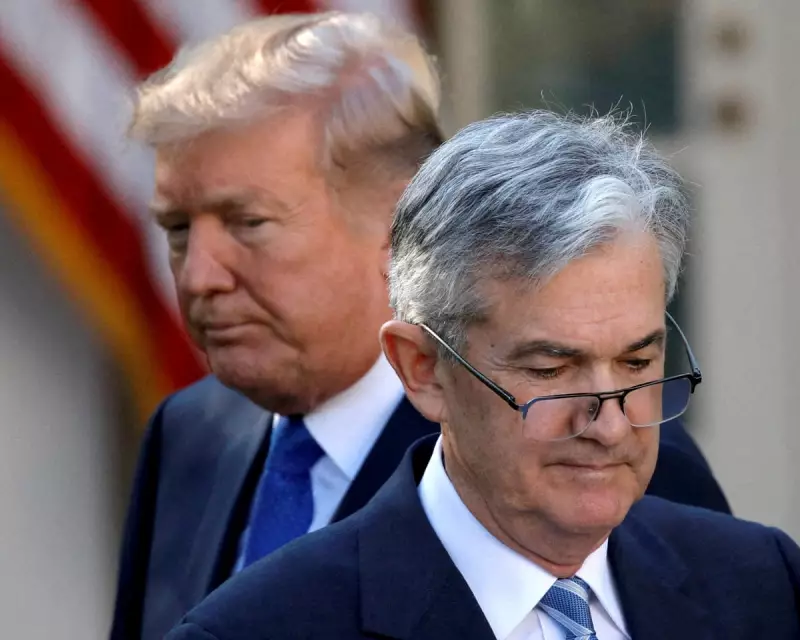
In an extraordinary and stark statement, Federal Reserve Chair Jerome Powell has framed a Department of Justice investigation into him as a direct threat to the central bank's cherished independence. Powell contends the probe, related to renovations at the Fed's headquarters, is an attempt to intimidate officials into setting monetary policy according to political whims rather than economic evidence.
A Stark Warning from the Fed Chair
Jerome Powell responded forcefully to news he had received a subpoena, declaring the situation was fundamentally about whether the Fed can continue to set interest rates based on economic conditions. "Or whether instead monetary policy will be directed by political pressure or intimidation," he stated. This public alarm follows a year of sustained criticism from former President Donald Trump, who has labelled Powell a "stubborn mule" for not cutting rates faster and even mused about firing him.
While Trump has denied knowledge of the Justice Department's investigation, the involvement of federal prosecutors marks a serious escalation. Initially, financial markets reacted with surprising calm. The dollar weakened only slightly, and US Treasury bonds saw modest selling pressure, a ho-hum response to a scenario more akin to a banana republic.

Why Markets Remain (Cautiously) Sanguine
Analysts suggest several reasons for the tempered reaction. Firstly, the investigation into headquarters refurbishment costs may fizzle out, appearing thin ground for criminal charges. Secondly, Powell's term as Chair ends in May 2026, limiting the long-term impact. Thirdly, interest rates are set by a whole committee, not just the Chair, making it harder for a future administration to impose immediate control even with a new appointment.
Furthermore, the Fed is already in a rate-cutting cycle, so the current political quarrel is about the pace of reductions rather than a fundamental directional fight. However, Powell is right to sound the alarm, as the underlying principle is under threat at a perilous time.
The High-Stakes Risks of Undermining Fed Independence
The United States is running an enormous fiscal deficit, while economic data presents mixed signals on unemployment and prices. Growth momentum is slowing, and the inflationary impact of Trump's proposed tariff policies remains unclear. In this fragile environment, the central bank's role in anchoring inflation expectations is critical.
Currency analysts at ING warn that "a combination of hot inflation and more bets on the Fed’s loss of independence would feed real rate concerns that could cause major dollar depreciation." A loss of confidence could trigger a flight from US assets, driving up long-term borrowing costs for American businesses and consumers through the bond market—a self-defeating outcome for any administration.
The crucial question is whether Trump recognises how undermining the Fed could backfire on him and the US economy. For now, markets cling to the assumption he will not push things too far. Yet, with the administration's war on the Fed lasting a year, this assumption smacks of complacency. As some Republican voices noted, a pre-emptive revolt in the US bond markets might be the necessary corrective to defend a cornerstone of global financial stability.






