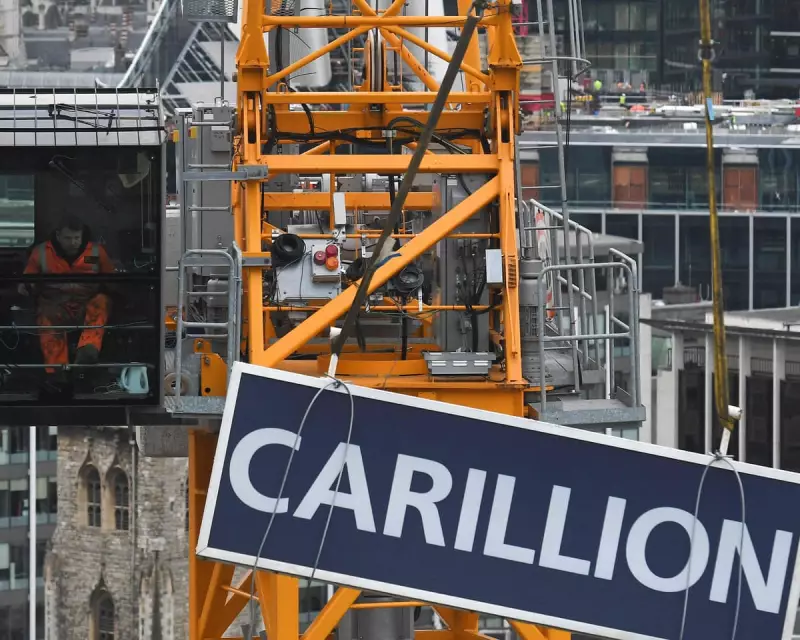
The chaotic collapse of construction and contracting giant Carillion in 2018 exposed systemic flaws in UK audit practices, prompting widespread consensus that both audit quality and regulation required substantial improvement. Photograph: Daniel Sorabji/AFP/Getty Images
UK Government's Feeble Retreat from Carillion Audit Reforms
Eight years after systemic failures were dramatically revealed through one of Britain's most significant corporate collapses, ministers have abandoned their long-promised overhaul of audit regulation. Instead, the government has opted for another iteration of its "pro-growth" agenda, effectively sidelining crucial reforms that were deemed essential in the aftermath of the Carillion disaster.
The End of the Long-Awaited Reform Bill
The wait for the "long-awaited" government legislation to reform the audit market has concluded, but not because ministers have finally addressed the embarrassment of eight years passing since Carillion's collapse. Rather, the government has completely given up on introducing a dedicated reform bill, preferring to prioritise deregulatory measures over strengthening corporate oversight.

"While the planned reforms would be beneficial, some would increase costs on business, and it would not be right to prioritise these over more deregulatory measures," explained Blair McDougall, the minister for small business, during his formal statement to the business select committee. Additional justifications included insufficient parliamentary time and the questionable assertion that "the need for major reform is less pressing than it was." These explanations collectively represent a concerning case of institutional short memory syndrome.
Remembering the Carillion Catastrophe
In 2018, the chaotic failure of Carillion, one of Britain's largest construction and contracting firms, generated near-universal agreement that UK audit quality and regulation desperately required a major upgrade. The collapse served as a stark reminder that auditing, while often perceived as boring, becomes critically important when outsiders need to trust published financial numbers.
The human and financial consequences were severe. Approximately 3,000 employees lost their jobs, and because the company held numerous contracts to service schools and hospitals, the government had to spend £150 million to maintain essential public services. Perhaps most shocking was the rapidity of the collapse: just six months elapsed between Carillion's first profits warning and complete calamity. By the end, liabilities stood at approximately £7 billion against a mere £29 million in cash.
Regulatory Fallout and Inadequate Response
KPMG, serving as Carillion's auditor, received a record fine from the Financial Reporting Council (FRC), and the repercussions continue, with two former Carillion directors being fined by the Financial Conduct Authority as recently as this month. The seriousness of the entire saga prompted calls for a new regulator equipped with stronger powers and a broader remit, as recommended by City grandee Sir John Kingman in his government-commissioned review.
A white paper emerged in 2021, but a formal bill never reached the legislative agenda of the last Conservative government, which remained consumed by Brexit matters. Now, under Labour, the legislation will not appear either.
Partial Progress and Persistent Flaws
The most charitable defence of the government's position acknowledges that the FRC, following a management clear-out, has improved its performance in subsequent years. The audit environment appears less cosy now that the Big Four accounting firms have separated their audit and advisory divisions.
However, the fundamental flaw remains the FRC's lack of statutory status, which would guarantee its annual funding and empower it to summon witnesses. If the government intends to retain rather than replace the FRC, will it at least establish the regulator on statutory footing with urgency? The government offers only the weak promise: "As soon as parliamentary time allows."

Abandoned Essential Reforms
There appears to be no intention to revive other elements previously considered vital. These include proposals to bring the largest private companies into a tighter regulatory auditing system—particularly relevant given the BHS failure occurred around the same time as Carillion—and plans to grant regulators authority to hold non-accountant directors accountable.
If the government views these proposals as unnecessary regulatory burdens, it should reconsider. Private companies continue growing in size and complexity, and both the FRC and FCA should possess the capability to pursue all directors in cases resembling Carillion.
International Comparisons Highlight UK Inaction
A generation ago in 2001, the United States experienced its "Enron moment" with the bankruptcy of a major energy company amid an accounting scandal. Within a year, Congress passed the Sarbanes-Oxley Act, which strengthened regulators and established criminal penalties for corporate misreporting.
In contrast, the UK's "Carillion moment" of 2018 has been met with eight years of ineffective tinkering by successive governments. The likely outcome will be the bare-minimum requirement of statutory powers for the regulator being attached to some other financial bill. This approach hardly represents dynamism in action or demonstrates serious commitment to preventing future corporate collapses.