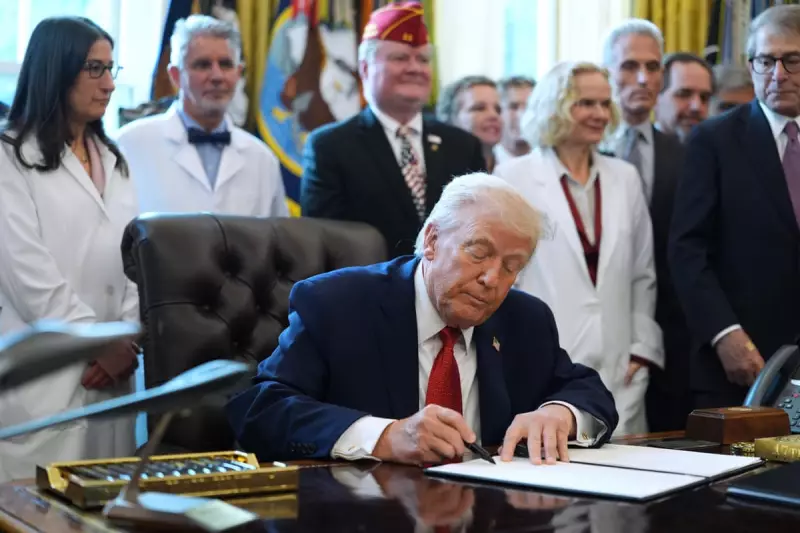
In a significant shift for American drug policy, President Donald Trump has signed an executive order to downgrade the federal classification of marijuana. The move, enacted at the White House on 18 December 2025, marks a historic step away from decades of stringent prohibition.
A Move from Schedule I to Schedule III
The core of the executive order directs the rescheduling of cannabis from a Schedule I to a Schedule III controlled substance. This transfers marijuana out of the most restrictive category, which includes drugs like heroin, and places it alongside substances such as ketamine and certain prescription pain medications.
"I’m pleased to announce that I will be signing an Executive Order to reschedule marijuana from a Schedule I to a Schedule III controlled substance with legitimate medical uses," President Trump stated during the signing. The change formally acknowledges the plant's accepted medical benefits and lower potential for abuse compared to its previous classification.

What the Order Does and Does Not Do
This policy shift is substantial but has clear limits. Crucially, it does not legalise marijuana for recreational use at the federal level. Senior administration officials, cited by the New York Times, confirmed that the order will not alter how law enforcement agencies handle arrests for marijuana possession where it remains illegal under federal law.
However, the reclassification carries several important practical consequences. It is designed to loosen limits on scientific research into cannabis, which has been heavily restricted under Schedule I. Furthermore, it will ease burdens on state-legal cannabis businesses by reducing punitive federal tax penalties under IRS code 280E and potentially improving their access to essential banking services.
A specific provision within the order also establishes a pilot programme to reimburse Medicare patients for products containing CBD, a non-intoxicating cannabis compound widely used for therapeutic purposes.
The Path Forward and Broader Implications
The executive order initiates the process, but the final change must still undergo the Drug Enforcement Administration's (DEA) formal rule-making procedure. This will involve public comment and review before being fully implemented.
For years, activists, researchers, and business leaders have criticised marijuana's Schedule I status as outdated and scientifically inaccurate. This reclassification represents a long-awaited federal alignment with evolving public opinion and the laws of numerous states that have already legalised medical or recreational cannabis.
While stopping short of full legalisation, President Trump's action on 18 December 2025 undeniably reshapes the landscape of US drug policy, paving the way for expanded research, a more viable legal industry, and a new chapter in the nation's approach to cannabis.