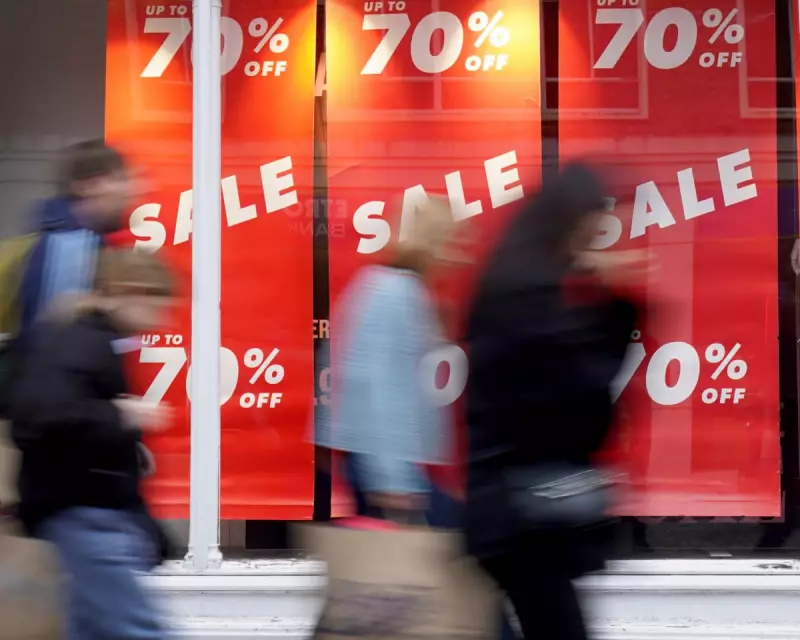
The British high street endured a disappointing festive season, with overall retail sales growth slowing sharply to a mere 1.2% in December compared to the previous year. According to the British Retail Consortium (BRC), this figure fell significantly below the 12-month average of 2.3%, painting a picture of a 'drab Christmas' for many retailers.
Non-Food Sales Stumble Amid Heavy Discounting
While food sales showed resilience, the crucial non-food sector, encompassing items like clothing, computers, and gifts, saw sales slip by 0.3%. This marked a stark reversal from the 4.4% growth witnessed in December of the previous year. The BRC's chief executive, Helen Dickinson, attributed the weak performance to mild, wet weather and consumers deliberately holding out for deeper discounts, with a significant sales bump only arriving in the final week with the start of the Boxing Day and January sales.
Separate data from Barclays bank underscored the consumer caution, showing a 1.7% year-on-year drop in card spending in December. This was the largest annual decline since February 2021 and followed a 1.1% fall in November.

Discount Supermarkets Win as Shoppers Cut Back
The trend of savvy spending was most evident in the grocery sector. Despite grocery inflation running at 4.3% in December, with the average shopper spending £476—around £15 more than the year before—the clear winners were the discounters. Aldi reported a 3% rise in sales in the four weeks to 24 December, while Lidl enjoyed a bumper 10% increase in the four weeks to Christmas Eve.
Although major players Tesco and Sainsbury's reported sales growth, their share prices fell sharply as investor expectations were not met. The pressure on household budgets is set to continue influencing behaviour, with a Barclays survey finding that 64% of shoppers intend to cut grocery spending this year, and over half plan to reduce discretionary outlay on items like new clothes and restaurant meals.
High Street Chains Face Mounting Pressure
The struggles extended across general merchandise. Argos, owned by Sainsbury's, saw sales drop 2.2% in the six weeks to 3 January, citing weak consumer confidence and a tough promotional market. Primark's owner, Associated British Foods, issued a profit warning after weak sales at the fashion chain, sending its shares down around 15%.
The industry is grappling with a perfect storm of higher costs, low consumer confidence, and intense competition from online giants like Temu and Shein. The strain is pushing some retailers to the brink, with jewellery chain Claire's, homewares retailer The Original Factory Shop, and clothing brand LK Bennett all reportedly poised to call in administrators.
The data confirms that for many UK retailers, the most important trading period of the year was a major letdown, highlighting the ongoing structural challenges facing the traditional high street.