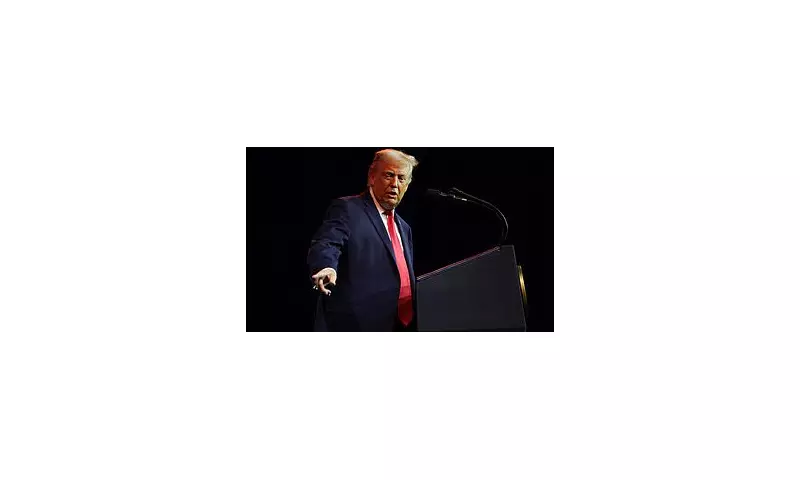
In a significant escalation of pressure on Tehran, former US President Donald Trump declared on Monday that countries continuing to trade with Iran would face substantial new tariffs from the United States. The move is a direct response to what he described as Iran's violent suppression of anti-government protests, which has reportedly resulted in nearly 600 fatalities nationwide.
Immediate Tariffs Announced via Social Media
Trump used a social media post to make the announcement, stating the punitive trade measures would be "effective immediately." The tariffs, set at a rate of 25%, are aimed squarely at the economies of Iran's key commercial partners. Nations identified as being in the crosshairs include China, Brazil, Turkey, and Russia, all of which maintain substantial business ties with the Islamic Republic.
A "Red Line" on Protest Crackdowns
The former President framed the decision within the context of his repeated warnings to Tehran regarding its domestic actions. Trump has previously threatened military intervention if his administration determined Iran was using deadly force against its own protesters. He indicated this threshold was now being approached, suggesting Iran was "starting to cross" a red line. This development has left him and his national security advisors considering what he termed "very strong options."

Wider Implications for Global Trade and Diplomacy
This policy shift represents a stark economic tool being deployed for geopolitical and human rights objectives. By targeting third-party nations, the US aims to severely constrict Iran's economic lifelines, isolating it further from the global trading system. The announcement underscores the ongoing volatility in US-Iran relations and introduces a new layer of complexity for international businesses and diplomats engaged with the listed countries. The immediate enforcement signals a move away from lengthy negotiation periods, demanding swift compliance from affected trade partners.
The decision is likely to provoke strong reactions from the governments of China, Russia, Turkey, and Brazil, potentially leading to trade disputes and further diplomatic friction. For the UK and European allies, this unilateral action may complicate broader efforts to manage relations with Iran, highlighting a continued divergence in transatlantic strategy towards the Middle East.