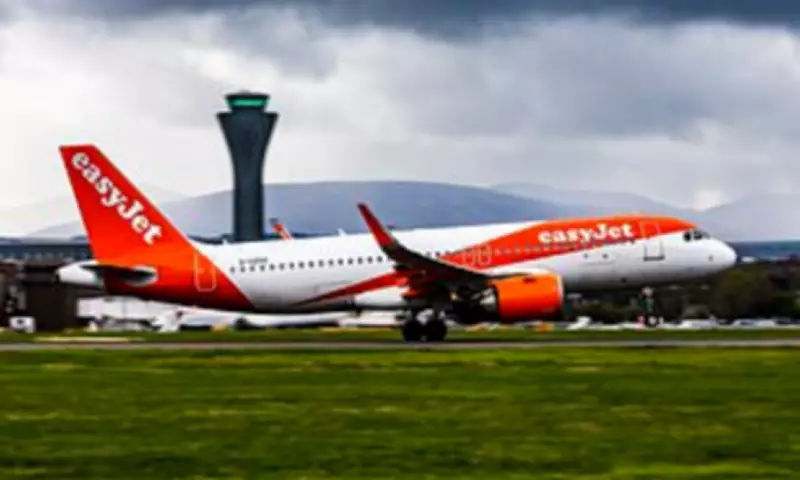
An EasyJet flight bound for Spain was compelled to execute an emergency landing in Portugal yesterday after the crew transmitted a critical 'squawk code' indicating a general emergency. The incident underscores the robust safety protocols within commercial aviation designed to handle unforeseen technical problems mid-flight.
Flight Path Interrupted by Technical Issue
Flight EZY3211 departed from Edinburgh Airport in Scotland yesterday morning shortly after 11:10 am. Its intended final destination was Fuerteventura in the Canary Islands, with a scheduled landing time around 4:00 pm. However, approximately two hours into the journey, the situation changed dramatically when the cockpit crew issued a 7700 squawk code.
In aviation terminology, a 7700 squawk code is a universal transponder signal denoting a general emergency. This alert can be triggered by a range of critical scenarios, including engine malfunctions, serious medical emergencies onboard, or indications of fire. In this instance, EasyJet confirmed the diversion was necessitated by a technical issue with the aircraft.

Swift Diversion and Passenger Care in Porto
As a direct result of the emergency signal, the Airbus was diverted to Porto Airport in Portugal, touching down safely at 1:30 pm. The pilot executed a routine landing procedure at the alternate airport. An EasyJet spokesperson provided details on the response, stating: 'The pilot performed a routine landing in Porto where we provided customers with refreshments in the terminal and arranged for a replacement aircraft and crew to continue the flight to Fuerteventura later that afternoon.'
The airline swiftly organised a replacement aircraft and a fresh crew. Passengers were accommodated in the terminal with refreshments before the journey resumed, ultimately reaching Fuerteventura as planned, albeit with a significant delay. The spokesperson emphasised the carrier's commitment, adding: 'The safety of our customers and crew is easyJet's highest priority and easyJet operates its fleet of aircraft in strict compliance with all manufacturers' guidelines.'
Understanding the Critical Role of Squawk Codes
This incident highlights the vital function of squawk codes in modern air traffic management. These four-digit transponder codes are used by air traffic controllers to identify and track aircraft. When a flight encounters an emergency, the crew will switch their assigned code to 7700.
This change immediately flags the aircraft on controllers' radar screens, displaying it alongside crucial data like speed and altitude. The alert enables Air Traffic Control to prioritise the flight, clear airspace, and coordinate necessary support, such as guiding the aircraft to the nearest suitable airport for an emergency landing.
Context: Recent Aviation Incidents Involving Emergencies
The EasyJet diversion follows other notable aviation emergencies investigated recently. Last year, a separate inquiry was launched into a Ryanair flight that came perilously close to fuel exhaustion. That flight, operated by Malta Air on behalf of Ryanair, was en route from Pisa, Italy, to Glasgow Prestwick Airport on October 3rd when it issued a 'fuel Mayday'.
That aircraft also broadcast a 7700 squawk code and was forced to make an emergency landing in Manchester after several unsuccessful attempts to land at both Prestwick and Edinburgh airports. Such incidents, while rare, demonstrate the established procedures airlines and authorities follow to manage in-flight emergencies and ensure passenger safety remains paramount.
While disruptive for travellers, the successful handling of Flight EZY3211's technical issue reflects the layered safety systems inherent in European aviation, designed to manage risks from minor faults to major emergencies with efficiency and care.