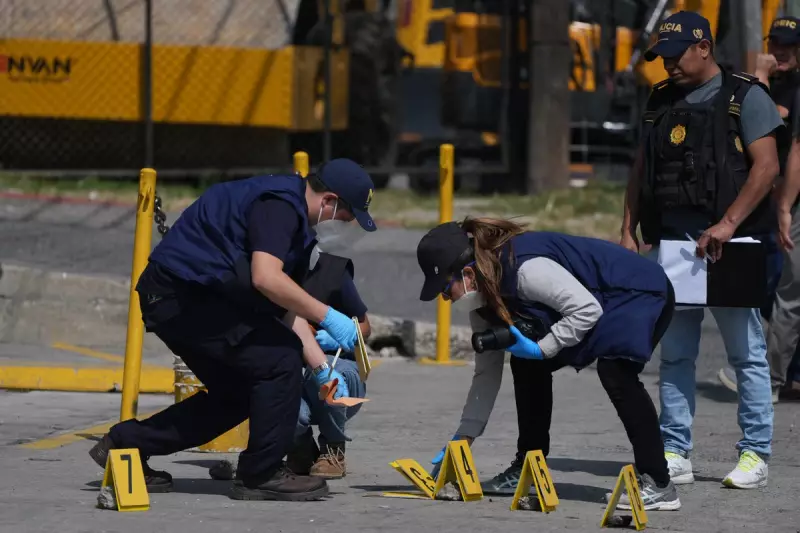
Guatemala has been plunged into a state of emergency after a wave of brutal, coordinated attacks by criminal gangs left nine police officers dead and dozens more injured. The violence, which began with prison riots over the weekend, has forced President Bernardo Arévalo to declare a 30-day state of siege, suspending key civil liberties across the Central American nation.
Wave of Violence and Prison Riots
The crisis erupted on Saturday, 17 January 2026, when inmates staged apparently synchronised takeovers at three separate prisons. During these riots, the gangs took 43 prison guards hostage. Authorities stated the gangs were using the situation to demand special privileges for their imprisoned members and leaders.
The situation escalated dramatically on Sunday morning. Shortly after police forces managed to liberate one of the seized prisons, suspected gang members launched retaliatory attacks on police units across the capital, Guatemala City.

Rising Death Toll and National Response
By Monday, 19 January, the National Civil Police confirmed the death toll from the attacks had risen to nine officers. Police Director David Custodio Boteo announced that a ninth officer succumbed to his injuries early that morning. "There are several wounded who are in critical condition," Custodio Boteo said, adding grimly that "some also suffered amputations." The fallen officers were honoured in a formal ceremony on Monday as the nation grappled with the scale of the assault.
In response, President Arévalo's declaration of a state of siege was published in the official government gazette on Monday. The decree, which took immediate effect from Sunday, justifies the move by citing "coordinated actions by self-named maras or gangs against state security forces, including armed attacks against civilian authorities." The Congress was expected to ratify the 30-day measure later on Monday.
Emergency Powers and International Reaction
The state of siege grants security forces sweeping powers, significantly curtailing citizens' rights. The measures include restrictions on freedom of movement, the authority to make arrests without a warrant, a ban on public demonstrations, and a prohibition on carrying weapons. Security personnel can also stop and search vehicles in designated areas and restrict traffic entirely.
The international community reacted with concern. The U.S. Embassy in Guatemala instructed its government personnel to shelter in place on Sunday. Although this order was lifted later the same day, staff were "advised to maintain a high level of caution when travelling." The U.S. government had already declared the Barrio 18 and Mara Salvatrucha gangs as foreign terrorist organisations last year.
This latest violence follows legislative action in October, when the Guatemalan Congress reformed laws to formally designate members of the Barrio 18 and Mara Salvatrucha gangs as terrorists. These legal changes were designed to impose longer prison sentences on gang members convicted of crimes.