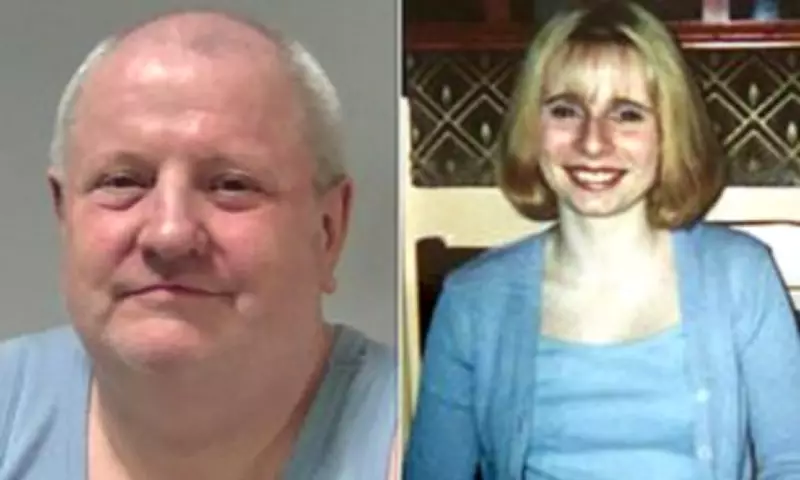
Suffolk Strangler Revels in Police Failures During Sentencing
Notorious serial killer Steve Wright displayed a chilling smirk on Friday as a court detailed how police blunders enabled him to escape justice for twenty-six years following his first murder. The sixty-seven-year-old predator, already serving a whole life sentence for killing five women in 2006, grinned in the dock while hearing how detectives missed multiple opportunities to stop his murderous spree.
Missed Opportunities and Failed Investigations
Wright was sentenced for the 1999 murder of seventeen-year-old Victoria Hall, his first known victim. The court heard how Suffolk Police failed to act on crucial evidence that could have identified Wright as a suspect decades earlier. His only surviving victim, Emily Doherty, described how officers dismissed her as a "silly little girl" after Wright attempted to kidnap her in Felixstowe just twenty-four hours before Victoria's murder.
Ms Doherty provided an accurate description of Wright, his vehicle, and partial license plate details, but investigating officers failed to log the incident as a crime, neglected to take proper notes, and didn't obtain a formal statement until two years after Victoria's death. The attending male officers suggested she had fabricated the story to secure a ride home and told her to "forget all about it."

Systemic Failures and Wrongful Prosecution
Despite Ms Doherty's detailed account, police conducted only a partial vehicle registration check that failed to identify Wright as the sole local suspect. His name was subsequently removed from the suspect list in June 2000, while detectives pursued a wrongful prosecution against an innocent businessman. This misguided investigation, led by Detective Roy Lambert, cost approximately two million pounds and resulted in acquittal when forensic evidence proved unreliable.
Meanwhile, Wright sold the car used in both attacks, took sick leave from work, and fled to Thailand before returning when he realized he had evaded detection. Seven years later, he embarked on his notorious 2006 killing spree, murdering five women in Ipswich's red-light district over six weeks.
Delayed Justice and Ongoing Concerns
Even after Wright's 2008 conviction for the 2006 murders, Suffolk Police continued to deny his involvement in Victoria Hall's death. It wasn't until a cold case review in 2020 that he was declared a suspect, with charges finally brought in 2024 following new DNA analysis linking him to Victoria's body.
During sentencing, Mr Justice Bennathan questioned whether police had conducted an inquiry into "what went wrong," to which prosecutor Jocelyn Ledward, KC, responded that Suffolk Police would decide whether to investigate "missed opportunities." The force has since refused to commit to any inquiry and offered no formal apology to Victoria's family, who described enduring "twenty-six years of hell."
Survivor's Anguish and Police Response
In her victim impact statement, Emily Doherty expressed profound anger and survivors' guilt, questioning whether Victoria might still be alive if police had taken her 1999 complaint seriously. "I have never been so scared in my life," she recalled of the attempted abduction. "When the police arrived, their first question was, 'How much have you had to drink tonight?' They didn't believe me."
Outside court, Suffolk Police congratulated investigating officers without acknowledging systemic failures, merely expressing regret that Ms Doherty was "disappointed by the initial response." Victoria's father, Graham Hall, refrained from criticizing police directly but stated the family would continue to endure their loss "forever."
Police have now launched an appeal for information about "possible previous offending" amid fears Wright may be responsible for additional unsolved murders. The serial killer showed no remorse during proceedings, shrugging when handed an additional forty-year sentence that ensures he will die in prison.