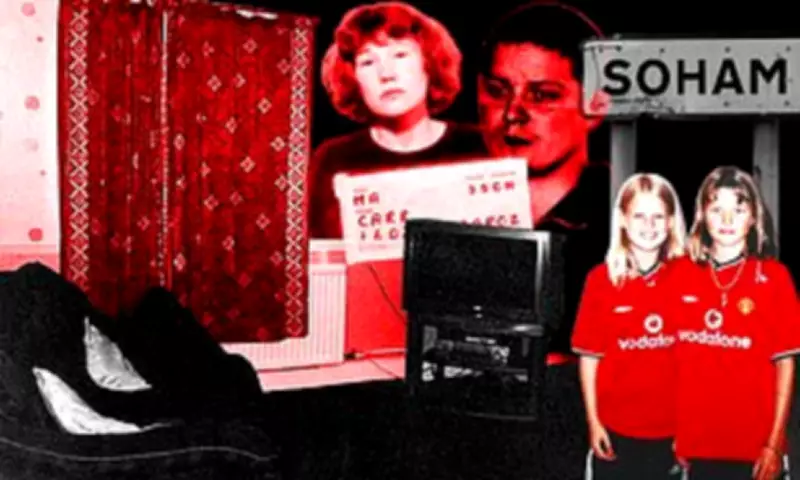
Soham Murders: A Reporter's Haunting Encounter with Killer Ian Huntley
More than a week after the disappearance of Soham schoolgirls Holly Wells and Jessica Chapman, I knocked on the door of Ian Huntley's cottage, seeking his assistance. Unbeknownst to me, I was about to step into the crime scene of one of the most horrific child murders of this century. Within minutes, I found myself seated on the sofa in the school caretaker's living room, as his fiancée Maxine Carr – later infamously known as Britain's most hated woman – offered a plate of custard cream biscuits. At that moment, I had no inkling that I was in the presence of one of modern history's most evil couples.
The Search for Holly and Jessica
Huntley is currently serving a life sentence for murdering 10-year-olds Holly and Jessica in his home in Soham, a Cambridgeshire market town forever tarnished by his vile crimes in 2002. The two best friends had ventured out to buy sweets on a summer afternoon when he lured them into his three-bedroom cottage. Their disappearance following a family barbecue sent shockwaves through the close-knit community and captivated the entire nation.
For two frantic weeks in August, Soham became the epicentre of one of Britain's largest and most intense missing child searches. Over 400 police officers were joined by concerned local residents and media members, all desperately trying to locate the lost schoolgirls as the nation held its breath. It was under these circumstances that I visited Huntley's home, ten days into the increasingly desperate hunt.
A House of Horrors
I had no notion that his glass-panelled front door was the gateway to a house of horrors, haunted by grisly secrets and a child sex predator nervously hoping to evade his fate. As a journalist, I needed the caretaker's help to borrow his television and VHS player. Minutes earlier, Cambridgeshire detectives had handed me a VHS cassette containing a pre-recorded police appeal to the girls' abductor. Without realising it, I was about to watch it with the abductor himself.
That afternoon, detectives had confided in journalists during a meeting in Soham's school hall. Once the doors were shut, they outlined their plan to find Holly and Jessica and requested our assistance. The timing was critical for the missing schoolgirls' families, who had endured ten long days and nights numb with terror, desperate for any news.
The Police Appeal
Detective Superintendent David Beck's plan was ambitious yet simple, relying on Jessica's missing blue Nokia 5110 mobile phone. He hoped that by tricking the kidnapper into switching on Jessica's phone, police could use its signal to locate the girls. He recorded a direct appeal to the abductor, which would be broadcast that evening on the Six O'Clock News. Police wanted journalists to watch the tape in advance to spread the message quickly, hoping the kidnapper would see it.
However, they did not provide transcripts; instead, they handed out copies on VHS cassettes. In 2002, VHS tapes were still common, but a television set with a VHS player was required. Along with Harriet, a reporter from another newspaper, I rushed out of the hall onto Soham's streets, clutching our cassettes and pondering how to view the police video.
Entering Huntley's Home
The solution presented itself almost immediately as we passed a house with a poster for the missing girls prominently displayed in the front window – the caretaker's cottage. Huntley worked at the town's secondary school, and his fiancée was a trusted teaching assistant at Holly and Jessica's primary school, St Andrew's. Both had given numerous interviews to aid the search, with Huntley even setting up chairs for press conferences in the school hall. They seemed likely to help.
The door to No.5 College Close opened slowly, revealing Huntley's pallid face. Harriet explained we had a videotape containing a police appeal to the girls' abductor and asked if we could come in to watch it due to looming deadlines. Huntley paused, looking unsure. With hindsight, we were asking the girls' killer himself if he wanted to watch a police appeal to the abductor. Still plotting to escape justice, Huntley must have been desperately scheming as we hovered on his doorstep.
After we pleaded, he agreed but insisted on checking with his girlfriend first. This seemed odd for such a minor request. At the time, no one but the wicked couple knew that Maxine Carr – who had shown off a sweet thank-you card from Holly – had provided her double killer boyfriend with a false alibi, making her one of Britain's most reviled women.
Inside the Living Room
We stepped inside and waited in the hallway at the foot of blue-carpeted stairs while Huntley went to find Carr. Just days later, police forensic officers would discover tiny traces of blood spattering in the hallway and at the top of the stairs near the main bedroom entrance. Huntley returned with Carr, and they directed us to the living room. Decorated in pale pastel shades with few personal knick-knacks, it felt soulless. Carr vanished and returned with a few custard creams on a chintzy oversized saucer; no one touched them.
Huntley laughed, remarking we were fortunate they still had a VHS machine as they were planning to get a DVD soon. He gestured for us to sit on the sofa, while he and Carr squatted on the carpet. He took the video cassette from me to insert into the machine. Carr spoke quietly for the first time, asking, 'Are we allowed to watch this?'
Watching the Appeal
The four of us fell silent as the small black TV flickered to life, and Detective Superintendent Beck's sombre face filled the screen. 'I appeal to you to work with me to stop this getting any worse than it is,' he intoned. 'You do have a way out.' Mr Beck had wanted the kidnapper to hear his message – and Huntley's face was barely two feet away from the detective's on the screen. If his plea meant anything to Huntley, he did not show it. The paedophile caretaker already knew what Holly and Jessica's parents did not – their children lay in a shallow grave, and their pitiful hopes would soon be extinguished.
Mr Beck continued slowly and purposefully: 'I have left you a message on Jessica's mobile phone. Listen to that message. It will tell you how to contact me – so you can stop this now. You have the opportunity to speak to me. This is the time to use it.' The policeman leading the hunt stared into the camera a final time and urged, 'Ring me by midnight tonight.'
Huntley's Chilling Reaction
The video lasted less than a minute, with Harriet and I scribbling down the words in our notebooks. Huntley and Carr gazed at the screen, emotionless and silent. After it finished, we compared shorthand notes to ensure accuracy and watched it a second time to double-check. As we prepared to leave, Huntley suggested playing it a third time. 'Shall I rewind and play it again, so you can make sure you've got it all?' he asked. We initially declined, but he persisted, and we agreed. Huntley rewound the videotape, and we all watched it again, silent apart from when Huntley shook his head and murmured, 'It beggars belief.'
This audacious pair were the very people Mr Beck's appeal was directed at, yet not a flicker of emotion crossed their faces. They appeared, like most in Soham, exhausted and concerned. We thanked the couple, took the video, and apologised for bothering them as we raced out the door. 'It's no trouble,' trilled Huntley. 'Anything to help get those two little girls back.'
The Aftermath and Legacy
Until brutally cut short by Huntley, Holly and Jessica's young lives were filled with fun. The 10-year-old classmates – who would be 33 now – shared a profound friendship and a passion for football, with Manchester United as their favourite team. On August 4, 2002, at 3.15pm, they changed into matching Manchester United red shirts and asked Holly's mother to take that indelible last photo. After a family barbecue, they left Holly's house at 6.15pm without telling anyone where they were going.
They walked side-by-side in their red shirts through Soham, with the last sighting by eyewitness Mark Tuck at around 6.30pm. No one except perverted Huntley knows exactly how he lured the innocent youngsters into his lair. At 6.46pm, Jessica's mobile phone was switched off. Their panicking parents called police later that evening, and for two weeks, the nation prayed the missing friends would be found safe.
Scores of journalists arrived in Soham to report on the story and assist police and families in publicising the search. Huntley and Carr both gave what were, in hindsight, jaw-droppingly cruel media interviews. Carr was seen bursting into nervous giggles on BBC Look East, repeatedly referring to the still missing girls in the past tense and laughing when corrected. Huntley approached a BBC journalist, asking, 'Have they found the girls' clothes?' – a Freudian slip since only their killer knew they were dead.
My colleague Brian Farmer, a veteran Press Association correspondent, found Huntley's answers so suspicious that he raised concerns with police. According to Huntley, the girls had enquired about Carr but not mentioned the dog he was washing, which Brian found strange. When asked if the girls had learnt about 'stranger danger' in school, Huntley jumped in to answer, speculating that 'Holly would probably get in the car and quietly go, but Jessica wouldn't, she'd put up a real fight and a real struggle.' Brian noted, 'He knew how they'd react because that's how they reacted – when he killed them.'
Carr's hopeless false alibi was the biggest giveaway, pretending she had been at home with Huntley on the night the girls vanished when she was actually 100 miles away socialising in Grimsby town centre, kissing another man in a nightclub. Thirteen days after their disappearance, the girls were found by a gamekeeper, their bodies rolled into a muddy ditch ten miles from Soham, with Huntley having set fire to them to destroy evidence. The cause of death for both was asphyxiation.
Huntley was charged with their murders, and Carr with attempting to pervert the course of justice. Both pleaded not guilty, prolonging the trauma for the families and earning Carr a reputation for callousness. Huntley's web of lies in the Old Bailey witness box brought him worldwide revulsion, as he pathetically claimed Holly had drowned accidentally and Jessica died while he tried to hush her.
Along with other journalists who had met Huntley and Carr, both Harriet and I gave witness statements to help the Crown Prosecution Service rebut their despicable defences. The jury took four days to find them both guilty. Huntley was sentenced to two terms of life imprisonment, with a minimum of 40 years behind bars; he is now 52. Carr, now 48, received three-and-a-half years. After her release, she was granted lifelong anonymity and a new identity to protect her from reprisals, living a secret life to this day.
Looking back on that surreal afternoon in the couple's living room, with Carr passing round custard creams and Huntley desperate to replay the video for his own nefarious reasons, it still sends a shiver down my spine. What kind of people would carry out such wickedness and then cheerfully offer visitors a chintzy plate of custard creams?