A landmark new law designed to rescue Ghana's crisis-hit fishing industry is facing accusations of failing to address the critical role played by women, who constitute the majority of the sector's workforce.
A Vital Industry Under Threat
Ghana's artisanal fishing sector is a cornerstone of the nation's economy and food security. It employs or supports an estimated two million people, roughly 10 per cent of the population, and contributes approximately $1 billion (£748 million) annually. The industry is under severe pressure from a triple threat: climate change, overfishing by foreign industrial trawlers, and recent cuts to vital foreign aid.
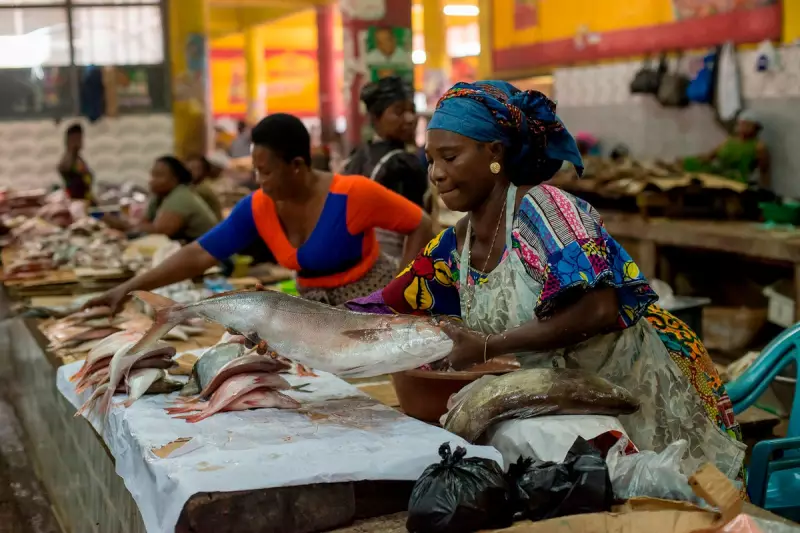
For workers like Esi Akomade, a 50-year-old mother of five from Mumford, these challenges are a daily reality. She begins her day at 4am, buying sardines, mackerel, and anchovies from returning fishermen, which she then cleans, smokes, and sells. "Due to the fact that I do not have a shed, when there are excessive rains, it destroys my oven since it is made out of clay," she explains. Her work, inherited from her mother and potentially destined for her children, is increasingly precarious due to volatile weather patterns and extreme heat.

The New Law and Its Blind Spot
In response to these mounting crises, the Ghanaian government signed the Fisheries and Aquaculture Bill into law earlier this year. Hailed as a potential saviour, the legislation promises key reforms including expanding the exclusion zone for foreign vessels from six to twelve nautical miles and establishing an independent fisheries management body.
However, advocacy groups argue the bill has a glaring omission. Matilda Ababio, acting country director for the CERATH Development Organization, states that while the bill addresses fish capture, it neglects the post-harvest sector. "The post-harvest, which is where a lot of women work, is not really paid attention to," she told The Independent. Women represent around 60 per cent of fishery workers, predominantly in processing, storage, and distribution.
These women often labour in hazardous conditions, using inefficient smoking ovens that expose them to detrimental heat and smoke. CERATH, which works with 26 fishing communities, promotes safer technologies and alternative incomes, but argues the new law perpetuates a dynamic where "women get overlooked."
Regulations and the Road Ahead
Ghana's Fisheries Minister, Emelia Arthur, acknowledges the concerns. She stated that the government is open to incorporating greater support for women in the implementing regulations, which are being devised until August next year. "If the point being made is that women in the fishery sector are not adequately catered for by the law, we will look at that," she said, highlighting serious health issues around traditional fish smoking.
The urgency for effective policy is amplified by recent foreign aid cuts. A $17.8 million USAID programme, the Ghana Fisheries Recovery Activity (GFRA), was terminated early this year, stripping communities of crucial support. According to Awo Ablo of Co-Impact, a philanthropic funder, such cuts have "disproportionately impacted women and girls," making targeted, gender-sensitive investment more critical than ever.
As Ghana strives to protect its fisheries, the success of its landmark bill may ultimately depend on recognising and empowering the women who form the backbone of the industry's post-harvest chain.