Government Shutdown Leaves Students Hungry as Federal Food Aid Frozen
American university students depending on federal food assistance are turning to their educational institutions for support as the Supplemental Nutrition Assistance Programme (SNAP) faces suspension during the ongoing government shutdown. The political stalemate in Washington has left millions of beneficiaries, including over 200,000 students in California alone, uncertain about their next meal.
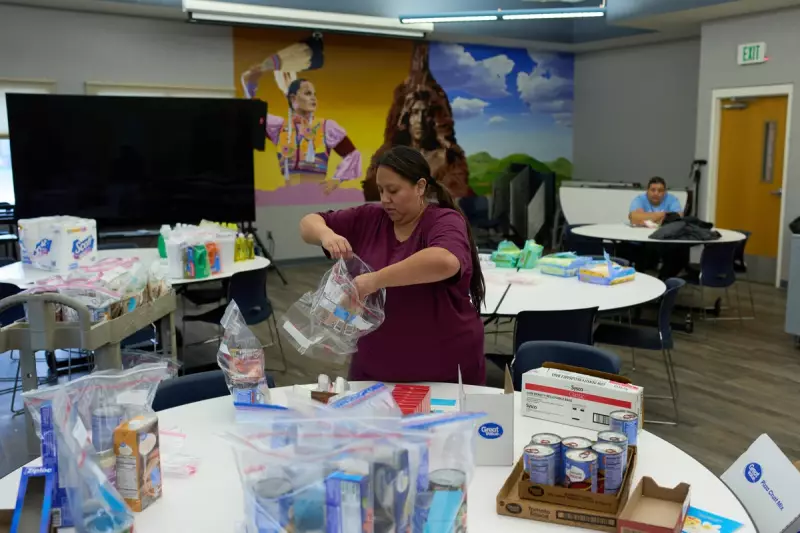
At California State University, Sacramento, the Basic Needs Resource Centre provides essential supplies to hundreds of students weekly. During a recent visit, shelves displayed everything from fresh vegetables and tinned meat to personal care items and secondhand clothing. Psychology student Antonette Duff, who relies on SNAP benefits, described the campus pantry as "a big blessing" during these challenging times.
Campus Emergency Services Struggle with Rising Demand
Emily Tupper, the university's director of Crisis Assistance and Resource Education Support, revealed that more than 3,600 students at the 31,000-strong institution receive SNAP assistance. Nationwide, the figure reaches approximately 1.1 million students according to the U.S. Government Accountability Office, while California's Department of Social Services reports over 200,000 student recipients in the state.
The situation became critical when SNAP benefits for roughly 42 million Americans were cut off at the beginning of November. Although a federal judge ordered the Trump administration to fully fund the programme last week, the Supreme Court temporarily blocked this order following an emergency appeal, creating confusion and anxiety among dependent students.
"It just puts students in a really horrible position," said Mike Hannigan, a student at Greenfield Community College in Massachusetts and campaigner against campus food poverty. Hannigan, who typically receives just under $300 monthly from SNAP, saw his November benefits delayed due to government processing issues.
Creative Campus Solutions Emerge Amid Funding Crisis
Educational institutions nationwide are implementing innovative approaches to address student hunger. Nueta Hidatsa Sahnish College in North Dakota, serving approximately 250 students, organises 'Soup Tuesdays' providing free meals to learners. The tribal college also operates a food pantry and distributes easy-to-prepare meal kits, with plans to introduce local grocery store gift cards.
College President Twyla Baker highlighted the additional challenges facing students in rural areas and on tribal lands, where limited supermarket access creates "food deserts." She condemned the political manoeuvring affecting vulnerable populations, stating: "To essentially use the most vulnerable as political pawns is just untenable. It's unsustainable, and it's detrimental to the country as a whole."
At the University of New Mexico in Albuquerque, between 100 and 150 students visit the campus pantry daily according to Lisa Lindquist, director of the LoboRESPECT Advocacy Centre. The facility, free to all students, sometimes requires staff to purchase additional supplies when donations run low. "The food just goes in and out so quickly," Lindquist observed. "That tells me anecdotally, there's great need."
Personal Struggles Highlight Systemic Problems
Sac State biology student July Star Medina experienced firsthand the impact of reduced benefits when her SNAP allocation decreased from $290 to $120 monthly this year. The adjustment followed increased summer working hours, but her benefits haven't been restored despite reduced employment during the autumn term.
"I don't think it's enough at all," Medina confessed. "After one week of groceries that'll last me maybe two weeks." The potential loss of even this reduced amount has increased her reliance on campus support services.
AJ Scheitler, director of the Data Equity Center at UCLA's Center for Health Policy Research, explained that students typically prioritise educational expenses above nutritional needs. "Food almost becomes this category that you can go without if you have to if after all of those other categories you don't have any money," she noted.
Scheitler warned of serious consequences if the situation persists: "The number of students who may have to drop out of school because they need to eat, their grades are going to fall. Their mental health is going to be hurt by the stress of not being able to eat."
As the political impasse continues, campuses like Sac State are preparing to increase their grocery pop-up events from twice monthly if federal food assistance remains uncertain, creating a vital safety net for students caught in the crossfire of Washington's budgetary battles.