Catherine Opie's Pioneering Photography Exhibition Opens in London
In an era marked by deep social divisions, the work of American photographer Catherine Opie offers a refreshing dose of human connection and understanding. Her first major UK exhibition, titled Catherine Opie: To Be Seen, is now on display at the National Portrait Gallery in London, running from 5 March until 31 May. Despite many of the images being over three decades old, they resonate with a contemporary urgency that challenges perceptions of time and identity.
Exploring Marginalised Communities with Emotional Depth
Catherine Opie, born in Ohio and based in Los Angeles, has built her career on documenting groups often overlooked in mainstream art narratives. Now 64, her portfolio includes intimate studies of surfers, high school footballers, and the lesbian subcultures of southern California. One of the most striking aspects of the exhibition is its focus on Los Angeles's "leather dyke" underground, a community with which Opie and many of her friends are closely associated. Through images featuring boots, piercings, and explicit S&M themes, she captures a tightly knit world that remains largely unfamiliar to British audiences.
The exhibition's poster image, a 1994 photograph of a tattooed, genderless individual, encapsulates the show's essence. This figure, seated cross-legged with a moustache and wearing a singlet and large boots, radiates a blend of confidence and underlying anxiety. It reflects today's gender-fluid society, making it hard to believe the photo is 30 years old. Opie's ability to portray such nuanced emotions highlights her skill in updating the narrative on human social and physiological transformation.

Artistic Influences and Personal Revelations
While the National Portrait Gallery emphasises Opie's references to Renaissance and Baroque masters like Caravaggio and Hans Holbein, the true power of her work lies in its raw, personal nature. Her breakthrough series, "Being and Having" from 1991, features close-cropped portraits of the artist and her friends wearing false moustaches and beards. On one level, it appears as playful clowning, but it also unsettlingly depicts women occupying masculine spaces, their fixed stares almost touching the camera lens.
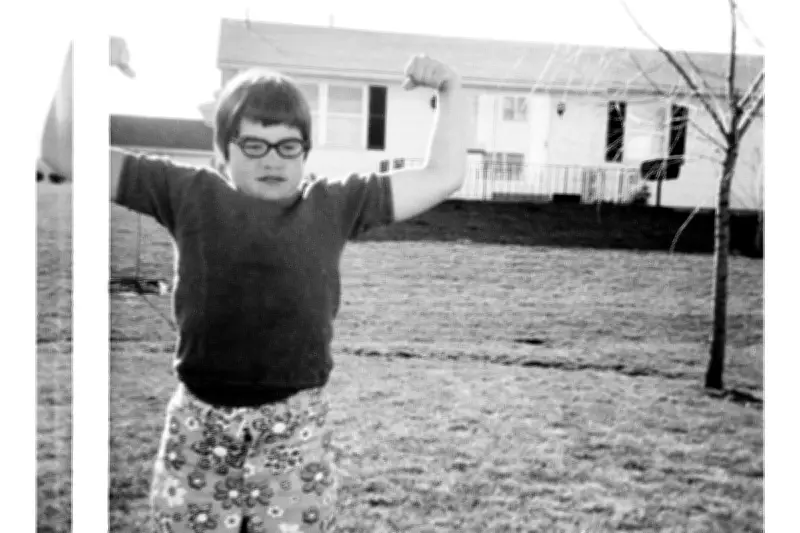
Opie's self-portraits add a deeply personal layer to the exhibition. She appears in various guises: as a nine-year-old posing as a muscle man, as her butch alter-ego Bo, and in the harrowing "Self-Portrait/Bleeding" from 1994, where her back drips with blood from carved stick figures representing an ideal nuclear family. A later work, "Self-Portrait/Nursing" from 2004, shows her breastfeeding her son Oliver, achieved through intrauterine insemination. This image of fleshy tenderness is so finely observed it's astonishing she took it herself, yet it's juxtaposed with the word "pervert" carved into her chest from an earlier piece, highlighting the complex interplay between self-abasement and domestic longing.
Compassion in Portraiture: Beyond Gender Norms
Despite the focus on masculinity and queer identities, Opie's portraits of surfers and footballers reveal a compassionate, even affectionate approach. These young men, often standing vulnerably before her large-format camera, are shielded by their boards and body armour. Opie's meticulous lighting gives their faces a glow of exaltation, set against mundane backdrops like beaches and football fields, emphasising their humanity amidst everyday settings.
A room of starkly lit portraits with black backgrounds, described in wall texts as reframing Baroque drama, may lack the spiritual depth of masters like Caravaggio, but Opie's hyper-detailed shots of conceptual artists Laurence Weiner and John Baldessari evoke a Rembrandt-like sense of observed humanity. This contrast underscores her versatility and emotional range.

Why Opie's Work Feels Fresh Today
The prevailing mood in Opie's photography is one of warmth and emotional generosity, defying expectations of cold stylishness often associated with S&M-inspired art. In a world increasingly characterised by desperation and alienation, her small acts of kindness and empathy, captured through the camera lens, feel radical and timely. This emotional resonance is a key reason why these 30-year-old images appear so contemporary, offering a vital reminder of the power of human connection across subcultures and generations.
Catherine Opie: To Be Seen not only showcases her technical prowess but also invites viewers to reflect on identity, community, and the enduring need for visibility in an ever-changing world.