Catherine Opie's UK Exhibition: A Bold Statement on Queer Visibility
Catherine Opie's inaugural large museum exhibition in Britain, titled To Be Seen, is making waves at the National Portrait Gallery in London. Running from 5 March to 31 May, this showcase features pivotal works from the 1990s onward, highlighting the American photographer's profound commitment to representing gay, lesbian, and queer communities often overlooked in mainstream art history.
Art as a Form of Bravery and Sincerity
For 27 years, Opie taught photography at the University of California, Los Angeles, instilling in her students the importance of bravery in public art. To Be Seen embodies this ethos, presenting iconic pieces such as her portraits of friends and members of LA's 1990s leather dyke scene. Notable works include the androgynous Pig Pen, the gender-norm-challenging Being and Having series, and Dyke, featuring a friend with the word tattooed across her neck.
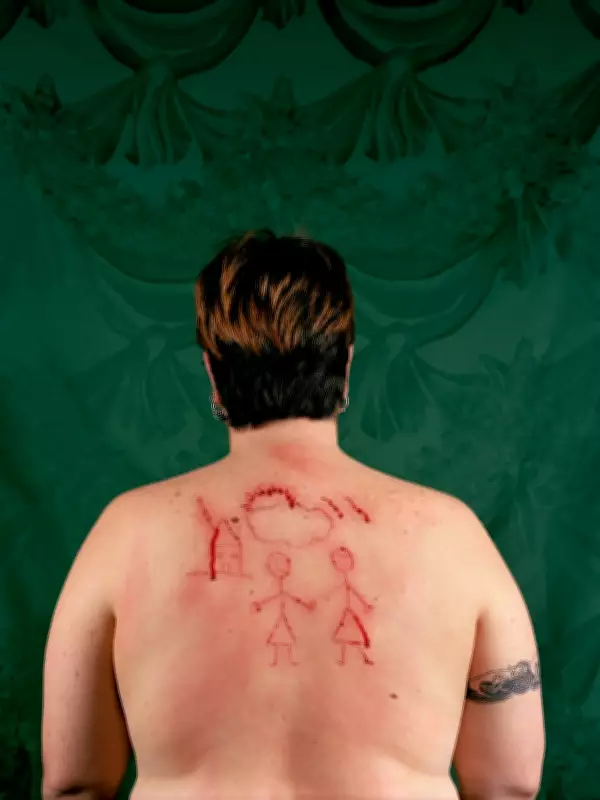
In 1993, Opie created Self Portrait/Cutting, an image that has become, somewhat annoyingly to her, her most famous photograph. It depicts a child's drawing of a house and family carved into her back, a piece often misinterpreted as merely shocking. Opie clarifies that her intent was deeper, aiming to explore the relationship between queer domestic life and a homophobic society.

Personal Narratives and Broader Themes
Opie's work resonates on a primal level, as seen in Divinity Fudge, a portrait of a performance artist, and Self-Portrait/Nursing, where she breastfeeds her son Oliver while bearing scars from previous artworks. These images oppose bigoted notions of radical lifestyles, instead embracing vulnerability and sincerity. Opie describes sincerity as a core value, ironically noting its Christian roots while feeling excluded by Christianity due to her sexual orientation.
Her journey into photography began at age 11, inspired by a Lewis Hine photo of a child laborer, which mirrored her own factory-owning family background in Ohio. This early exposure to creativity, despite familial resistance, fueled her artistic path. Moving to California at 13, Opie developed a fascination with the American heartland and its margins, reflected in works like Self-Portrait 1970, showing her as a non-conformist child.
Expanding Horizons and Challenging Assumptions
In the late 2000s, Opie broadened her focus with portraits of school football players across the US, exploring themes of American landscape and masculinity. This shift responded to critics who questioned her exclusive focus on queer subjects, a scrutiny rarely applied to straight artists. Opie humorously remarks, "I'm dying for the day when every single heterosexual child has to come out to their parents as heterosexual."
Beyond fine art, Opie has maintained a commercial career, shooting for brands like Gucci and publications such as LA Weekly. This practical experience, she says, enriches her artistic toolbox, emphasizing capability and versatility. Her cool reputation in fashion circles even includes admiration from figures like Madonna.
Provocative Art and Double Standards
Opie addresses double standards in art, particularly regarding Self-Portrait/Cutting. In the exhibition's audio guide, she encourages viewers to engage children with questions about representation rather than shielding them from perceived shock. She draws parallels to religious imagery, stating, "As soon as the Vatican puts trigger warnings on its work, I'll put trigger warnings on mine."
Ultimately, To Be Seen serves as a powerful rebuke to exclusionary narratives, asserting the moral right to exist through art that is both personal and universally moving. Opie's work continues to challenge and inspire, making this UK show a landmark event in contemporary photography.