Euan Uglow Exhibition Review: Technical Mastery That Leaves Viewers Cold
A new retrospective of the artist Euan Uglow at MK Gallery in Milton Keynes showcases over 70 of his regimented paintings, but the exhibition leaves many viewers feeling emotionally detached. Titled Euan Uglow: An Arc from the Eye, the show runs from 14 February to 31 May 2025 and highlights the artist's painstaking, slow process that often saw models, including a young Cherie Blair, bow out before portraits were completed.
The Painstaking Process of an Artist's Artist
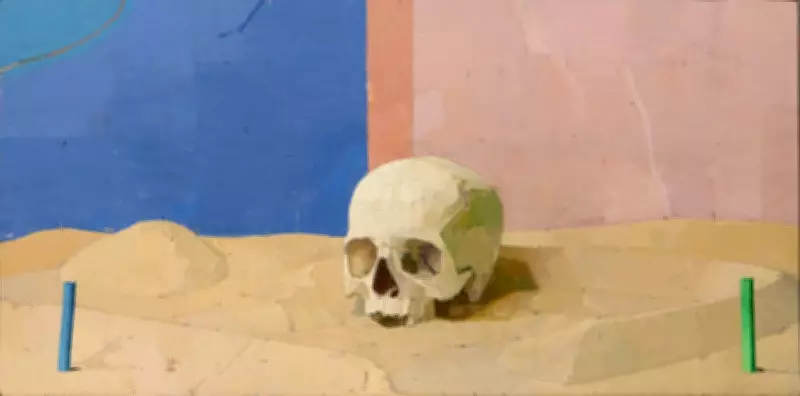
Euan Uglow, who died in 2000 aged 68, is often described as an artist's artist, a label that underscores both his technical prowess and the challenge for general audiences. His work, influenced by Paul Cézanne and Alberto Giacometti, is marked by complex dashes, crosses, plumb lines, and geometric grids visible on the canvas. While these elements might fascinate those interested in construction and perspective, they can render the paintings cold and static to others seeking inspiration or emotional connection.
The exhibition opens with a slightly frustrating room featuring only two of Uglow's paintings among seven works, including pieces by his tutors from the Camberwell School of Arts and Crafts and the Slade. However, the following room brings Uglow into better focus, tracing his development after he rented a studio in Battersea, London, in 1959. Early works like Marigold (1969) show flashes of life with vibrant cerulean and ochre bursts against black, but these moments are rare in the broader collection.

Nudes and Models: A World Apart from Contemporaries
A central room is devoted to Uglow's large-scale nudes, which stand in stark contrast to the fleshy, emotional works of his London contemporaries such as Frank Auerbach, Francis Bacon, and Lucian Freud. Instead, Uglow's naked women often resemble carcasses, with bones jutting at awkward angles and a lack of meatiness. In Root Five Nude (1974-75), for example, the left breast appears upright and stiff, defying natural flopping, contributing to an overall sense of freeze rather than frieze.
Uglow's demanding process required models to pose for extended periods, sometimes years, leading to high dropout rates. The Diagonal (1971-77) took six years to complete, and Three in One (1967-68) used three models, with a ghostly white outline hinting at a previous girl's arm. This laborious approach is underscored by a clunky white heater in the painting, symbolising the chillingly slow creation.
Cherie Blair and the Unfinished Portraits
One notable sitter was Cherie Blair, who appears twice in the exhibition, including a semi-naked portrait in an open blue shift dress that sparked tabloid interest. Introduced to Uglow as a trainee barrister, she posed before realising she lacked the time his meticulous methods demanded. Her unfinished portrait hangs beside a more polished canvas modelled by a substitute, illustrating the common theme of abandonment in Uglow's work.
Despite moments of brilliance, such as the intimate pinkish sole in Pepe's Painting (1984-85) or the character in a flexed foot in The Diagonal, many pieces fall flat. The pink legs in Zagi (1981-82) look like they've emerged from a too-hot bath, and Nuria (1998-2000) resembles a Sarah Lucas bunny without the humour.
The Trouble with Uglow: Art for Art's Sake
Uglow once said, "I want the brain to intervene between the observation and the mark," and often emphasised that "the proper subject of a painting is painting itself." While this philosophy may appeal to purists, it often results in an unenriching viewing experience. In an age of AI, his dedication to time and effort is reassuring, but excessive methodology can suck the life out of art.
The exhibition concludes with still lifes, including a daisy, a plastic cake, a toy palm tree, and a spoiled peach. The final work, Mouse Loaf (1991-92), took over a year to paint as rodents nibbled the bread mound, which Uglow filled with plaster to prevent collapse. This piece encapsulates the show's theme: life chewed cold, leaving viewers with a sense of technical admiration but emotional emptiness.