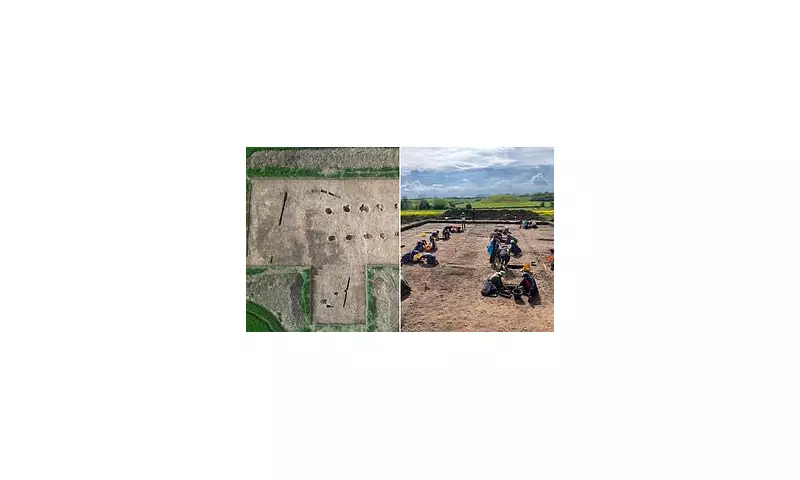
Archaeologists from the University of York believe they have uncovered the remains of a high-status hall that belonged to Harold Godwinson, the last Anglo-Saxon King of England. The discovery was made near the site of Skipsea Castle in East Riding of Yorkshire.
A Site of Wealth and Power
The excavation, co-led by University of York lecturer Jim Leary, revealed evidence of a large timber hall built on land historically owned by King Harold. The team's findings point to a location of significant wealth and influence, including a rare sunken tower, a malthouse for brewing beer, and a piece of worked amber intended for jewellery.
The discovery of the tandoori-style oven and charred seeds confirmed the site was used for malting around the year 750 or 850. The subsequent hall built atop it, along with the tower, are strong indicators of a lordly centre, a place where the elite lived and conducted business.

Connecting the Dots to 1066
Harold Godwinson's reign was brutally cut short in 1066 when he was killed by the forces of William the Conqueror at the Battle of Hastings. This event, famously depicted in the Bayeux Tapestry, ended over 400 years of Anglo-Saxon rule. The Normans systematically removed traces of the previous rulers, making this discovery particularly significant.
Mr Leary noted that while the land is recorded as Harold's, there is no concrete proof he ever visited. However, the architectural style provides a compelling link. "The tower may relate to Godwinson, as he did have a similar tower in Bosham in Sussex. We know he had it because it was depicted in the Bayeux Tapestry," he told The Mail.
Surprises from the Soil
The six-year project, which also serves as a field school for York undergraduates, has consistently yielded unexpected results. Co-director Elaine Jamieson expressed surprise at the scale and rarity of the finds, particularly the sunken tower and the malthouse, which they had no prior indication existed.
The team also found evidence of Iron Age ritual activity at the site, adding deeper historical layers to the location. The dig is featured in the upcoming January series of the BBC's Digging for Britain.
With excavations set to continue next year, archaeologists are hopeful of uncovering more secrets. The site is now a strong candidate for being the lost lordly centre of Cleeton, a settlement mentioned in the Domesday Book. As Mr Leary stated, the project "has blown us away" and remains "tremendously exciting" for all involved.