WADA Delays Decision on Potential Ban for Officials Over Unpaid Dues
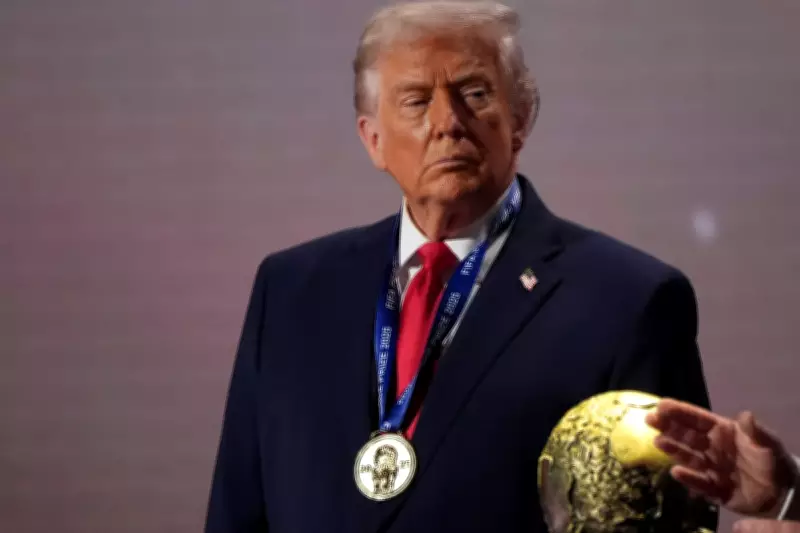
The World Anti-Doping Agency (WADA) has postponed a critical decision regarding the prohibition of government officials from major sporting events if their nations voluntarily withhold financial contributions. This deferral pushes a potential confrontation with figures such as former President Donald Trump and other U.S. lawmakers until at least after the upcoming 2026 World Cup, which is set to be hosted by the United States, Canada, and Mexico.
Timeline and Implications of the Proposed Rule
During a meeting on Tuesday, the WADA executive committee announced that it will reconsider the proposed regulation in September, two months following the conclusion of the World Cup. If adopted later this year, the rule would likely take effect before the 2028 Los Angeles Olympics. The United States has not fulfilled its dues since 2023, and if this pattern persists, the new rule could place Trump and U.S. legislators on a banned list for events in their own country. However, there are significant doubts about whether an anti-doping regulator possesses the authority to prevent such officials from attending the Olympics.
This conflict with WADA has not emerged as a particularly partisan issue within the United States. The country withheld payments in both 2024 and 2025, spanning the administrations of both Donald Trump and Joe Biden. The total amount withheld over these two years amounts to $7.3 million, a protest against WADA's handling of a case involving Chinese swimmers and other contentious matters.

Clarifications and Stakeholder Concerns
WADA spokesman James Fitzgerald previously indicated to The Associated Press that the proposed rule would not be applied retroactively, meaning events like the World Cup and the Los Angeles and Salt Lake City Games would not be affected. However, a copy of the proposal obtained by AP did not include specific language to support this claim, and Fitzgerald did not respond to multiple emails seeking further clarification on his use of the term "retroactively."
After the meeting, WADA director general Olivier Niggli emphasized the seriousness of the issue, stating, "the withholding of contributions by governments for political or other voluntary reasons remains a serious topic of concern for all WADA's stakeholders." He added that funding instability directly impacts the functioning and development of the World Anti-Doping Program, ultimately negatively affecting athletes worldwide.
Historical Context and International Dynamics
WADA began exploring this issue in 2020, coinciding with the U.S. threats to withhold funds. The agency asserts that the proposal to penalize governments for non-payment is not specifically targeted at the United States. During the Biden administration, U.S. representative Rahul Gupta, who served as drug czar, led efforts to reject the proposal in 2024. Since then, the U.S. has lost its position on the executive committee.
The proposal resurfaced earlier this year, and in correspondence with European decision-makers, WADA suggested that such a measure could be adopted "without undue delay." European officials questioned why the executive committee was revisiting the issue before a working group had completed its analysis. Any decision by the executive committee would require ratification by the WADA foundation board, with its next meeting scheduled for November, though WADA indicated in a February letter that the board could convene sooner if necessary.