Five Centuries of Passion Revealed in Historic Love Letters Exhibition
As Valentine's Day approaches, the National Archives in London is preparing to unveil a captivating exhibition that explores the many facets of love through handwritten correspondence spanning five remarkable centuries. Titled "Love Letters," this extraordinary display brings together intimate documents that reveal the universal human experiences of longing, joy, heartbreak, and sacrifice.
From Royalty to Commoners: The Spectrum of Affection
Curator Victoria Iglikowski-Broad explains that the exhibition showcases "legendary romances from British history" alongside the heartfelt expressions of everyday people. "We're trying to open up the potential of what a love letter can be," she revealed. "Expressions of love can be found in all sorts of places, and surprising places."
The collection demonstrates remarkable diversity in both content and form. Visitors will encounter everything from early twentieth-century classified advertisements seeking same-sex romance to tender correspondence between sweethearts separated by war. The exhibition even includes a medieval song lamenting heartbreak, demonstrating how the expression of romantic feeling has evolved across generations.

Iconic Historical Documents and Personal Sacrifices
Among the most poignant items is a letter from Robert Dudley, Earl of Leicester, to Queen Elizabeth I, written just days before his death in 1588. This document, marked "his last lettar" in the idiosyncratic spelling of the period, reveals the intimate connection between the monarch known as the "Virgin Queen" and the man who called himself "your poor old servant." The letter was discovered at Elizabeth's bedside when she died nearly fifteen years later.
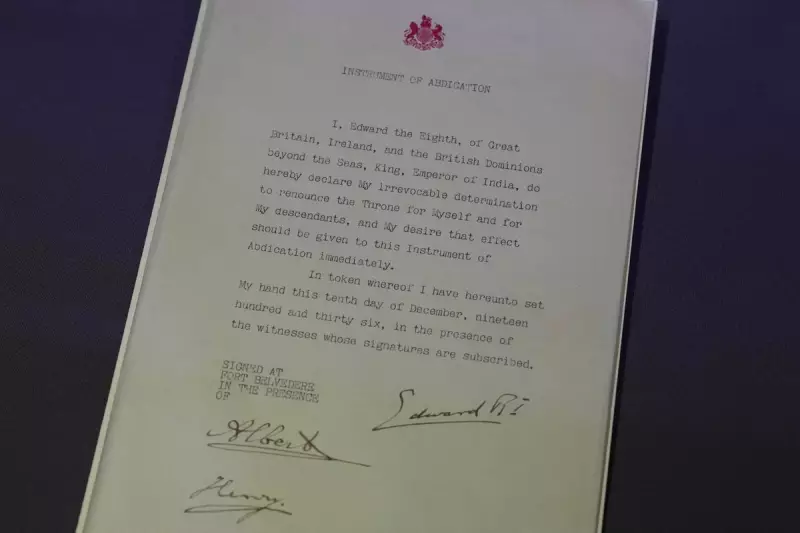
The exhibition thoughtfully juxtaposes documents from vastly different social strata. An 1851 petition from Daniel Rush, an unemployed seventy-one-year-old weaver, begs authorities not to separate him from his wife by sending them to different workhouses. This heartfelt plea is displayed alongside the Instrument of Abdication through which King Edward VIII relinquished the throne in 1936 to marry "the woman I love," the twice-divorced American Wallis Simpson.
"There is a lot of connection in these two items even though on the surface they seem very different," observed Iglikowski-Broad. "In common they have just this human feeling of love... that the sacrifice is actually worth it for love."
Tragic Romances and Dangerous Liaisons
Some documents reveal love stories that ended in tragedy or danger. A letter from Catherine Howard, the fifth wife of King Henry VIII, to her secret lover Thomas Culpeper in 1541 demonstrates what archives historian Neil Johnston describes as "restrained panic." Catherine signs the letter "yours as long as life endures" - a promise that proved tragically brief when both she and Culpeper were executed for treason after the king discovered their affair.
Another section features Lord Alfred Douglas's unsuccessful plea to Queen Victoria to pardon his lover Oscar Wilde, who had been sentenced to two years imprisonment for gross indecency. Nearby, visitors can examine a never-before-displayed 1944 letter from British intelligence officer John Cairncross to his former girlfriend Gloria Barraclough, in which he reflects on what might have been between them. Cairncross would later be unmasked as a Soviet spy.
Rare Glimpses into Royal Intimacy
A particularly rare treasure is a letter from Queen Henrietta Maria to King Charles I, whom she addresses as "my dear heart." Such intimate correspondence between monarchs is exceptionally uncommon, as Britain's royal family traditionally guards its private papers closely. This letter was discovered among possessions abandoned by the fleeing king in 1645 after a battlefield defeat during the English Civil War.
"We don't have very many intimate letters between monarchs like this," noted Johnston. "This is a little gem within the disaster of the English Civil War." The document eventually found its way into Parliament's archives before being transferred to the National Archives last year.

Beyond Romantic Love: Family Bonds and Friendship
The exhibition thoughtfully expands the definition of love beyond romantic relationships. Family bonds are beautifully illustrated through Jane Austen's handwritten will from 1817, in which she leaves almost everything to her beloved sister Cassandra. Another document features a 1956 letter from the father of London gangster twins Reggie and Ronnie Kray, imploring a court to show leniency toward his sons because "all their concern in life is to do good to everybody."
The "Love Letters" exhibition opens to the public on Saturday and will run through April 12th. Admission to this remarkable collection of historical intimacy is completely free, offering visitors a unique opportunity to connect with five centuries of human emotion expressed through the written word.