Claims of 'Rediscovered' Michelangelo Bust Unsettle Art World Experts
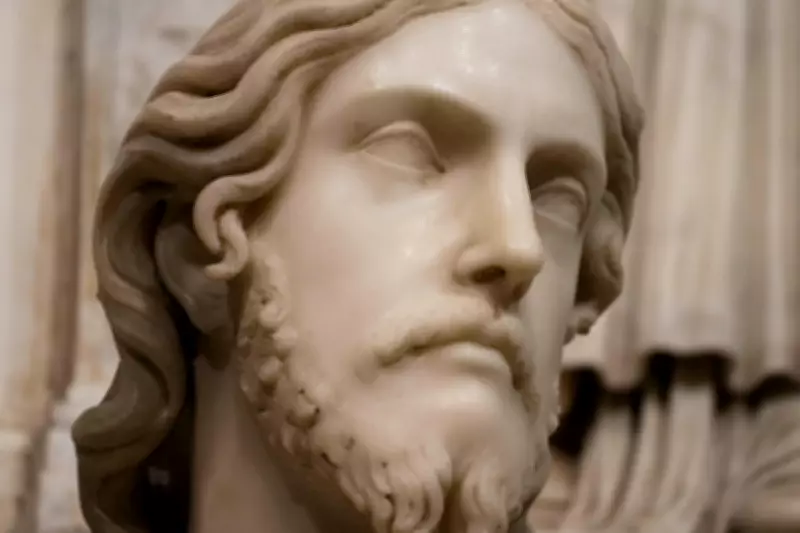
An independent researcher has asserted that a marble bust of Christ housed in a Roman church is the work of Michelangelo, creating significant unease among Renaissance art scholars. This latest purported attribution to the Renaissance master, whose works remain among the most imitated in global art history, has emerged amid heightened sensitivity following recent high-profile authentication controversies.
High-Stakes Attribution Claims
Valentina Salerno, the researcher behind the claim, announced her findings at a press conference on Wednesday, suggesting that documentary evidence supports attributing not only this bust but several other works to Michelangelo. Her theory, published on the commercial website academia.edu rather than through peer-reviewed academic channels, has drawn particular attention because the Vatican initially showed interest in her research.
The timing coincides with the 550th anniversary of Michelangelo's birth, marked by numerous exhibitions, conferences, and commemorations celebrating his artistic legacy. This anniversary context has amplified interest in any potential new discoveries related to the Renaissance genius.

Expert Reactions and Institutional Responses
Leading Renaissance experts have largely declined to comment on Salerno's claims, reflecting the cautious approach within academic circles toward unverified attributions. The recent sale of a disputed Michelangelo sketch for $27.2 million at Christie's auction has further heightened awareness of the financial and reputational stakes involved in such authentication debates.
Italian authorities have taken protective measures regardless of the attribution question. The Carabinieri's art squad has secured the sculpture with an "Alarm armed" sign while refraining from commenting on its authenticity. Lieutenant Colonel Paolo Salvatori emphasized that "this asset, which belongs to our cultural heritage regardless of whether it can be attributed to Michelangelo Buonarroti or not, is part of the national heritage that we are responsible for defending."
The Bust in Question
The marble bust resides in the Basilica of Sant'Agnese fuori le mura in Rome, currently listed by Italy's culture ministry as an anonymous work from the 16th-century Roman school. Salerno contends that multiple documents from the centuries following Michelangelo's death correctly attribute the work to the artist, but that a 1984 scholar erroneously debunked this attribution.
According to Salerno's research, the bust may have been modeled on Michelangelo's intimate friend Tomaso De' Cavalieriis and formed part of the artistic inheritance Michelangelo left to his students. She reached her conclusions by tracing wills, inventories, and notarized documents held in church and state archives, as well as archives of Roman confraternities to which Michelangelo and his students belonged.
Historical Precedents and Scholarly Skepticism
This is not the first time the bust has been attributed to Michelangelo. Nineteenth-century French writer Stendhal previously noted during a visit to the Sant'Agnese church that "we noticed a head of the savior which I should swear is by Michelangelo." However, as Michelangelo expert William Wallace noted in a 1996 ArtNews article, "Stendhal's vow notwithstanding, the head has never been taken seriously, and nowadays would not even appear in a catalog raisonné under 'rejected attributions.'"
Wallace, who serves on a Vatican scientific committee with Salerno, acknowledged that her methodology shows sound research practices and noted Europe's tradition of non-credentialed researchers producing solid work. He agreed with her thesis that Michelangelo didn't destroy his works in a fire, as was commonly believed, but rather entrusted remaining works to his students.
However, Wallace disputes Salerno's conclusion that a significant treasure of Michelangelo's works was secretly preserved, arguing that Michelangelo simply wasn't producing much in his final years while overseeing six architectural projects in Rome. He emphasized that proper academic scholarship would require Salerno to transcribe documents and undergo peer-review processes.

Vatican Involvement and Committee Dynamics
Salerno's research attracted the attention of Cardinal Mauro Gambetti, who oversees St. Peter's Basilica. Gambetti appointed Salerno and her mentor to a 2025 scientific committee formed to discuss a potential Vatican exhibition commemorating Michelangelo's birth anniversary.
Committee members, including Barbara Jatta (director of the Vatican Museums), Hugo Chapman (curator at the British Museum), and Wallace, have either distanced themselves from Salerno's work or declined to comment. Some expressed surprise at her inclusion alongside leading Renaissance scholars, given her background as an actress and fiction author without formal art history credentials.
Broader Context of Art Attribution Claims
Italy has witnessed numerous claims regarding rediscovered works by famous artists throughout art history, with regular occurrences of fakes, frauds, and new "discoveries" involving artists like Modigliani. Wallace noted that since 2000 alone, approximately 45 works have been attributed to Michelangelo with dramatic headlines proclaiming each as "the greatest discovery of the time" or something that "will change everything we think about Michelangelo"—only to be forgotten within years.
Salerno maintains that she will continue providing documentary evidence as her research progresses, stating that "according to the documents, the object is attributed to Michelangelo." She also claims to have uncovered evidence of a secret "pact of indissolubility" among Michelangelo's students and their heirs to preserve his works after his death, including a previously unknown chamber requiring three keys held by different students to open.
As the art world awaits further developments, the controversy highlights the complex interplay between documentary research, academic skepticism, and the enduring fascination with one of history's most celebrated artists.