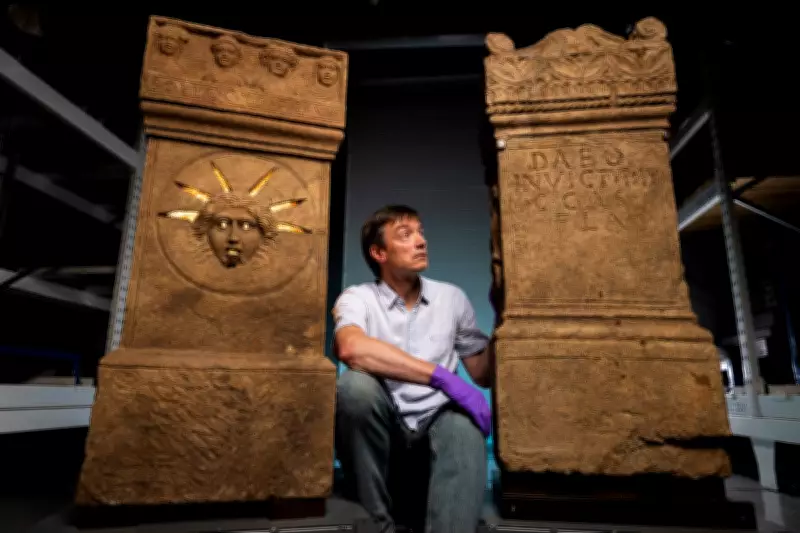
In a significant archaeological development, two Roman stone altars, unearthed at a fort near Edinburgh, have been acquired by National Museums Scotland and are poised for their public debut. Dating to approximately 140AD, these remarkable artefacts once served as the central features of the Roman Empire's most northerly known temple dedicated to the god Mithras, located at Inveresk in East Lothian.
Unveiling the Mysteries of the Mithras Cult
Experts highlight that the cult of Mithras was a secretive, male-only religion, and these altars provide fresh perspectives into the beliefs and daily lives of Roman soldiers stationed on the frontier. One altar vividly depicts the sun god Sol, with traces of original paint still visible, while the other honours Mithras and includes symbols associated with Apollo. Both were dedicated by a legionary centurion, underscoring their historical and religious significance.
Conservation and Exhibition Details
Following extensive conservation efforts to preserve their intricate details, the altars will be a centrepiece of the upcoming Roman Scotland: Life On The Edge Of Empire exhibition at the National Museum of Scotland. Scheduled to open in November 2026, this exhibition aims to showcase the rich history of Roman influence in Scotland, with these altars offering a unique glimpse into the spiritual practices of the era.

The discovery of these altars near Edinburgh adds to a growing body of archaeological finds in the UK, such as the recent unearthing of a large Roman villa in Wales, often referred to as 'Port Talbot's Pompeii'. This highlights the ongoing importance of archaeological research in uncovering the layered history of Roman Britain.