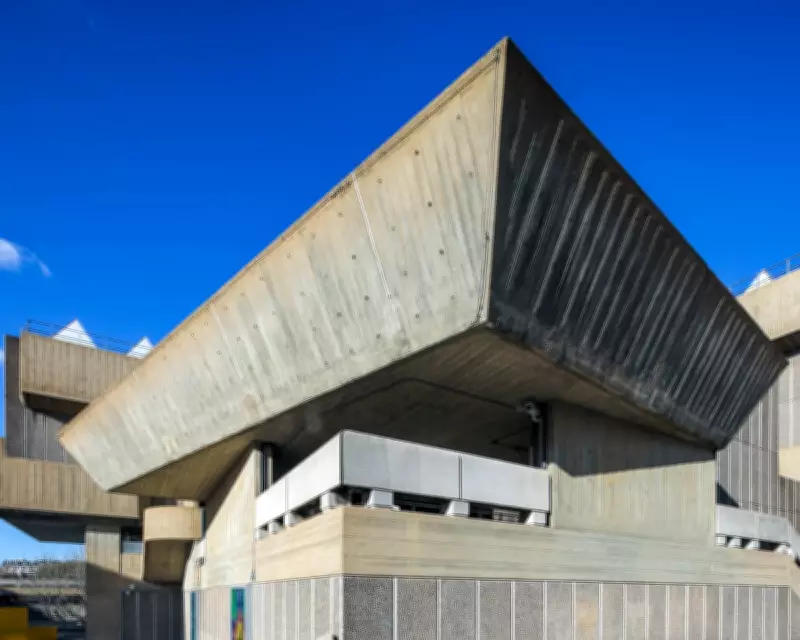
Southbank Centre Awarded Protected Status Amidst Architectural Debate
The Southbank Centre, a prominent cultural complex situated along the River Thames in London, has officially been granted protected status. This designation, announced in February 2026, acknowledges the centre's significant architectural and historical value, cementing its place as a key landmark in the UK's cultural landscape.
A Striking Yet Divisive Architectural Icon
Known for its bold and modernist design, the Southbank Centre has long been a subject of public fascination and controversy. Its striking appearance, characterised by brutalist elements and expansive concrete structures, has polarised opinions since its inception. While many admire its innovative and imposing aesthetic, others criticise it as austere and unwelcoming, sparking ongoing debates about its place in London's architectural heritage.
The protected status comes after years of advocacy from heritage groups and cultural organisations, who argued that the centre represents a critical period in post-war British architecture. This move ensures that any future modifications or developments at the site will require careful consideration and approval, safeguarding its original design intent and historical integrity.

Implications for London's Cultural Scene
As a hub for arts and entertainment, the Southbank Centre hosts a wide range of events, including concerts, exhibitions, and festivals, attracting millions of visitors annually. The new protected status is expected to enhance its role by providing greater stability and recognition, potentially boosting tourism and cultural investment in the area.
However, this decision has also reignited discussions about the balance between preservation and modernisation. Some stakeholders express concerns that stringent protections could hinder necessary updates or adaptations to meet contemporary needs, while others celebrate it as a victory for cultural conservation.
In summary, the Southbank Centre's protected status marks a significant milestone, highlighting its enduring impact as both a celebrated and contentious symbol of London's architectural and cultural identity. This development underscores the complex interplay between public opinion, heritage preservation, and the evolving demands of a dynamic urban environment.