Tracey Emin's Candid Reflections on Health, Art, and Reform's Threat
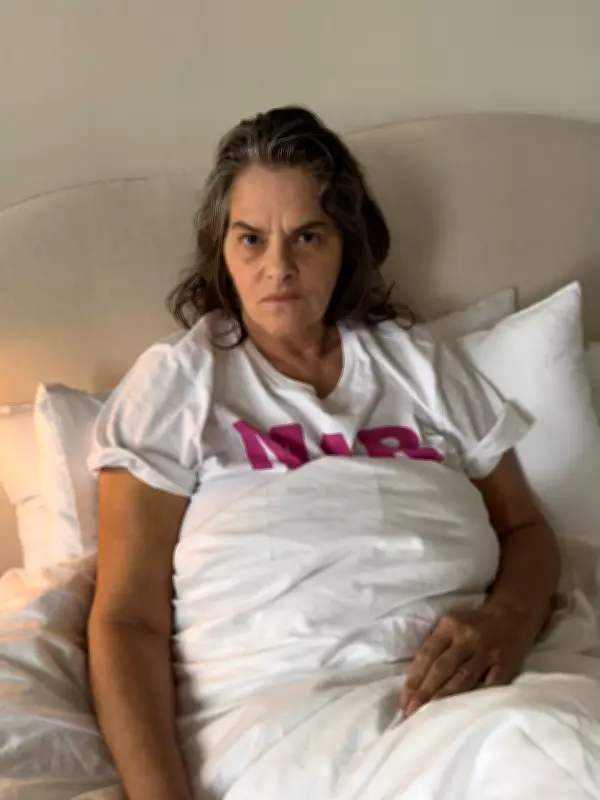
Tracey Emin, the renowned British artist, welcomes visitors into her expansive Georgian home in Margate, where her two cats, Teacup and Pancake, precede her like elegant sentries. Known for her late riser habits, Emin's average day runs from 6pm to 3am, a schedule that reflects her deep immersion in her creative work. Dressed in loose dark attire, she retains her iconic sardonic expression and flashing eyes, yet now exudes a surprising calmness, with greying hair swept into a loose bun. This is the Emin who has evolved from the scandalous Young British Artist of the 1990s into a national treasure, having weathered personal storms and a near-fatal health crisis.
A Second Life After Cancer
In 2020, Emin was diagnosed with a severe squamous cell cancer, leading to extensive surgery that removed her bladder, uterus, lymph nodes, part of her vagina, urethra, and bowel. She now lives with a urostomy, requiring a collection bag for urine, which she often carries in a tote bag. Life without a bladder is "pretty heavy," she admits, detailing challenges like frequent bag emptying, potential leaks, and infections that have led to sepsis. Despite this, she expresses gratitude for her survival, viewing it as a second chance. "I reckon that I was going to die and then they, whoever they are, said, 'I don't think she's all bad. Let's give her another go,'" she says, tracing a lifeline on her wrist.
Philanthropy and Artistic Legacy in Margate
Emin's brush with death spurred her to permanently relocate to Margate, where she has established a philanthropic empire. Her initiatives include buying flats for artists at low rent, creating an art school with nine students, renting out affordable studios, converting a former morgue into a training kitchen for the unemployed, and planning a cafe and community bathing club. Her home features a hidden indoor swimming pool, a luxury she hesitates to mention for fear of disapproval. This community-focused work is part of her effort to give back to her hometown, which she sees as a full-circle return after years of turbulence.

Tate Modern Exhibition and Artistic Evolution
Her upcoming show at Tate Modern, titled "Second Life," spans her 40-year career, though she avoids calling it a retrospective. It includes early works like "My Major Retrospective 1963-93" and the infamous "My Bed," which caused uproar in 1999. New pieces feature photographs of her post-operative body, contrasting with images from her youth. Emin reflects on past criticism, noting that sexism often coloured reactions to her work about emotions and the female body. Films like "Why I Never Became A Dancer" address themes of grooming and bullying, highlighting her refusal of shame. "I do care, immensely," she says when asked about public perception.
Political Stances and Reform Fears
Emin, a lifelong Labour voter with two exceptions for David Cameron's Tories, expresses deep concern over the rise of Reform in Kent. She recalls a past incident where UKIP misinterpreted her use of the union flag in art, and she now warns against far-right rhetoric. "If the far right get in in this country, we are doomed," she states, urging votes for any party but Reform to prevent a neo-Nazi influence. She believes art will survive political suppression, rising like a "volcano" against attempts to stifle creativity.
Regrets and Personal Insights
When asked about regrets, Emin lists smoking and "taking it up the wrong hole," laughing as she clarifies it refers to both literal and metaphorical missteps. She regrets her "B-list years" of excessive partying in the mid-2000s, which distracted from her art. Childless by choice, she finds fulfilment in mentoring young creatives. Currently single, she values her sovereignty and ability to live on her terms, emphasizing love as essential to humanity.

The Centrality of Painting
Painting has become the core of Emin's creative life, with multiple canvases in progress in her studio. She describes the process as an "explosion" where she drags everything through a "weird tunnel" onto the canvas. This artistic focus brings her happiness, even amid health struggles. "I do what I want to do," she says, whether painting, teaching, walking on the beach, or cuddling her cats. The cancer diagnosis clarified her purpose: "I don't want to die right now," she realizes, embracing a newfound appreciation for life.
Tracey Emin's journey from scandal to serenity underscores her resilience and commitment to art, community, and political vigilance, making her a poignant voice in contemporary British culture.